Showing posts with label HIT. Show all posts

Friday, May 29, 2015

Healthcare Technology need to include Patients

A survey conducted at HIMSS15 found that patient satisfaction

and patient engagement rank among the top priorities for CIOs. In fact, they rank above improving care coordination, streamlining operational efficiencies, and achieving Meaningful Use.
The tides are clearly changing. We’ve all been talking about what the shift to a value-based care model means for healthcare organizations. What we haven’t been talking about is how this shift is transforming our patients into “prosumers.”
There’s a saying, “To a worm in horseradish, the world is horseradish,”

meaning we are predominantly aware of that which we are surrounded by on a daily basis. Health IT, in all its intricacies and expansiveness, has become hyper focused on making sense of its nebulous infrastructures, working hard to prepare healthcare organizations for next new wave of regulations. Our world, while not horseradish, is composed of goals and milestones that are 100 percent contingent upon these systems.
But, as yet one more unintended consequence of this pursuit, we have become myopic. The business of healthcare is no longer simply confined to a hospital or an IDN site map.
Patients are reaching for their phones, not to call their doctors, but to research their symptoms. They’re educated buyers, looking up reviews before seeing a new specialist, just as they would before buying the latest gadget on Amazon. And, as we enter the era of the Internet of Everything (IoE), they want their wearable devices to meaningfully connect as simply as when they use their phones to play songs from the playlist on their laptop.
It becomes a challenge of sustaining the momentum of the moment. As the wearable trend continues to grow, it is not merely enough to count steps or measure the amount of UV rays absorbed. That won’t keep patients engaged. We need statistics and personal health trends that can be used to foster a richer, ongoing dialogue between patients and their physicians.
Consider the positive health implications for patient who receives a treatment plan from her doctor, which is entered into the EMR during the visit and connected to a three-question daily check-in for three months via a mobile device. The patient could provide a thumbs-up, thumbs-down, or neutral rating (think Pandora playlist) on how the treatment is working, with perhaps an option to enter free text should she choose to expound upon her responses. These daily reports could be aggregated into trends and reviewed by a clinician to make adjustments to the treatment plan as needed, extending patient care beyond confines of the four walls and the 12 minutes of an office visit.
Connectivity and personalization is the zeitgeist. CIOs know this. We are all unique snowflakes, and as more and more people submit their genes for analysis and mapping, we’re proving the increased drive for individuality. While the industry is pushing for population health (a laudable vision indeed), patients are looking not to be considered in aggregate, but to be treated with the same personalized attention they experience when they go to a favorite restaurant where the wait staff recalls their usual order or when they go to a website that remembers all their previous preferences. It’s about not starting from square one every time.
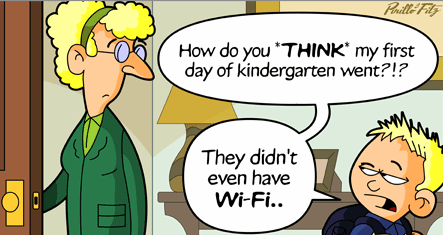
Patients aren’t going to tolerate the disconnect in healthcare forever. And as digital natives,some generations won’t tolerate it at all. The day is coming where a patient will ask her doctor, “Did you notice that that my headaches seemed to lessen on those days I go to the gym? I’m wondering if there’s a connection?” If her physician isn’t paying attention to her, she will find a physician, or perhaps even an intelligent medical assistant, who will.


This post originally featured on HISTalk

Friday, April 10, 2015

HIMSS15 The Year of DigitalHealth, Interoperability and Security

HIMSS is finally upon us and like the 20,000+ people heading Chicago there is a lot to take in, many options and far too much for any one person to see or catch up with. So what do you do?


First off - download the HIMSS Mobile APP that now comes with GPS intelligence which hopefully will start to provide keen insights into activities and opportunities that are nearby as you move around Chicago, the convention center and beyond

Download and print (I know not very environmentally friendly but there is a lot to absorb) the HIMSS Conference Guide (72 Pages) - or if you are feeling really clever send it to you iDevice, Pocket, Kindle or some other reading device

Or use the online version of the HIMSS of the guide - here

For the physician centric guide - head on over to this living breathing dynamic Google Document - put together by Wen Dombrowski (@HealthcareWen)

For the HIT Centric Guide from John Lynn (@TechGuy)

For the latest and greatest news be sure to follow the #HIMSS15 hashtag, and others linked to the conference including #DrHIT

And your best option for keeping up with the latest and greatest from Symplur tracking system on #HIMSS15 and that page features additional topics and tags worth following and tracking

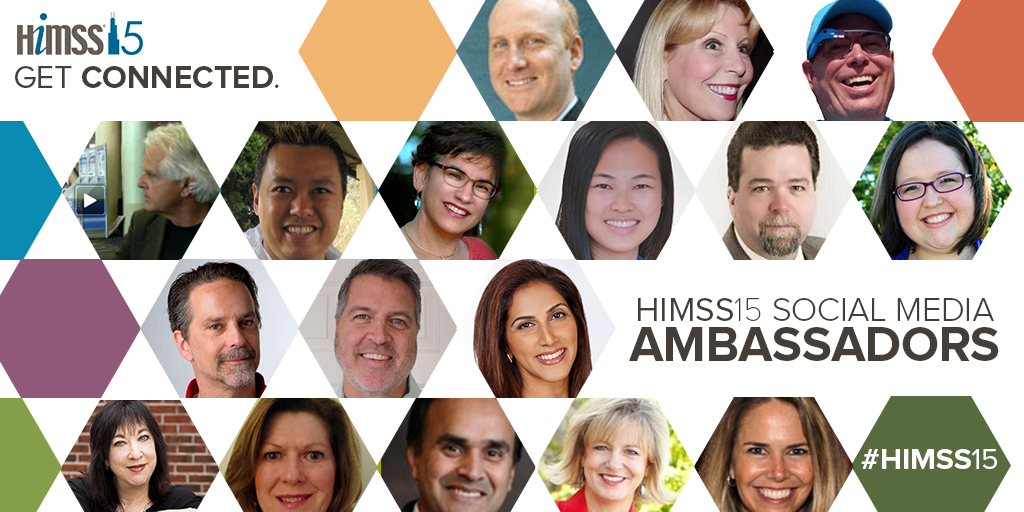
And of course follow your Social Media (#SoMe) Ambassadors can all be found in this list on twitter


Tuesday, January 6, 2015

CES 2015 - The Year of Digital Health and Wearables

This year I have the privilege of attending CES2015 in Las Vegas - for those of you who have not been before its big..even by Las Vegas standards.

CES attracts 150,000 visitors (all looking for the same cabs so I’m willing to bet that Uber is not going to work as well), occupies 2,000,000 sq ft of space (35 football fields - American or the rest of the world soccer) and includes 3,500 companies

This year the DigitalHealthCES meeting runs concurrently and I believe is in its 4th year. Further evidence of the merger of health, consumer and the engaged patient equipped with mobile technology and wearables.

As my friend John Lynn said in his post Initial CES 2015 Observations. He sees the top trends as

  • 3D Printers
  • Drones, and
  • Wearables

The first two not closely linked to healthcare (except perhaps this recent recent student suggestion of an Ambulance drone to deliver help to heart attack victims).

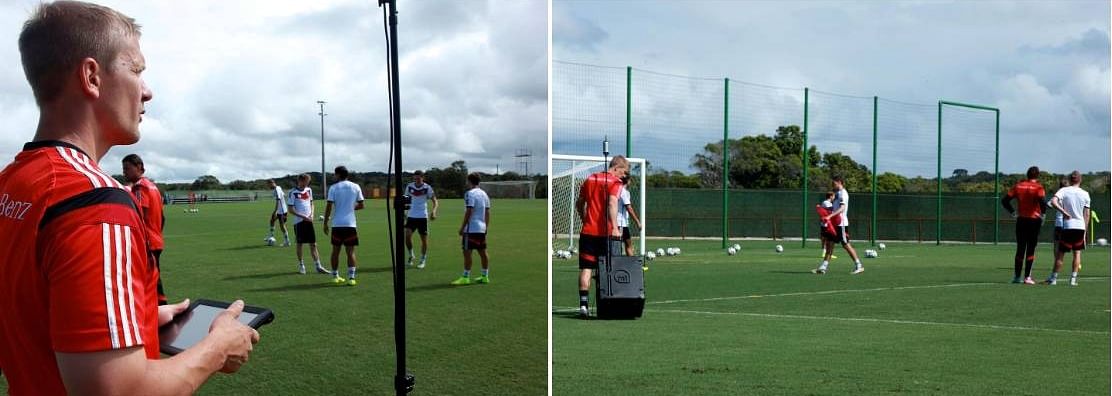
Wearables are front and center and John cites the Amstrip company with a band aid style monitoring concept. I expect clothing and in particular sports to lead this charge with the initial interest in optimizing training and athletic performance as we saw from the World Cup last year and the miCoach system from Adidas that was in use by the winners Germany.


Needless to say others are joining the fray with clothing brands such as Asics, Under Armour and Ralph Lauren now offering clothes to monitor all sorts of parameters

This year may see the emergence of more from the Internet of Things (IoT) - or the new term the Internet of Everything (IoE).


Everything connected and controlled through a consumer friendly hub which will include the wearable and monitoring concepts.

This is as simple as ceiling fans and cooling systems and thermostats but with healthcare making this even more interesting and the learning potential of these intelligent systems and their Artificial Intelligence offering insights into our lives to help turn unhealthy behaviors and activities into healthy choices.

So much of our healthcare expenditure is related to chronic care management, imagine the impact this level of synergy and motivation will have on driving a healthier population while reducing cost.

I’m ready, are you?

Tuesday, May 27, 2014

Getting Value from the EHR - Yes it is Possible

I have the privilege of spending a lot of time on the road interacting with clinicians around the country (and world). I hear with too much frequency many doctors complaining about the Electronic Medical Record and how it fails to help them and in many cases makes their work harder. Some of this is a hangover from the past and the inadequate technology and in some cases hardware at the time
In fact I’ve told this story a number of times that I can date to around 1995/6 and in this piece: Clinical documentation in the EHR
Many years ago, an excited friend who worked for one of the electronic health record (EHR) vendors at that time — it was really more of a billing and patient tracking and management system than an EHR — was desperate to show me some of their latest applications. In particular, a new module they had developed to capture clinical data.
My friend pulled out his laptop, fired up the application, selected a patient and proceeded to enter blood pressure (BP). Some 20-plus clicks later, he had entered a BP of 120/80. While he was excited, I was dumbfounded. When it comes to patient care, doctors didn’t have time for 20 clicks to record BP years ago and they definitely don’t have that luxury in today’s demanding medical environment.
There is still some of that going on and not enough focus on the User Interface design and turning the technology into a barrier - this is the focus of the Art of Medicine campaign we launched some weeks ago


This article on Government HealthIT Are electronic health records already too cluttered? highlights a rising problem and one I hear about frequently. This is not just a healthcare problem and it is the focus of the work by Edward Tufte an American statistician and professor emeritus of political science, statistics, and computer science at Yale University who is well known for his books on information design which are bets acquired by attending one of his frequent courses on data visualization
Here is a recent overview of visualization on the iPhone


He has a section on healthcare but many of his principles apply

For Brian Jacobs the problem was even more acute working in a Pediatric ICU:
The ICU is a very toxic and tech-laden environment….because of that, it offers the opportunity to make a lot of mistakes
As he points out much of the cutter derives form the multiple notes entered into the EHR every day. "It’s not uncommon in teaching hospitals to have six to seven notes per day on one patient, by the time the attending physician, residents, consultants, other doctors and fellows check on the patient."
So they instituted a policy of One Note per day

Actually its
It’s actually one note per team per patient per day; one giant multi-contributor note. They still may be all writing their components, but it’s one note
With a template to hold the content generated each morning by the resident and then everyone contributing to that one note, adding and amending as necessary

So in addressing the issue clutter they also addressed usability and design turning the note into a living breathing document that is updated and maintained by the team that now takes care of patients
But he addressed some other important issues - especially when it comes to quality of care and the quality of the medical note

Copy Forward is subject to some warranted scrutiny from a billing and audit standpoint. Much of the repetitive and “clutter” in the note comes form the copying forward of past information. But:
These notes should never be the same
And as part of that message they moved to an "End-of-day note” that was a fresh summary of the patient.
Add to that an updated and well maintained Problem List and integration with the billing system to allow doctors to select their code for the work carried out that day and they moved to a valuable addition to the healthcare team in delivering quality healthcare with their EHR
EHRs are: more complete, legible, accessible and can be auto-populated and searched. They can provide diagnosis codes and they’re good for billing. On the other hand, they can sometimes lack quality information and are by far, too cluttered.
I said this back in 2003 (yikes!) - The Future of Technology is already here - Who’s on Board the train and who’s left at the station. I still believe it and understand that the technology does need to get better and be more integrated into the existing workflow

The next generation of health care technology is here, with visionaries and futurists pushing the envelope to enhance, create and generate the newest cutting edge in health care delivery. Advances in technology, like advances in medicine, are a shared entity that enhances life expectancy and the quality of life.

Monday, April 14, 2014

Social Media in Healthcare

Social Media is here to stay and its impact in Healthcare has been impressive and far reaching.


If you still need convincing - look no further than this piece 24 Outstanding Statistics & Figures on How Social Media has Impacted the Health Care Industry that features a host of examples. As they put it
In a generation that is more likely to go online to answer general health questions then ask a doctor
And that’s the point our population and customers are changing and they are using the internet and social media as a major source and guide to their care.
A few choice data points:
90% of respondents from 18 to 24 years of age said they would trust medical information shared by others on their social media networks
This may be the younger generation but in many instances they are becoming the healthcare support infrastructure for their parents and will use the same methodology to for their parents care as their own
31% of health care professionals use social media for professional networking
I am willing to be this is increasing and I only have to look at my own twitter feed and lists of doctors I am connected with, follow and use as major source and guides
41% of people said social media would affect their choice of a specific doctor, hospital, or medical facility
Ignore this at your peril - 2 in 5 of your patients are looking at social media to guide their healthcare selection.
And the opportunity and impact will increase as we see the penetration of mobile devices increasing
International Telecommunications Union estimates that global penetration of mobile devices has reached 87% as of 2011
So for those of you already online the impact and effect will increase. Those of you not….well that train has left the station. This graphic by Howard Luks (@hjluks) captures the extent of the opportunities

Monday, March 24, 2014

What Patients Want - The Art of Medicine

The Art of Medicine Panel (part of the Art of Medicine campaign) is hosted this week and I am looking forward to hearing from our panelists:

  • John D. Halamka, MD, MS, CIO of Beth Israel Deaconess Medical Center (and Life as  healthcare CIO blog and @jhalamka)
  • Steven J. Stack, MD, past chair of the American Medical Association (AMA); served on multiple federal advisory groups for ONC on HIT, practicing emergency physician  
  • Keith Dreyer, DO, PhD, FACR, Vice Chairman of Department of Radiology, Massachusetts General Hospital 
  • Adam Landman, MD, MS, MIS, MHS, CMIO, Health Information and Integration at Brigham and Women's Hospital (@landmaad)

and moderated by Paul Weygandt, MD, JD, MPH, MBA, CCS, CPE, Vice President of
      Physician Services, Nuance Communications

The panel is taking place this Thursday from 9 - 11am at the Boston's W Hotel, 100 Stuart St, Boston, MA. If you have not already you can register here: www.nuance.com/artofmedicine. The event is free of charge,

Sadly many physician are feeling the strain as noted in this piece (Are Physicians the Cure to Healthcare’s Bugs?):

"waking up in the morning, and not looking forward to going to work"

As this piece (Doctors and Tech: Who Serves Whom?) in the Atlantic pointed out

Technology should serve doctors, rather than doctors serving technology

The sad reality of our technology environment is taking the focus away from people


We love our mobile technology


But is this the right interaction all the time?


And it is true in healthcare especially (The Cost of Technology)
“If we want doctors to do better work, we need to give them better work to do.”

and to do that doctors have to engage in the design of these solutions and the clinical community and the #HealthIT world must address these issues:
Just as we can’t expect a patient with heart disease to know intrinsically to maintain a low-sodium diet, we can’t expect the healthcare industry to know how to fix everything unless we speak up and advocate for change (especially with the other loud voices of insurers and politicians speaking on “our behalf”)
Some solutions are not technical as this Tweet by "Dr K" @MedschoolAdvice)
We have the rare opportunity to shape the future of healthcare infused with technology and I, for one, want to be part of developing a solution that helps the next generation of physicians offer that comforting touch as they deliver an even greater level of care to their patients

Download the Art of Medicine eGuide here and join me and the panelist on Thursday as they discuss they start to shape a better HealthIT future for everyone. I will be live tweeting from the panel (#ArtofMedicine) and will post a summary after the event.


Monday, December 2, 2013

Virtual Assistants in your Future - Personal Healthcare Delivered

You can always rely on Hollywood to take concepts and extend them into the future - sometimes correctly (cloaking, holographic TV, forcefields and eco skeletons with mind control), sometimes incorrectly (aluminum dresses, atmosphere that is completely controlled, suspension bridge apartment housing). We have had speech recognition and Spock's request:

So it was no surprise to find the latest Hollywood idea is the "Her" - a lonely writer develops a relationship with a newly developed operation system

Intriguing and challenging our current concepts with an exploration of artificial intelligence, voice and natural language technologies. These new styled avatars understand, listen and decipher what we say and something that Nuance has been developing and reinventing the relationship that people and technology can have. We can engage with our devices on our own terms and we have show these concepts in healthcare with our very own Florence - who is getting ready to launch in 2014

Ambitious you say - maybe but imagine the environment with intelligent personal assistants that hear you, understand you, know your likes and preferences – and in our world exist across your doctors office, the phone, surgery, hospital and elderly care and hospice. Cool? Liberating? Impossible?
If you’re Nuance, the idea is not only brilliant – it’s our focus and drive as we reinvent the relationship between people and technology. It is the chance to connect with your devices on human terms and presents infinite possibilities for intuitive interfaces that adapt to you.
Liberating our clinicians to focus on the patient and providing patients with someone they can talk to, interact with and who does have time for them. That future - coming to a doctors office near you:

Friday, September 13, 2013

21 Bow Tie Salute to Farzad Mostashari

Like many in the healthcare IT industry, I was saddened by the announcement that Dr Farzad Mostashari (@Farzad_ONC) would be retiring. I would suggest as famed football legend Vince Lombardi said

"The strength of the group is the strength of the leaders"
And, for healthcare technology, Dr. Mostashari has been a great leader. I’ve outlined below some of the many contributions he has made to healthcare.

Dr. Mostashari joined the Office of the National Coordinator (ONC) in 2009, and has had a huge and positive impact on the implementation, development and overall perception of healthcare IT.  Personally impacted by the state of healthcare when his mother was admitted for arrhythmias, after having asked for the paper chart, he admitted;
I couldn’t even read the cardiology consult’s name
Perhaps this is one of the reasons he like me is a proud member of Regina Holliday (@ReginaHolliday) "Walking Gallery". This difficult, and highly personal, situation likely galvanized his vision as he took on the daunting tasks demanded by the role of the ONC. He inherited a department that had, in effect, been pushed over the edge of the luge and, whilst speeding wildly along this track, was expected steer a course that would deliver on a range of programs in record time:


  • Meaningful Use of Electronic Health Records (EHR)
  • Certification program for EHRs
  • National Standards
  • Grant programs
  • Regional Extension Centers
And that was just what he knew about coming in. The team endured the challenges, weathered the storm in the "Office of No Christmas"

He rapidly earned a reputation as a leader who listened and was engaged.  He made many appearances and, although he may not have been the first, he was certainly an early adopter of social media and online engagement – clear indicators of his heartfelt passion to be part of the solution. As a customer service representative I recently encountered very astutely pointed out:
I can't do anything about the past, but I can help improve the future


Successes
It is hard to pick individual highlights from such an impressive record, but here's my list of Dr. Mostashari’s top 13 achievements and quotable/notable moments from his time in office:

  1. Successfully delivering on the Stage 1 Meaningful Use, despite frustrations and the challenges of a fickle and change-resistant healthcare profession.  He gracefully offered a personal hand to help steer his colleagues:
    "Meaningful use is the best-we-could-make-it roadmap to prepare for delivery of higher quality care and mitigating some of the costs toward getting there, if it's a distraction we need to change it, and I want to hear from you personally."
  2. Creating a viable technical assistance program that has touched many providers and hospitals through regional extension centers (REC).
  3. Driving the successful adoption of electronic health records (EHRs) and electronic medical records (EMRs).
  4. Interoperability (see note below on focus for the future)
  5. Pushing for patient empowerment (He, like me, is a proud owner and runway model for the Regina Holliday Healthcare Collection).
  6. As he said: "We’re on the right track to make meaningful use of meaningful use
  7. ePrescribing
  8. And as if to prove the point about his use of social media, this from his twitter feed: “We've made more progress with EHRs in the past 2 years then we have in 20"   
  9. Championing the patient engagement he stated: "We cannot have it be profitable to hoard patient information"
  10. Nailing the coffin shut on paper he said: "Once you close a paper file it's dead. You’re not able to move it or learn from it"
  11. While this may not be his own personal quote but he applied cyberpunk science fiction, William F. Gibson famous quote to healthcare: “The future is already here – it’s just not evenly distributed.” by pointing out that we do have the technology - its just not being applied
  12. Piloting Meaningful Use stage 2 criteria, which built on the success of stage 1, and pushed towards interoperability including standards for data sharing data, quality improvement, and quality measures that foster  patent engagement. As he put it: "We are using every lever at our disposal to increase the sharing of information" and "Patients need to care for themselves and become partners in their care"
  13. Successfully weathering the storm of the controversial (or as he put it "headline grabbing") Health Affairs article based on data from 2008 that suggested that EHR technology was increasing the costs of healthcare.


The Future:
To the lucky individual taking the reins, I offer five suggested  areas of focus:

2. A friend once said to me: "You've put us on the horse, you might as well give us the ride." The same can be said of payment reform, which must shift from quantity-based to quality-based payment. And taking a sheet from Dr Mostashari's play book, every journey starts with a single, small action, so even a small dent would be a welcome shift.


  1. Continue the engaged and inclusive discussion with all the constituents and make social media a central part of that strategy both for ONC but also for the healthcare industry.
  2. A friend once said to me: "You've put us on the horse, you might as well give us the ride" The same can be said of payment reform, which must shift from quantity-based to quality-based payment. And taking a sheet from Dr Mostashari's play book, every journey starts with a single, small action, so even a small dent would be a welcome shift.
  3. I must include a shout out for patient engagement. Nowhere else in the industry will you find such a large and untapped resource that is ready, willing – but perhaps not yet able to participate in the change. As I have stated many times:  when a doctor and patient are in a room, there is nobody, I repeat nobody, more interested in successful outcomes than the patient. Give them the tools and make them part of the solution.
  4. Occasionally, the issue of Tort and Medical Negligence is raised, but it appears to have the "third rail" syndrome. Unless this is addressed, we will continue to see "defensive medicine" practiced. As I recently blogged in Science, Evidence and Clinical Practice, despite clear data that shows intensive monitoring causes more harm in normal care deliveries, we continue to see almost universal rates of this high-level monitoring.  While some may be attributable to the payment system, I believe a large part of this volume stems from the general inertia of and fear of litigation.
  5. Above all - have fun. I made this point at every soccer practice when I was a coach. If you aren't having fun, there is little incentive to do well or, for that matter, to do at all. I know I am constantly amazed at the great fortune that finds me at this intersection of medicine and technology. I constantly have that feeling as if I paddled for the wave just at the right time:
"Surf's Up dude - ten foot waves of the Pier"


The Making of the 21 Bow Tie Salute

Dr Farzad Mostashari has been an incredible role model, a source of inspiration and a true visionary who has helped others see what the future of healthcare can look like. And so, in extreme appreciation of all that he has accomplished, I offer this 21 Bow Tie Salute.  


I was fortunate enough to have another wonderful role model, my father, take the time to teach me how to tie a bow tie, but for those of you wanting to learn the fine craft of tying a bow tie, instructions are included below (The 21 Bow Tie Salute was made with Real Bow Ties). 


Thanks Dad!

Here are some basic instructions:


News and sources include:


Friday, November 16, 2012

Discussing the Imapct of Social Networks on Healthcare with @EricTopol on Friday #VoieoftheDr

I am excited to be joined by one of the keynote speakers from HIMSS13 conference Dr Eric Topol - Author of
The Creative Destruction of Medicine: How the Digital Revolution Will Create Better Health Care and has been named in the list of the Top 100 Most Influential Physician Executive in Healthcare, 2012 by Modern Healthcare

We will be discussing amongst other things the impact of Social Networking Impact on Medicine: Topol on Social Networking’s ‘Big Impact’ on Medicine.

Patients are moving in droves to online interactions and not just to access medical information online but also to interact with other people experiencing the same conditions or symptoms. But it is the opportunity for the positive social influence of people:

If you combine the capability of monitoring such things as blood pressure or glucose with social networking, then you can have managed competitions with your friends, your family, or your social networking cohort, and you can start to compete for such things as who has the best blood pressure or who has the best glucose level. This, of course, is beyond competitions as simple as who has the best weight or does the most activity in terms of number of steps


That is really exciting. I have had great positive experiences of this using a manual tracking system with colleagues for fitness and health monitoring and has now moved ingot he digital world in the form of FitBit tracking - you can see my FitBit Profile here. Sadly I lost my FitBit device (it fell off while I was running) about a month ago so the profile and activity is a little light but it is central to my constant focus on personal health management

Will you be joining your friends and other patients online or are you still concerned about sharing your personal data or troubled by the security or impersonal nature of online interactions. Join me on Friday at 2:30 ET on VoiceoftheDoctor when I will be talking about this with Dr Eric Topol

Join me on Friday at 2:30 ET on VoiceoftheDoctor
There are three ways to tune in:

• Stream the show live – click the Listen Live Now to launch our Internet radio player.


• You can also call in. A few minutes before our show starts, call in the following number:  Call: 1-559-546-1880; Enter participant code: 840521#


•  HealthcareNOWradio.com is now on iTunes Radio!  Stream the show live – you’ll find this station listed under News/Talk

Wednesday, July 11, 2012

Voice of the Doctor - July Part 2

July Voice of the Doctor Guests

Jul 13
Talking to Don Rosenthal (You can follow him on twitter @DonRosenthal) part of the original team that developed the scheduling system for the Hubble Space Telescope and ran the artificial intelligence group at NASA. HE is also the founder and CTO of Allocade and publishes a blog THITSE A Mashup of Tech, Healthcare IT, and Space Exploration
He published a two part blog on HiTech answer on Medical Records Interoperability: My medical data should move with me as easily as my music or photo library and Part 2 where he threw down the "latex" gauntlet to the #HealthIT industry in creating interoperability that was as easy as sharing my music and photos libraries <--I could not agree more with his points and these articles are worth digesting to get a good understating of the barriers we all face to sharing medical data effectively and creating truly interoperable healthcare.

We will be talking about Artificial Intelligence in Healthcare and how we can bring this technology to the complex world of medicine.

Will AI really make a difference to healthcare or is it still a mirage on the horizon of innovation
Can AI replace the clinicians consultation and review and should it
What can we learn from AI implantation from NASA and space exploration where time and distance have significant impact on the need for autonomous intelligence.

Jul 20
Monthly news round up - more opportunity to dive into the latest news and activities. THere has been lots of follow up commentary and discussion on the ruling and we will cover this as well as the most recent #HealthIT #HITsm #hcsm #HIT #EMR #CMIO #doctors #mHealth news


Jul 27
I am looking forward to talking with Gregg Masters (You can follow him on twitter @2healthguru). He is the CEO of Xantamedia and a well recognized voice and Top Players in the Social Media world. I had the privilege of meeting Gregg a while back in person and have enjoyed reading his posts and thoughts.

He and I exchanged tweets shortly after the #SCOTUS #ACA ruling was announced after I posted a link to this: Health-care leaders: Ruling no cure for spiraling costs which for me was an interesting take on the challenges that talked about the fragmented nature of the healthcare system and a general agreement that it's broken:
"We all agree, I think, that the current fee-for-service model has all the wrong incentives in it," said Swedish Medical Center CEO Kevin Brown. "The health-care system has been really fragmented, with independent entities all working for their own best interests."
I liked the concept they talked about where:
Insurers and providers have worked together, rejiggering the typical payment model to shift incentives toward keeping people healthy instead of just running up bills when they're sick.
Which reminded me of the ancient practice of paying the doctor in your village while you were healthy, only stopping paying him when you fell ill (I know simplistic but quite compelling). They did say that
The Affordable Care Act, which relies on private insurance, for the most part doesn't directly address costs.
And while it represents a start (every journey begins with a step) there are still holes (tort and medical liability to mention a couple). Gregg responded and suggested that:
innovation will come via margins aka CMMI. Private market ACOs & direct practice models galloping ahead
We had a series of exchanges and I suggested that instead of the 140 character exchange he come on my radio show to discuss and he graciously agreed. Much as I did pre the release of the ruling, when I had the pleasure of talking with Sam Bierstock on March 30, we started with tentatively opposing views but in reality our opinions were not widely different. You can hear download that show here

I'm looking forward to a lively and informative discussion and by then will have had an extra 2 weeks to diets more of the details of the ruling and its potential effects.

Hope you can join me on #Voice of the Doctor


Join me on Friday at 2:30 ET on VoiceoftheDoctor There are three ways to tune in:
• Stream the show live – click the Listen Live Now to launch our Internet radio player.

• You can also call in. A few minutes before our show starts, call in the following number: Call: 1-559-546-1880; Enter participant code: 840521#
• HealthcareNOWradio.com is now on iTunes Radio! Stream the show live – you’ll find this station listed under News/Talk