Showing posts with label Personal Health. Show all posts

Saturday, May 23, 2015

Memorial Weekend - Be Happy

This memorial day is a good time to reflect and give thanks - in fact this visual gives a great sense of the sacrifices of so many for our freedoms and life today

BloodofourVeterans

Original from Facebook

Here's one for the SHARE button. A truly powerful image that tells it like it is.

Posted by Madison Rising on Thursday, October 30, 2014  

So while thinking about how lucky we are we should try hard to be happy as Bobby McFerrin suggested: “Don’t Worry, Be Happy” So in the spirit of focusing on happiness which is well proven to improve your life this piece in Time Magazine: Happy Thoughts: Here Are the Things Proven To Make You Happier choked full of great ideas and principles - starting with Gratitude which

Showing gratitude for the good things you have is the most powerful happiness boosting activity there is....which seemed a perfect match for today. But there are many other elements starting with

Doing what you are good at - no matter what that might be as often as possible - Starving Artists are happier with their jobs which goes a long way to explain the power of Regina Holliday and her amazing presence and power in medical advocacy (She’s just a published her first book “The Writing on the Wall” which should be required reading and would definitely be on Oprah's book list if that were still thing)

As for you time - spend it with the people you like - the happiest people are social with strong relationships and that describes much of the online community around Healthcare and Patient advocacy that i consider myself very lucky to be part of. There have been some studies that suggest a causation between happy social networks influencing others and helping them to be happier (I know could just as easily be correlation but either way Happiness is infectious)

Money can help but is not essential to happiness and it is not good to focus on money or the desire for it.

Well known that giving is better for happiness than receiving - notable during the holiday that the giving of gifts is more satisfying than receiving. Interestingly striving for ambitious goals has a positive effect and being optimistic (even bordering on delusional) has positive effects but it is this list of “big life regrets” that is worth highlighting

  • I wish I’d had the courage to live a life true to myself, not the life others expected of me.
  • I wish I didn’t work so hard.
  • I wish I’d had the courage to express my feelings.
  • I wish I had stayed in touch with my friends.
  • I wish that I had let myself be happier.

and as someone pointed out - no one says as they near death - I wish I had worked much harder and spent more time at work.


Relish the time off, enjoy your life, family and friends, savor the positive experiences and do so frequently even in small doses.


Monday, March 2, 2015

Would you swipe left on a healthier you?

2015 health IT innovation holds the promise of turning massive amounts of personal health data into usable information that can keep you healthier -- and it's conveniently accessible on your phone.


It’s always comical to watch movies from the 1980s, not only for the distinct style choices that typified that decade, but to see the type of technology most of us can still recall using. It’s nearly impossible to believe we used to happily lug around three pound mobile phones with antennas and back-up battery packs, but they offered a convenience the likes of which we had never seen before. While heading to the 2015 Mobile World Congress (MWC)


one of the most prominent tradeshows in the tech industry, I couldn’t help but think about the pace of change and get excited about the digital health innovations that will be showcased.

We tend to take for granted the conveniences and time-saving effects such innovation has on our lives. Prior to the pervasiveness of mobile technology, if you were walking down the street and you saw someone collapse, you would need to find the nearest store or phone booth to call for help. In fact, most of us probably knew which corners on our daily commute had pay phones. Now, even if you’ve left your phone in the car (an unthinkable these days) you can comfortably rely on the fact that someone nearby will have theirs in the case of an emergency.


Is your heart in it?


From a healthcare perspective, the interconnectivity of devices is fascinating and holds a lot of potential for engaging patients and improving health outcomes. Innovations such as smart watches, which are being outfitted with fitness trackers and heart rate monitoring sensors, can alert the wearer he has achieved 10,000 steps that day or that a runner has reached her target heart rate


While innovations such as these are always exciting, the bigger picture is about creating a healthier population. According to the World Health Organization, cardiovascular disease is the number one cause of death in the world today. Factors such as poor diet and lack of physical activity are some of the main contributors to the disease— and they are also elements most of us struggle to balance. In other words Lifestyle is the biggest contributor to your health as you can see in this video


Wearable devices designed with intuitive interfaces hold the possibility of helping us maintain that balance, remind us of our inactivity, track our daily caloric intake, remind us of how many hours, minutes, and days it has been since our last cigarette (even Spock spoke out against smoking)

When smart watches and fitness bands are tethered to mobile devices, we can layer on more practical applications for personal health management. What if you were walking down the street and your wearable could sense you were having a minor heart arrhythmia, send a signal to your phone, and have it call for help or advice? Or, perhaps, much like our phones can now alert us to poor traffic for our daily commute, what if your wearable, knowing you are diabetic, could sense low blood sugar, sync this data with your phone and tell you some appropriate restaurants and grocery stores nearby? They will be able to translate personal health data into steps and actions we, as patients, can take to better manage our care and keep ourselves healthier.


Engagement ROI

The benefits of an engaged patient population are numerous. Not only will people be healthier, but consider the above World Health Organization cardiovascular disease statistics and the associated costs of care, medication, and lost productivity, not to mention the personal impact on each of us. For coronary heart disease alone, the U.S. spends $108.9 billion. If people were more dialed in to their health— tracking, monitoring, and being rewarded by insurance companies for adherence to healthy lifestyle activities— imagine the savings both in lives and dollars. And with the pervasiveness of health IT innovation, we are seeing more consumer-facing health apps, such as Sharecare’s AskMD, becoming standard features on mobile devices. People can now use these apps to walk them through their symptoms, offer guidance on managing chronic conditions, and remind them to check in with their doctors.

We’ve come a long way from the shoe-box sized mobile phones of the ‘80s and it will be interesting to see a glimpse of our future technologies, widgets and devices on display at CES 2015. One thing is certain: whether you’re a physician or a patient, we’re all still consumers and our expectations for efficiency and conveniences on mobile devices will play a large role in the next phase our health evolution. In fact, I imagine the current wearable will be considered clunky and dated in as little as 10 years. We might find our lives equipped with even more svelte tools integrated with all of our healthcare data and real-time advisors, apps or avatars that coach, coerce or cheer us on through daily choices to keep our lives and health on the ideal track.


The original article appeared in WhatsNext

Saturday, February 28, 2015

Honor Spock's Logic - Follow the Science


Like many I was saddened to hear the loss of one of my heroes growing up - Leonard Nimoy was Spock to me as he was to many others. He epitomized the value of science and logic in the resolution of problems

As my good Friend Jane Sarasohn-Kahn highlighted in her tribute on Healthpopuli: Learning from Mr. Spock and Leonard Nimoy about living long and prospering. Her selection of this iconic moment with Spock were right on target - from one of the great movies from the franchise - Wrath of Khan


Spock: “Do not grieve, Admiral. It is logical: the needs of the many outweigh…”
Kirk: “The needs of the few…”
Spock: “Or the one.”
He spoke out on smoking - something that in the end killed him before his time in this tweet from January 2014:
I quit smoking 30 yrs ago. Not soon enough. I have COPD. Grandpa says, quit now!! LLAP
30% of people will suffer serious Chronic Obstructive Airways Disease (COPD) as a result of smoking - and that's just one of a slew of diseases inextricable linked to smoking. Smoking while in decline in some countries is on the rise in others and this major health risk remains one a negative impact on personal health

You can explore WHO data in this interactive chart from who here

But don't limit the application of science to health and smoking - you can put Vaccines in the same category of Science and Logic. Jimmy Kimmel captured the sentiments aptly in this segment featuring real doctors


So much of your health boils down to Lifestyle choices that was so elegantly captured by Brigitte Piniewski, MD in this chart


Where would you rather be - fun or no fun


Spock the Hero with Super Powers
We may wish for the seriously cool vulcan Nerve Pinch


But we don’t need the vulcan nerve pinch. He and his character have taught us that science while not infallible has been working for us for millennium. We have started to tap into the power of science and the opportunity offered to our health and well being.

When it comes to science and healthcare Doctors are your trusted advisor - the relationship may be changing from the paternalistic role to a collaborative role as Eric Topol so eloquently describes in his latest book - The Patient will See you Now. But as captured in this piece by this Trauma Surgeon (@DocBastard) on the Daily Beast: Why You Trust the Internet More Than Your Doctor
...for god’s sake don’t think that you know as much as a doctor because you Googled something. Medical training takes up to a decade or longer (depending on the specialty), so a 0.452 second Google search does not substitute for consulting with an actual physician whose only interest is your health.
We are only at the beginning - what comes next and in our future is unimaginable. Our innovation, inventiveness and abilities continue to expand our universe and our understanding. Science wins- every time. Be logical with that splash of human emotion and honor his legacy - open your mind, analyze the facts and apply the science. As Jesse: Yeah, Mr. White! Yeah, science!


Live Long and Prosper (LLAP)

or perhaps

Live Long, Logically and Prosper (L3AP)


On a side note - if you are interested in the history of the Spock Vulcan Salute - Live Long and Prosper you can watch his explanation of his Jewish Origins here (derived from the Hebrew letter shin  and the first letter of several hebrew words Shaddai (god), Shalom (hello/goodbye/peace) and Shekhinah (feminine word for god) - How Fascinating!


Tuesday, January 20, 2015

CES 2015 - Turning a techie into a modern-day Odysseus

As a physician and a CMIO, I’m forever seeking the latest technology offerings that might help us solve some of the very complex problems that exist in healthcare. With that goal in mind, I set out across the CES 2015 showroom floor, seeking the best in health innovation.

While it was interesting to see all the fitness and consumer health apps, I found myself spending extra time looking at non-healthcare related technologies, drawn in one direction or the other based on the “oohs” and “ahhs” of crowds marveling at incredible and unfettered innovation. I made countless stops along the way, and spoke to many different creators about the potential healthcare implications of their products, and I quickly realized that the future of health IT innovation will be a combination of various consumer technologies that are carefully sutured together.

Internet of Healthcare Things (IoHCT)

The interconnectivity of devices has been a growing trend in the consumer world, but it is one that has not really made its foray into healthcare. When it does, the potential will be astounding. I spoke with La Crosse Technology,


They collect data from weather systems, such as temperature, humidity, etc. They have developed the ability to leverage this data to adjust home heating and cooling systems according to the current weather conditions. Practical and money-saving for sure, but it is easy to extrapolate the benefits of such technology to patient consumers.


Imagine the impact this could have for someone suffering from chronic respiratory issues or severe asthma: they could receive guidance on what is going on outside and perhaps take extra medication to cope with poor air quality.


Additionally, such data could be used to send important reminders to help patients better cope with their medical issues, for instance, a virtual assistant that says “Heavy snow is on the way for the next three days, and I noticed your drug supply was down to two days, you should refill today so you don’t run out while the weather is bad and traveling is difficult.”

I also met with Butterfleye

a company that develops in-home monitoring systems.

Although there were many players in the home-monitoring space, I found this one compelling as it was easy to install and designed to learn, adapting to daily occurrences and routines as opposed to being programed. Imagine the value of setting this device up in the home of an elderly patient or loved one and using it not for security purposes, but for peace-of-mind, to make sure there is activity and movement and to learn of a fall or worsening condition more quickly.


Because the system is able to learn, it can discern the difference between a dog or cat roaming about the house and a person, so if there was an incident, a pet won’t “trick” the system into thinking the individual is actually walking about the room. While personal alerts are helpful if the individual is conscious and is wearing a medical alert device, a system such as this could help identify more severe life-threatening health conditions, and, with an intelligent virtual assistant, could ask residents if they are okay and call for help, if they get a negative or no response.

A Modern-day Techie Odysseus

Those familiar with the story of Odysseus know that he spent seven years sailing the seas trying to return to his homeland, Ithaca. What started out as a point A to point B trip, became a journey that forced him to see things differently. He was drawn in by all sorts of alluring (and not so alluring) options along the way, and when he finally returned home, he did so a wiser man. Meandering through the labyrinth-like CES showroom floor, I saw everything from robots that attach to windows
Solving that challenging problem of dirty windows on the outside

And clean the outside, to alluring bionic sensor


 Technology that allows users to control devices via subtle muscle movement from behind their ears.

A Nod to 3-D Printing

3D printing is taking off and I saw multiple exciting innovations of the technology on the show floor that included developments around materials and the ability to print metals and food. As you can see from this Geek Beat clip we are heading for a reality of the Star Trek Replicator


Healthcare is just scratching the surface and you can get a sense of some of the excitement in this piece by Dave deBronkart (ePatientdave): The Future Is Leaking In: "The Patient Will See You Now" Is 3D Printed Reality

Health and Fitness Apps Get a MakeOver

As my colleague Rebecca Paquette pointed out in her post on CES we are getting people to talk to things more naturally.
Chances are if you’re into staying fit, you’re into tracking all of the data that goes into keeping you happy and healthy. But tracking that data shouldn’t be a workout unto itself. The amount of time we spend logging meals, activity and sleep could be much better used burning more calories, or, if you’re like me, getting more shut eye (I forget to log it, then scramble to get it in before I fall asleep).
This consumer health prototype app on the Samsung Gear S from Nuance turns the process of interacting with these devices on its head as featured in this interview at CESLive


You lift your wrist, say “I had two eggs with multigrain toast, and coffee,” and voila – meal logged, calories tracked.

But the best thing about wandering the show is that it makes you see things differently, helps you think about things in a new way. It’s about pushing the limits, finding new use cases, new possible technology partnerships to create an even more robust, more powerful solution to address what people need.

Healthcare impacts many different types of people, from patients and clinicians, to administrators, coders and compliance officers— just to name a few. The common denominator, regardless of who you are, is that we all seek the best possible health outcomes. Having the opportunity to not only see, but experience, all different types of technology with untapped healthcare potential was incredible. It wasn’t about finding the health-specific applications and devices that would magically solve any one challenge, but about seeing the copious options available to consumers en masse, and talking with innovators about the potential cross-over and blending of technologies to advance healthcare today and in the future

This post originally appeared on WhatsNext


Tuesday, January 6, 2015

CES 2015 - The Year of Digital Health and Wearables

This year I have the privilege of attending CES2015 in Las Vegas - for those of you who have not been before its big..even by Las Vegas standards.

CES attracts 150,000 visitors (all looking for the same cabs so I’m willing to bet that Uber is not going to work as well), occupies 2,000,000 sq ft of space (35 football fields - American or the rest of the world soccer) and includes 3,500 companies

This year the DigitalHealthCES meeting runs concurrently and I believe is in its 4th year. Further evidence of the merger of health, consumer and the engaged patient equipped with mobile technology and wearables.

As my friend John Lynn said in his post Initial CES 2015 Observations. He sees the top trends as

  • 3D Printers
  • Drones, and
  • Wearables

The first two not closely linked to healthcare (except perhaps this recent recent student suggestion of an Ambulance drone to deliver help to heart attack victims).

Wearables are front and center and John cites the Amstrip company with a band aid style monitoring concept. I expect clothing and in particular sports to lead this charge with the initial interest in optimizing training and athletic performance as we saw from the World Cup last year and the miCoach system from Adidas that was in use by the winners Germany.


Needless to say others are joining the fray with clothing brands such as Asics, Under Armour and Ralph Lauren now offering clothes to monitor all sorts of parameters

This year may see the emergence of more from the Internet of Things (IoT) - or the new term the Internet of Everything (IoE).


Everything connected and controlled through a consumer friendly hub which will include the wearable and monitoring concepts.

This is as simple as ceiling fans and cooling systems and thermostats but with healthcare making this even more interesting and the learning potential of these intelligent systems and their Artificial Intelligence offering insights into our lives to help turn unhealthy behaviors and activities into healthy choices.

So much of our healthcare expenditure is related to chronic care management, imagine the impact this level of synergy and motivation will have on driving a healthier population while reducing cost.

I’m ready, are you?

Tuesday, November 11, 2014

Bridging the Digital DIvide

This week I will be at the Medicine 2.0 Conference on a panel Bridging the Patient Digital Divide moderated by
Melody Smith Jones


and includes
Lauren Still

and
Nick Genes


The session was put together by Melody to take on the oft talked about but perhaps poorly understood “Digital Divide”. Patients spend less than 1% of their time with doctors - the balance of our time represents (lost) opportunity to interact with people helping them live fulfilling healthy lives and making the best possible choices.
On average, patients only spend 1% of their time in the clinical care setting.  Traditional medicine has focused upon patient engagement during that eight minute doctor visit.  Yet, it is the other 99% of the time, when patients are at home, at work, at school, and in their communities that matters most.  It is outreach to patients while they are living, working, and playing that determines how their overall wellness is managed.
We have seen a plethora of technologies that attempt to address this area with everything from diet and fitness apps to specific applications designed to address long term health issues.
But there is variability with access in the community to information technology preventing access and knowledge and skills necessary to derive the value from these tools. Melody has addressed this divide specifically focusing on apps doe Low-Income Mothers in her recent post: 3 High Health Apps for Low-Income Moms. Check out Melody’s top 3 picks for low income mothers - some great apps focusing on the Food stamps including clever use of Bar code scanning technology to check eligibility of food and the nutritional value and a novel use of simple text messaging to improve maternal and newborn health <----- approach="" font="" love="" of="" simplicity="" the="" this="">

As she points out many of us make assumptions about accessibility to technology in lower social economic groups- as she puts it
Many make an assumption that those with low income or low education levels would not have mobile technology to use in the first place
But despite the budgetary restrictions we see a very high level of adoption of mobile technology - this is true worldwide as demonstrated by the statistics of mobile phone in the world: More People Have Cell Phones Than Toilets, U.N. Study Shows.


Out of the world’s estimated 7 billion people, 6 billion have access to mobile phones. Only 4.5 billion have access to working toilets.

In one of my personal areas of passion - Africa that is replete with examples of successful use of technology to impact the health of the population at levels that we can only dream of here in “the West".  Here in this study: Text message reminders improve healthcare practice in rural Africa
and this piece in the Atlantic: Medicine by Text Message: Learning From the Developing World

It might seem counter intuitive to spend money on what some might consider a luxury or discretionary spend - but for some this is the only means of communication replacing the plain old telephone line (POTS) and these devices come with capabilities and a reach that was pervasively unavailable to many in our society. The statics suggest as many as 80% of low income consumers own a mobile device.

But despite this opportunity the technology and apps are often times targeted at the higher income who already have fitter healthier lifestyles. Some of this is because of the existing developer community (higher social economic group) who develop for the problems they perceive and the harsh economics - this is where the money is (or at least we think it is). Despite Malaria being such a big killer there is limited investment in prevention and treatment of the disease as it affects the poor nations with limited capacity to buy any solutions that are developed despite significant progress and the impact of World Malaria Day


This was covered eloquently by J.C. Herz at wired in this piece: Wearables Are Totally Failing the People Who Need Them Most. We are awash with wearables, new devices and new apps and buckling under a Tsunami of data but:
...developers continue flocking to a saturated market filled with hipster pet rocks, devices that gather reams of largely superficial information for young people whose health isn’t in question, or at risk. It’s a shame because the people who could most benefit from this technology—the old, the chronically ill, the poor—are being ignored. Indeed, companies seem more interested in helping the affluent and tech-savvy sculpt their abs and run 5Ks than navigating the labyrinthine world of the FDA, HIPAA, and the other alphabet soup bureaucracies.
There are some economic reasons for these current trends, some social aspects of the development community but these may be based on false belief of the economics when you consider the opportunity exists to shake up the $2 trillion annual cost of chronic disease….!
I’m with Kabir Kasagood, director of business development for Qualcomm Life who said
Go from the children’s table to the grown-up table...If you’re serious about this, embrace the FDA. Learn how HIPAA works... move away from fitness and go hardcore into health. That’s where the money is
Around 45% of US adults are dealing with at least on chronic condition and picking on one Diabetes and look at the market opportunity of $6.3 Billion spent on blood glucose strips gives you a sense of the economics of this market. These are motivated people for whom the quantified self can mean the difference between an (expensive) admission to hospital or managing and improving at home.
At some point, you’ve got to ask yourself whether it’s just the friction created by health-industry regulation—the HIPAA security rules and FDA approval (or waiver) process and the hassle of integration with legacy systems. Or is it too daunting for a twenty-something engineer to develop technology for people who aren’t like them at all? An obese diabetic on a motorized scooter? Or a frail old lady with memory loss? Or her caregiver? Someone who’s three bus transfers away from a doctor’s office? 
We plan to address these issues in our panel - if you can’t join us maybe you can join the conversation using the hash tag from the conference #Med2 here at Symplur

Friday, July 18, 2014

Wearable Technology - An Exploding Segment

I attended a Wearble Technology conference today in Pasadena California: Wearable Tech LA

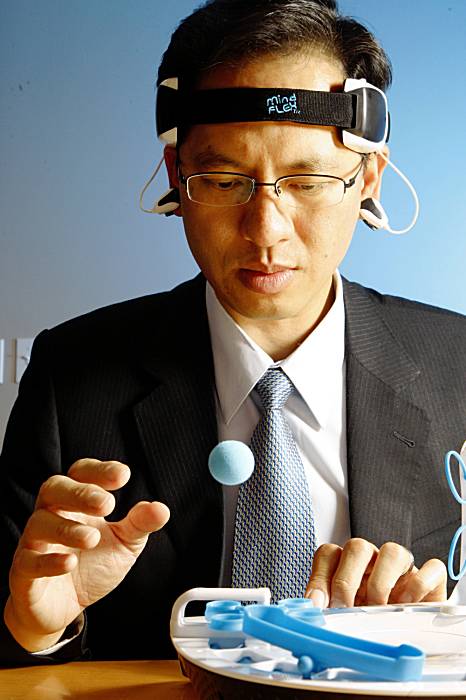
There was a wide range of technologies and innovations - everything from the mind monitoring by IntraXon’sMuse headband. Here’s their online demo video


One of the more interesting concepts takes the challenge we have all faced mastering the mechanics of walking, exercise, running and in some cases rehabilitation by placing sensors in the sole of shoes - Plantiga who have taken force analysis for our feet to a whole new level

The technology takes the static Force Plate sensor and turns into a continuous assessment 3-D tool offering an opportunity to apply this in specific sports and to help rehabilitate people who have been injured or have mechanical challenges (the side effect of capturing all this data is actually creating more comfortable shoes as they now have built in suspension and springs).
Better than this concept!

It might take a while to arrive in healthcare but in the meantime may well show up as another input device for the X-box or PS3 for a more realistic interface.

There was sensors to be placed all over the body for respiration, heart rate, muscle movement, acceleration/deceleration and even some to be ingested

A major challenge highlighted by several speakers facing all of the wearables genre was the issue of battery life
(and ironically it was the same problem I faced as I tried to capture and post social media)

The opening keynote was from Nadeem Kassam - CEO of BioBeats (Founder of Basis which is now an Intel company). His journey was one of classic rise from poor neighborhood in South Africa where he started his entrepreneur sporty selling oranges

He focused on three lessons - the first an essential learning point for everyone especially those facing healthcare challenges
Nothing is stronger than habit

He also suggested that those looking to succeed with innovation should:

  • Look for innovation outside of your industry, and
  • Don’t throw a big team or money at innovation

His story behind this was a classic one of engineers told to build a product who came back with his wearable watch that was a huge device that weighed down his arm and had a velcro battery pack under the arm!


He ended up finding his greatest engineers on Craigslist who’s references and Resume was a cardboard box full of devices that he had built.

The new concept of “Adaptive Media” which is bridging the divide between human emotion, data and the media we consume and should adapt to our mood based on our emotion. His new company has done some interesting research programs including an experiment with machines designed to allow people to hear their own heartbeat and have it set to music in Australia. When people heard their heartbeat for the first time it created a deeply emotional experience and many were moved to share very personal life stories.

They took this a step further and worked to gather heartbeats worldwide - a clever BIGData gathering exercise that amassed large quantities of rate, rhythm and details of millions of people around the world.


His overriding point was

We have to make health fun and engaging - merging it with entertainment to help people achieve what we all want - long tail of healthy life

There was a fascinating blend of the Entertainment industry and Hollywood and a slew of companies taking different approaches to these devices:

Epihany Eyewear tries to make wearables fashionable as well as functional (I’d say it not so much as fashion but blending into society)


Optivent with  powerful wearable glass - but no mention of the interface
They probably had the most fun concept video

Les lunettes d’Optinvent voient plus grand que les Google glass from Rennes, Ville et Métropole on Vimeo.

Enlightened design had the most impressive on stage display with a jacket that had lapels that constantly changing color

Janet Hansen - Founder & Chief Fashion Engineer, Enlightened Designs
Sporting her jacket with lapels that constantly changed color


Sports and Wearable


Given the excitement over the last month wight he World Cup it was fascinating to hear from Stacey Burr from Adidas who revealed that most if not all the teams were using technology to help them train and track in extensive detail - she suggested that there is not a single team or sport that is not using wearable technology in some form or another.

You can see some of the gear below
GPS enabled ECG/EKG monitoring Units plug into the back around the neck area


Paired with watches to offer players feedback


Digital insides of a ball used to sense how well it is struck


These are the professional versions used by major teams but Adidas is releasing commercial versions that will be available to the general public but lack the GPS capability and the analysis tools they offer

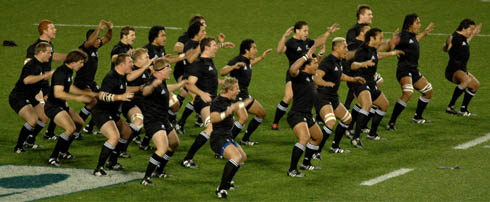
Surprisingly the leaders from a sports and country standpoint are Rugby and Australia and New Zealand who are "light years ahead" of wearable tech in sports
They are ahead in Psyching out their opponents too!


Sensoria demonstrated an exciting interactive future for sports and wearables where we challenge ourselves, other people and are coached by virtual assistants


Sensoria Fitness Shirt with Heart Rate Sensors from Heapsylon on Vimeo.

One of the highlights:Seeing Dick Fosbury of the "Fosbury Flop” Olympic Gold Medal Winner from Mexico 1968 and it turns out he is a Cancer Survivor, has an aneurysm and fully engaged in the intersection between healthcare and wearable technology

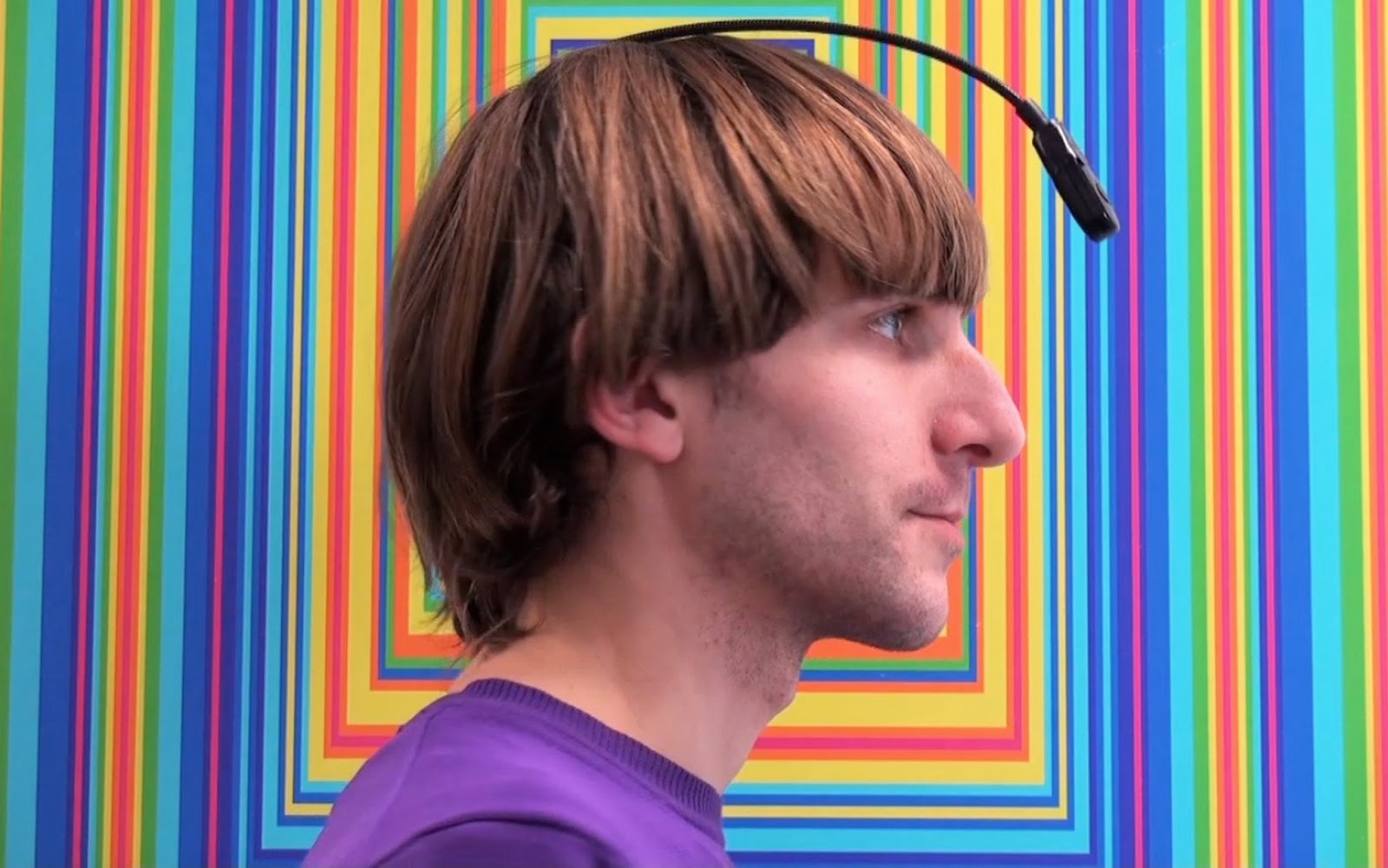
Neil Harbisson - Co-Founder, Cyborg Foundation


who was born totally color blind was definitely at the edge of wearable technology. He has an implanted device that turns color into sound and this is directly fed into his brain. He described that it took 5 weeks for the headaches to stop with this sudden input of data and then 5 months before it just became part of him and he now sees in color.
Here's his TED Talk: I listen in Color

He also has a permanent internet connection in his brain so people cane send him colors and images directly (he joked the address is private - but I did wonder given the ease with which spammers seem to find new addresses how he protects this destination from spam!)
I don't wear technology I am technology, I can't tell the difference between the software & my brain

The healthcare focused panel: Emerging Wearable 2.0 Health Platforms:

The furthest along and well know was probably Misfit wearables (Sonny Vu, CEO) who try and make sensors “disappear” but still simple sensors

OMSignal (Jesse Slade Shantz - Chief Medical Officer) was the most interesting as they are trying to change the monitoring from attached sensors to using fabric that can be loose fitting but can capture physiological information.

Breathometer (Charles Michael Yim - CEO) focus on analyzing your breath and have a range of products directed at health (over and above their simplistic alcohol breathalyzer available today) that assessed fat burning (using acetone) and asthma

NeuroSky (Stanley Yang - CEO) offer a system that other manufacturers can integrate into their wearables. Typically found in mobile phones or headsets

LUMO (Monisha Perkash - CEO & Co-founder) offering a discreet sensor that is designed to help improve your body posture and works as a tracker.

It's an exciting future with some fascinating technology to come - one thing for sure - with ubiquitous technology comes ubiquitous complexity and your voice will become an essential tool for successfully managing and navigating. Dragon Assisatnt is one of several tools built to assist in using and navigating technology that is reinventing the relationship between people and technology


Friday, June 27, 2014

Health Insurance Reform - It's Not a Bumper to Bumper Warranty

We have some Healthcare reform in the US but we are still challenged with a system that is failing to deliver results. This piece recently: America Ranks No. 1 for Over-Priced, Inefficient Health Care featured the chart from the Commonwealth fund

That ranks the US last in a group of 11 industrialized countries.

As he puts it:
There is one way America is clearly exceptional:  we have a healthcare system that is dramatically more expensive than the rest of the industrialized world, but it doesn’t manage to make us any healthier.While  the Affordable Care Act attempts to address access it does little to address the cost of the system and the inefficiencies. This does not require a reduction in premiums it needs to address the costs built in to the system that we are all paying for in on form or another

Dr Hans Duvefelt wrote this piece on the healthcare blog: A Swedish Country Doctor’s Proposal for Health Insurance Reform that draws on his personal experience in "socialized medicine, student health, cash-only practices and government-sponsored rural health clinic working for an underserved, underinsured rural population."

His focus is as a primary care physician but most would agree this is one of the most challenging areas for reform with the shortage in clinicians and low reimbursement rates that is driving doctors out and certainly no encouraging our new generating of clinicians to dive into this essential area.

His main proposals center on basic services that are covered by a flat rate for populations

  • Have the insurance company provide a flat rate in the $500/year range to patients’ freely chosen Primary Care Provider, similar to membership fees in Direct Care Medical Practices.
  • Provide a prepaid card for basic healthcare, free from billing expenses and administration.

but importantly changing the responsibility and feedback on the cost from a central purchasing authority (the government for example) to the user themselves.

  • Unused balances can be rolled over to the following years, letting patients “save” money to cover copays for future elective procedures.

And offers a pathway to specialty care with some appropriate oversight and appriroate levels of reimbursement.

  • Keep prior authorizations for big-ticket items, both testing and procedures, if necessary for the health of the system.
  • Keep specialty care fee-for-service.

 These are clever suggestions and would do much to encourage the patient engagement that will be, as Leonard Kish stated

Patient Engagement is the  Blockbuster drug of the century


He rightly points out that the current health “insurance” products are often poorly named - given that insurance that pays and copiers to identify diseases with screening but then stops short of paying to treat conditions and diseases when they are found through that screening. But most of all Insurance should be user driven and priorities and decision left in the hands of the individual and their clinician and not relegated to others who sit in offices emoted from clinical practice and focused on fiscal drivers not on care and quality fo life

Health insurance is not like anything else we call insurance; all other insurance products cover the unexpected and not the expected. Most people never collect on their homeowners’ insurance, and most people never total their car. Health insurance, on the other hand, is expected by many to be like a bumper-to-bumper warranty that insulates us from every misfortune or inconvenience by covering everything from the smallest and most mundane to the most catastrophic or esoteric.

His point about setting of priorities is important - no matter how you cut it there is no unlimited pot of money o resources to treat everything and everybody. These are difficult conversation and ripe for abuse by those with their own agenda’s through fear mongering and use of emotive terms like “Death Panels”.

None of this aspect of reform is simple but it needs to be addressed and included.

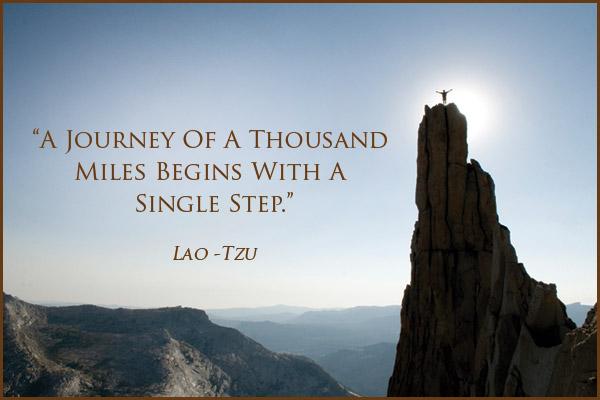
The United Kingdom’s National Health Service (NHS) may not be perfect but they have started this process of addressing the challenge of allocating resources in an open manner. They developed the the quality-adjusted life years measurement (QALY) out of the National Institute for Health and Care Excellence (NICE). There has been criticism and push back as there will always be but the concept and methodology use is not limited to the UK. While imperfect as Laozi (c 604 bc - c 531 bc) stated:
A journey of a thousand miles begins with a single step


There is lots of detail in this piece and I would encourage you to go over and read it

Monday, April 21, 2014

How Americans Die

How Americans Die
This is a fantastic visual presentation of data that you can look at in more detail on the Bloomberg Site
Error: Embedded data could not be displayed.
If the embedded page does not work head over there directly here


The main points highlighted
  • The mortality rate fell by about 17 percent from 1968 through 2010, years for which we have detailed data...Almost all of this improvement can be attributed to improved survival prospects for males
  • The surge in for 25- to 44-year-olds was caused by AIDS, which at its peak, killed more than 40,000 Americans a year (more than 30,000 of whom were 25 to 44 years old)
  • AIDS was the single biggest killer of Americans who should otherwise have been in the prime of their lives (Sobering Statistic)
  • 45- to 54-year-olds are less likely to die from disease, they have become much more likely to commit suicide or die from drugs
  • How does suicide and drugs compare to other violent deaths across the population? Far greater than firearm related deaths, and on the rise. (Suicide and has recently become the number one violent cause of death) - (Sad Statistic)
  • The downside of living longer is that it dramatically increases the odds of getting dementia or Alzheimer's
  • The rise of Alzheimer's and other forms of dementia has had a big impact on health-care costs because these diseases kill their victims slowly. About 40 percent of the total increase in Medicare spending since 2011 can be attributed to greater spending on Alzheimer's treatment

They do a great job of slicing the data by cohorts of age groups showing how much we have improved mortality and how our 25 and under age group is benefiting from the health improvements with the lower mortality and higher life expectancy than any other cohrot

Friday, April 18, 2014

Giving Personal Health Advice to Family and Friends

In an interesting post on the medscape site (subscription/registration probably required): The Pitfalls of Giving Free Advice to Family and Friends Shelly Reese described some of the challenges of giving medical advice

to friends and family (even if you are a wannabe Dr Phil).

As she puts it the path can sometimes lead to challenging areas of ethics and professional boundaries.
How do you address or deflect such requests? Unfortunately, there are no easy answers. It depends a lot on you, your boundaries, and the situation.
And she links to the AMA Guidelines
The American Medical Association (AMA) Code of Medical Ethics is clear, however: "Physicians generally should not treat themselves or members of their immediate families."[1] The statement goes on to provide an extensive list of good reasons why, including personal feelings that may unduly influence medical judgment, difficulty discussing sensitive topics during a medical history, and concerns over patient autonomy (Ref: American Medical Association. Code of Medical Ethics Opinion 8.19: Self-treatment or treatment of immediate family members. Issued June 1993.)
Some of the challenges of simple advice include

  • Escalation to more complex or persistent advice 
  • Long distance diagnosis with missing data
  • Lack of Doctor/Patient relationship and documentation
  • Litigation
  • Impaired judgement 
  • Changing and coloring of relationships

In one section she describes the challenges of dealing with family members and says
"I try not to give too much medical advice, even to my parents. I see my role as an advocate: to help them synthesize information when they have questions. When my mother calls and says, 'I'm short of breath and I don't know what to do,' I walk her through all the things her doctor has talked to her about: Have you taken your blood pressure and pulse? Do you know how many times you're breathing per minute?"
Good advice on being the patient advocate and healthcare manager for your family members (which many already are)
In the end it boils down to personal judgement and your own boundaries.
Questions are appropriate and to be expected, Caplan says, but doctors have to wrestle with themselves in determining how to respond if they're to act responsibly and ethically. "When close friends and family ask for medical advice, that's always a matter for introspection, and at the end of the day, it's not resolved by codes of ethics but by considered individual judgments."
It used to be as the trusted source of knowledge where access to information was limited this was a significant responsibility but with the age of

and medical applications like
AskMD, iTriage and HealthTap to mention a few you might find there is fewer and fewer requests. So for those of you that like the opportunity to help others out...enjoy it while you can mHealth and Telemedicine may be changing the landscape and soon!

Tuesday, January 28, 2014

Vaccines Don't Cause Autism - Vaccinate your Kids

It can be frustrating to be a clinician in the era of the internet and instantaneous availability of data especially when the reliability and accuracy is variable. But this is the world we live in and there is plenty of data showing that patients are accessing information in ever increasing numbers. The challenge has been helping patients filter the data for both relevance and accuracy.
Vaccination has been at the epicenter of a these challenges for some years - in fact long before the wide spread use of the internet thanks to a piece published in The Lancet in 1998  and unusually retracted. In fact the BMJ published a paper in 2011 declaring the paper fraudulent - as they noted in the discussion the lead author (now stripped of his medical degree and academic credentials) was clearly actively perpetrating the fraud
Who perpetrated this fraud? There is no doubt that it was Wakefield. Is it possible that he was wrong, but not dishonest: that he was so incompetent that he was unable to fairly describe the project, or to report even one of the 12 children’s cases accurately? No. A great deal of thought and effort must have gone into drafting the paper to achieve the results he wanted: the discrepancies all led in one direction; misreporting was gross. Moreover, although the scale of the GMC’s 217 day hearing precluded additional charges focused directly on the fraud, the panel found him guilty of dishonesty concerning the study’s admissions criteria, its funding by the Legal Aid Board, and his statements about it afterwards
Sadly despite repeated studies and investigations. Despite the retraction of the original article by the Lancet. Despite the other authors personally retracting the paper we still hear about a “link”. Sadly some high profile individuals continue to perpetrate the fraud (notably the model Jenny McCarthy and most recently the “reporter” Katie Couric).
I saw the posting by Aaron Carroll MD, MS is a Professor of Pediatrics and Assistant Dean for Research Mentoring at Indiana University School of Medicine (the Incidental Economist) last week when he posted this map of the real effects of this in Vaccine Preventable Outbreaks (click on the map button on the left if necessary)
In fact Dan Munro posted his own take on this piece: Big Data Crushes Anti-Vaccination Movement. As he sadly notes
Add a well known celebrity (or two) and the effects can be powerful, long term and hard to refute.
 And ss Dr Carroll notes the impact can be seen in the chart above:
  • All of that red, which seems to dominate? It’s measles. It’s even peeking through in the United States, and it’s smothering the United Kingdom.
  • If you get rid of the measles, you can start to see mumps. Again, crushing the UK and popping up in the US.
  • Both measles and mumps are part of the MMR vaccine.
  • Almost all the whooping cough is in the United States.
But the best part of this post is his accompanying video - included below - well worth watching the full 8 minutes
Expertly and accurately put.
Vaccinate your kids….please.


Friday, December 13, 2013

23 and Me and

The FDA issued a warning letter to 23andMe on Nov 22, 2013. There followed a slew of articles, posts, tweets and commentary - amongst the many
And this piece on Forbes on the class action suit and this older piece that talked about the service before this news hit and then followed up with this piece "23andMe Saga Doesn’t Bode Well for EMR Genetics Integration" and David Katz: Return to Sender, Genome Unknown: Seven Reasons I Will Return My Personal Genome Kit

Declaration: I am a 23andMe customer - I liked the concept and was excited by the price point that made the service accessible and cost effective...so maybe that explains my quick reaction (per the Kübler-Ross model of grief of Denial, Anger, Bargaining, Depression, Acceptance) to many of the posts and negative feedback pushing back.

I am still processing the news and not sure exactly where I sit - personally I am glad I got in before the health information was blocked. Maybe this is a purely personal position coming from the privilege of being a physician. In fact this piece on Forbes/Quora: What Do Doctors Think About 23andme?
probably captures the viewpoint I have different from others. In fact the images summarize how many people might approach this
Hmmm - you can see the logic and while the point made that not all information is relevant or important my view is firmly on the side of the patient being allowed to make that decision themselves.  It is always worrying to me that someone else is filtering information and making decisions as to what they consider to be important to me - how can they know?

The example cited is one of a fit healthy individual making a decision based on genetic testing that suggests they might be at increased risk of cardiac disease that needs to be put int he context of them being fit and healthy
In fact they state
This is why every ethical healthcare provider follows this mantra: do not order a test or perform a procedure if it will not change your management of the patient, because doing so may cause needless harm/risk to the patient and will cause needless damage to the patient’s finances.
A reasonable position and one perhaps we might expect the FDA to support.....yet the FDA allows for direct to consumer advertising in the US.....? That seems at odds with the stance taken on genetic testing. There is no doubting that extra testing can cause additional stress and concern - putting everyone into an MRI is a bad idea since we identify around 20% "findings" many (may even be most) of which are incidental. I personally am delighted with my 23andMe results that include genetic details and insights that help me make my own personal health decisions.

I gave up personal genetic information to 23andMe who like any other cooperation could misuse it, may not protect it sufficiently or may share it with insufficient privacy protections to shield me from being identified. But that was my choice and in this instance I felt the risks outweighed the benefits.

But the cynic in me can't help but think that this may all be money related especially given the recent spat over the BRCA gene testing that was recently struck down but remains the tip of the patent iceberg.

This piece on KevinMD: 23andMe and the FDA: Did the government overreach? probably captures my basic views on the subject. As Dr Marroquin states
One worry is that people might undergo unnecessary tests and procedures based on the information 23andMe provides.  For example, critics worry that a woman who is found to have a false-positive BRCA mutation might have a prophylactic mastectomy inappropriately.  This seems to me to be an impractical concern.  It is difficult imagine a surgeon operating in such a situation without first verifying the genetic testing through another lab and extensively discussing the benefits and risks of such an approach with the patient.
Quite - it might create a worthwhile discussion between a patient and their healthcare provider. In another example the risk of Alzheimer's which a customer might feel powerless to prevent but I would suggest that this may not be true in the future and as one friend and colleague told me when he shared his results that showed an increase risk of Alzheimer's:
It just means I am going to play more sudoku as I get older
That seemed like a good strategy and attitude. It is also important to note:
It turns out, however, that people seem to be less psychologically devastated by adverse genetic test results than many of the experts anticipated.  For instance, a study published in the New England Journal of Medicine found that “in sample of subjects who completed follow-up after undergoing consumer genomewide testing, such testing did not result in any measurable short-term changes in psychological health, diet or exercise behavior, or use of screening tests.
On balance I'd rather have the choice than have the government make decisions about what data I can access. I say this with all due respect to my clinical colleagues who may disagree and the many that had exchanges with me in other social media forums.

I would also explicitly state that this is a personal view and does not represent that of my employer nor does it represent clinical guidance.


Tuesday, November 26, 2013

Thanksgiving, Decency and End of Life - Be Thankful you had the conversation now #health

Patients deserve the same standard and car that doctors receive when they need treatment. But as I have said before (Doctors Die Differently and more recently Treatment Creep in Medicine - sucking Decency out of Patients) we remain challenged especially when it comes to dying.

This piece by Dan Gorenstein, How Doctors Die: Showing Others the Way touched on these issues in a moving a thoughtful way.

Dr. Elizabeth D. McKinley’s battled breast cancer for 17 years but this past spring discovered the cancer had spread to her liver, lungs and brain. Her choice was to undergo more treatment that would have potentially debilitating and mind altering effects on her or change course, accept death and work on getting the best out of what was left of her life...as she put it
..time with her husband, a radiologist, and their two college-age children, and another summer to soak her feet in the Atlantic Ocean...“a little more time being me and not being somebody else.” 
And some of her fight was with her own family - the non-medical members
clinging to the promise of medicine as limitless
And the medical members of her family (her husband is a radiologist)
looking at her disease as doctors, who know the limits of medicine
Its not a difference in the effects of disease and death but rather an advantage of knowledge and information that lead to truly informed decisions "doctors have control over their quality of life before they die and this sadly is control that eludes most other members of society" and it would appear especially try here in the USA. More than half of deaths take place in hospital and not at home surrounded by people we love which is the way most say they want to "go".

So if you do nothing else this Thanksgiving - take the time to talk about the subject with the people you love and create and advance directive or living will. In many respects no better way to be thankful than to set out what is important and let everyone know, now when you are fit and healthy.

Wishing you all a very happy family and friend fill Thanksgiving


Tuesday, October 29, 2013

The Future of Healthcare as Seen Through the Eyes of @kpTotalHealth with @Tedeytan #HealthIT

I posted a piece that was published on FastCompany site at the end of last month:


It included a link to an original concept from the innovative Kaiser founder Dr Sidney R. Garfield


I shared this with my wife who is an accomplished midwife (she stopped counting her deliveries after she hit 1,000) and we both shared a laugh but as she pointed out - at the time it was a brilliant compromise between two competing interest:

On the one hand you have healthcare wanting to help mothers rest after giving birth
On the other hand you have mothers who's genes are screaming at them - be with your baby

In this particular instance the National Health Service (NHS) in England was ahead of its time, guided by an experienced and well respected cadre of midwives who promoted and encouraged rooming in of babies when they were born. We experienced this with our children but our youngest was born here in the United States and at the time it was a fight to stop the nurses from removing our daughter from the room

I had the privilege of visiting the Kaiser Total Health facility and spent an invigorating few hours with Dr Ted Eytan, Physician Director in the Kaiser Permanente Federation (@TedEytan and his blog)

He was kind enough to reply to my article in a tweet:
And the details even appeared in the wall of knowledge with the background that I captured here:


Ted shared a link to the original history
KP’s ‘Baby in the Drawer’ Helped Turn the Tide Back to Breastfeeding Babies after World War II Which tells the story of the driver on this innovation centered around better outcomes from keeping mothers and babies together:
Sidney R. Garfield he had read an interesting article about the now famous Yale University School of Medicine research experiments with rooming-in for mothers and babies
Kaiser Permanente has continued their continued innovation - Small Hospital, Big Idea which continues and contributes to their impressive growth:
An Impressive and consistent increase in Patients

All this is embodied in the Kaiser Total Health Center that brings together existing and new technology in innovative ways. Everything from the large screen introduction:

 Through to the handheld ultrasound device:

It includes patient education with the explosion of the obesity epidemics - captured in this video graphic


The mock up health room 
Mock up Patient Examination Room

and placed working technology in the reach of innovators, patients and clinicians

3-D Visualization for Patient Engagment on Medication
 and simple technology - but so important - two hand sets for one phone so patient and health care worker can both listen in to the same conversation with immediate availability for language translation (I'm willing to be we won't need a telephone for this simultaneous translation in the near future)

and the room and facility continues to be updated:

No doubt Ted who is is currently exploring the GoogleGlass Innovation (you can read about his exploration here in his blog "The USA #ThroughGlass") will be including some of his google glass experiences as they learn more about this innovation

I believe

Paper and manilla folders will become a thing of the past relegated to museums

this will be true and perhaps when I am lying in my hospital bed will look back at this age and think
Mostly, I know that someday, someone in my same CMIO and MD shoes will think how silly it was that doctors actually hand-typed patient notes