Showing posts with label Personal Health Management. Show all posts

Monday, January 26, 2015

Will 2015 be the year your watch teaches you about your health?


There is no known medical condition that enables an individual to predict the future. While such an ability would be extremely useful for myriad reasons, we have, instead, learned to hone and leverage our analytic skills to deduce what might occur, relying on the data we cull and parse to help forecast the future. So, when it comes to predicting the year ahead, we should consider the one we just had.

Regardless of which side of the exam table you sit, we’re all healthcare consumers

Consumer technology is often a good indicator of what type of capabilities and functionalities might be in store for health IT. This past year, we saw major players in the tech space announce their forays into healthcare. While this will not be without its challenges, it does not diminish the underlying fact that there is a need and want for better technology in healthcare— regardless of whether you are a patient looking to effectively manage your weight or a physician struggling to juggle patient care and administrative duties.

In the last year, we saw a wave of next-generation wearable devices flood the market, and as a result, we, as patient consumers, now have streamlined access to information such as our daily step count and average heart-rate on our watches. We know that ease-of-use, understandability, and some level of gameification:
“Congratulations! You’ve reached your target heart rate today!”

are vital to maintaining engagement.

I believe this is the beginning of something much larger, a groundswell movement that will result in patients wanting more information about their health data, and, more importantly, craving a better understanding of what all these numbers actually mean and how to positively impact them. Achieving this level of engagement demands a simpler intelligent interface that doesn’t require a learning curve, but is one that consumers can just use. Clever user interface designs can only go so far, particularly given the small visual real estate available on wearable devices, and the addition of capabilities such as intelligent voice assistants will be an integral part of this explosion of personal health management.

Having a heart-to-heart about your heart

Technology holds the potential to create clinical synergy, bringing patient consumers (who have become professional health IT consumers, or health prosumers) better intelligence about their personal health data and outlining the proactive measures they can take to become better partners in their own health. The average patient consumer may not have a reaction to the phrase

“Your Protime this week is 3.3,” but for someone with a heart condition, this number is very important and indicates how fast her blood is clotting. The data, while extremely useful to a clinician, is only helpful to the patient if she understands what it means and how she can take the right actions as a result.

The future is about patients managing their own care and working alongside clinicians to drive better outcomes. To the woman who has a Protime of 3.3, access to these results supplemented with clinical guidelines would mean that she wouldn’t need to wait for her physician to call with diet recommendations, she would know her blood is clotting too slowly and that she might have an inadequate protein consumption or might need to increase her vitamin K intake. If the number required that her Coumadin dosage be adjusted, this would be the point where her physician would reach out to her to discuss.

Although a basic example, it is one that has endless permutations when it comes to building a more engaged patient population. There is no one more invested in your health than you, and the person who cares the next most about keeping you well, is your physician. I believe that clinical synergy will be driven by both patients, who want to actively manage their chronic conditions and take meaningful preventative care measures, and physicians who want to empower their patients to better understand how the choices they make have significant health implications. Technology is the connective fiber that can enable the transmission of this important data, and help translate it into wisdom. And that truly is the crux—the data flowing between patient and physician must be relevant and meaningful. That ability for technology to determine the relevancy of health data information is just around the corner and soon our wearables will be able to notify our health information data that deviates from our personal “normal” results.

Approximately 75 percent of U.S. healthcare expenditure is related to chronic care management, imagine the impact this level of clinical synergy will have on driving a healthier population while reducing cost. I’m ready, are you?

This post originally appeared on WhatsNext


Monday, November 10, 2014

Dunkirk Spirit: How physicians support patients overcoming adversity

This article originally appeared on WhatsNext: Healthcare
One in eight U.S. women will develop invasive breast cancer over the course of her lifetime.  In 2014 alone, an estimated 295,000 new cases of invasive breast cancer are expected to be diagnosed.  That’s approximately 808 cases per day.

That’s ~640 cases per day or a little over 1 case per hour (26 per day)1

But these statistics don’t matter.  Whether it’s one-in-eight or one-in-3 million, the impact of the illness is what matters—not the numbers.  It immediately becomes a reality to you.  We can never forget that healthcare is personal, something my colleague, Melissa Dirth, articulated beautifully in her recent post “When 1 in 8” was no longer just a statistic to me.”


As a physician, sharing unfavorable findings and test results is always a sobering moment, no matter how many times you’ve done it before.  We all struggle to find the right words, and look for ways to be supportive as you allow your patient to handle the shock that accompanies such news.  We all have different viewpoints and our perspective on the disease is colored by our own life experiences and the individual circumstances.

What never ceases to amaze me, however, is the strength of the human spirit.  Despite the hard road stretching before them, so many of our patients face breast cancer with what the British would term “Dunkirk Spirit,” that inner strength that helps patients and their families overcome tremendous adversity.

Dunkirk Spirit


It is, in my opinion, one of the reasons that make cancer sufferers and survivors such an important and compelling tableau of courage.

Unfortunately, one of the essential elements that quickly becomes lost in the morass of technology is the Art of Medicine, and our ability as doctors to spend the time focused on our patient and their relatives.  As clinicians, we intuitively know the statistics associated with the disease and can interpret them to understand the impact the diagnosis we have just communicated with the patient is likely to have, but there is so much more to providing care.  We don’t just treat the condition, the physical body—we are caregivers and healers, and we seek to help the whole patient.

Technology can help in healthcare, but it is not the goal nor should it ever be the focus.  Yet, in some cases, it has detracted from our ability to provide care and compassion.  To deliver on the promise of great healthcare we have to return to the Art of Medicine and enable, not disable, our clinicians with the technology we develop.

To learn more about the role technology plays in the Art of Medicine, read: “There’s no room in technology in end-of-life care decisions"

Monday, April 21, 2014

How Americans Die

How Americans Die
This is a fantastic visual presentation of data that you can look at in more detail on the Bloomberg Site
Error: Embedded data could not be displayed.
If the embedded page does not work head over there directly here


The main points highlighted
  • The mortality rate fell by about 17 percent from 1968 through 2010, years for which we have detailed data...Almost all of this improvement can be attributed to improved survival prospects for males
  • The surge in for 25- to 44-year-olds was caused by AIDS, which at its peak, killed more than 40,000 Americans a year (more than 30,000 of whom were 25 to 44 years old)
  • AIDS was the single biggest killer of Americans who should otherwise have been in the prime of their lives (Sobering Statistic)
  • 45- to 54-year-olds are less likely to die from disease, they have become much more likely to commit suicide or die from drugs
  • How does suicide and drugs compare to other violent deaths across the population? Far greater than firearm related deaths, and on the rise. (Suicide and has recently become the number one violent cause of death) - (Sad Statistic)
  • The downside of living longer is that it dramatically increases the odds of getting dementia or Alzheimer's
  • The rise of Alzheimer's and other forms of dementia has had a big impact on health-care costs because these diseases kill their victims slowly. About 40 percent of the total increase in Medicare spending since 2011 can be attributed to greater spending on Alzheimer's treatment

They do a great job of slicing the data by cohorts of age groups showing how much we have improved mortality and how our 25 and under age group is benefiting from the health improvements with the lower mortality and higher life expectancy than any other cohrot

Friday, December 13, 2013

23 and Me and

The FDA issued a warning letter to 23andMe on Nov 22, 2013. There followed a slew of articles, posts, tweets and commentary - amongst the many
And this piece on Forbes on the class action suit and this older piece that talked about the service before this news hit and then followed up with this piece "23andMe Saga Doesn’t Bode Well for EMR Genetics Integration" and David Katz: Return to Sender, Genome Unknown: Seven Reasons I Will Return My Personal Genome Kit

Declaration: I am a 23andMe customer - I liked the concept and was excited by the price point that made the service accessible and cost effective...so maybe that explains my quick reaction (per the Kübler-Ross model of grief of Denial, Anger, Bargaining, Depression, Acceptance) to many of the posts and negative feedback pushing back.

I am still processing the news and not sure exactly where I sit - personally I am glad I got in before the health information was blocked. Maybe this is a purely personal position coming from the privilege of being a physician. In fact this piece on Forbes/Quora: What Do Doctors Think About 23andme?
probably captures the viewpoint I have different from others. In fact the images summarize how many people might approach this
Hmmm - you can see the logic and while the point made that not all information is relevant or important my view is firmly on the side of the patient being allowed to make that decision themselves.  It is always worrying to me that someone else is filtering information and making decisions as to what they consider to be important to me - how can they know?

The example cited is one of a fit healthy individual making a decision based on genetic testing that suggests they might be at increased risk of cardiac disease that needs to be put int he context of them being fit and healthy
In fact they state
This is why every ethical healthcare provider follows this mantra: do not order a test or perform a procedure if it will not change your management of the patient, because doing so may cause needless harm/risk to the patient and will cause needless damage to the patient’s finances.
A reasonable position and one perhaps we might expect the FDA to support.....yet the FDA allows for direct to consumer advertising in the US.....? That seems at odds with the stance taken on genetic testing. There is no doubting that extra testing can cause additional stress and concern - putting everyone into an MRI is a bad idea since we identify around 20% "findings" many (may even be most) of which are incidental. I personally am delighted with my 23andMe results that include genetic details and insights that help me make my own personal health decisions.

I gave up personal genetic information to 23andMe who like any other cooperation could misuse it, may not protect it sufficiently or may share it with insufficient privacy protections to shield me from being identified. But that was my choice and in this instance I felt the risks outweighed the benefits.

But the cynic in me can't help but think that this may all be money related especially given the recent spat over the BRCA gene testing that was recently struck down but remains the tip of the patent iceberg.

This piece on KevinMD: 23andMe and the FDA: Did the government overreach? probably captures my basic views on the subject. As Dr Marroquin states
One worry is that people might undergo unnecessary tests and procedures based on the information 23andMe provides.  For example, critics worry that a woman who is found to have a false-positive BRCA mutation might have a prophylactic mastectomy inappropriately.  This seems to me to be an impractical concern.  It is difficult imagine a surgeon operating in such a situation without first verifying the genetic testing through another lab and extensively discussing the benefits and risks of such an approach with the patient.
Quite - it might create a worthwhile discussion between a patient and their healthcare provider. In another example the risk of Alzheimer's which a customer might feel powerless to prevent but I would suggest that this may not be true in the future and as one friend and colleague told me when he shared his results that showed an increase risk of Alzheimer's:
It just means I am going to play more sudoku as I get older
That seemed like a good strategy and attitude. It is also important to note:
It turns out, however, that people seem to be less psychologically devastated by adverse genetic test results than many of the experts anticipated.  For instance, a study published in the New England Journal of Medicine found that “in sample of subjects who completed follow-up after undergoing consumer genomewide testing, such testing did not result in any measurable short-term changes in psychological health, diet or exercise behavior, or use of screening tests.
On balance I'd rather have the choice than have the government make decisions about what data I can access. I say this with all due respect to my clinical colleagues who may disagree and the many that had exchanges with me in other social media forums.

I would also explicitly state that this is a personal view and does not represent that of my employer nor does it represent clinical guidance.


Monday, December 2, 2013

Virtual Assistants in your Future - Personal Healthcare Delivered

You can always rely on Hollywood to take concepts and extend them into the future - sometimes correctly (cloaking, holographic TV, forcefields and eco skeletons with mind control), sometimes incorrectly (aluminum dresses, atmosphere that is completely controlled, suspension bridge apartment housing). We have had speech recognition and Spock's request:

So it was no surprise to find the latest Hollywood idea is the "Her" - a lonely writer develops a relationship with a newly developed operation system

Intriguing and challenging our current concepts with an exploration of artificial intelligence, voice and natural language technologies. These new styled avatars understand, listen and decipher what we say and something that Nuance has been developing and reinventing the relationship that people and technology can have. We can engage with our devices on our own terms and we have show these concepts in healthcare with our very own Florence - who is getting ready to launch in 2014

Ambitious you say - maybe but imagine the environment with intelligent personal assistants that hear you, understand you, know your likes and preferences – and in our world exist across your doctors office, the phone, surgery, hospital and elderly care and hospice. Cool? Liberating? Impossible?
If you’re Nuance, the idea is not only brilliant – it’s our focus and drive as we reinvent the relationship between people and technology. It is the chance to connect with your devices on human terms and presents infinite possibilities for intuitive interfaces that adapt to you.
Liberating our clinicians to focus on the patient and providing patients with someone they can talk to, interact with and who does have time for them. That future - coming to a doctors office near you:

Tuesday, November 26, 2013

Thanksgiving, Decency and End of Life - Be Thankful you had the conversation now #health

Patients deserve the same standard and car that doctors receive when they need treatment. But as I have said before (Doctors Die Differently and more recently Treatment Creep in Medicine - sucking Decency out of Patients) we remain challenged especially when it comes to dying.

This piece by Dan Gorenstein, How Doctors Die: Showing Others the Way touched on these issues in a moving a thoughtful way.

Dr. Elizabeth D. McKinley’s battled breast cancer for 17 years but this past spring discovered the cancer had spread to her liver, lungs and brain. Her choice was to undergo more treatment that would have potentially debilitating and mind altering effects on her or change course, accept death and work on getting the best out of what was left of her life...as she put it
..time with her husband, a radiologist, and their two college-age children, and another summer to soak her feet in the Atlantic Ocean...“a little more time being me and not being somebody else.” 
And some of her fight was with her own family - the non-medical members
clinging to the promise of medicine as limitless
And the medical members of her family (her husband is a radiologist)
looking at her disease as doctors, who know the limits of medicine
Its not a difference in the effects of disease and death but rather an advantage of knowledge and information that lead to truly informed decisions "doctors have control over their quality of life before they die and this sadly is control that eludes most other members of society" and it would appear especially try here in the USA. More than half of deaths take place in hospital and not at home surrounded by people we love which is the way most say they want to "go".

So if you do nothing else this Thanksgiving - take the time to talk about the subject with the people you love and create and advance directive or living will. In many respects no better way to be thankful than to set out what is important and let everyone know, now when you are fit and healthy.

Wishing you all a very happy family and friend fill Thanksgiving


Tuesday, October 29, 2013

The Future of Healthcare as Seen Through the Eyes of @kpTotalHealth with @Tedeytan #HealthIT

I posted a piece that was published on FastCompany site at the end of last month:


It included a link to an original concept from the innovative Kaiser founder Dr Sidney R. Garfield


I shared this with my wife who is an accomplished midwife (she stopped counting her deliveries after she hit 1,000) and we both shared a laugh but as she pointed out - at the time it was a brilliant compromise between two competing interest:

On the one hand you have healthcare wanting to help mothers rest after giving birth
On the other hand you have mothers who's genes are screaming at them - be with your baby

In this particular instance the National Health Service (NHS) in England was ahead of its time, guided by an experienced and well respected cadre of midwives who promoted and encouraged rooming in of babies when they were born. We experienced this with our children but our youngest was born here in the United States and at the time it was a fight to stop the nurses from removing our daughter from the room

I had the privilege of visiting the Kaiser Total Health facility and spent an invigorating few hours with Dr Ted Eytan, Physician Director in the Kaiser Permanente Federation (@TedEytan and his blog)

He was kind enough to reply to my article in a tweet:
And the details even appeared in the wall of knowledge with the background that I captured here:


Ted shared a link to the original history
KP’s ‘Baby in the Drawer’ Helped Turn the Tide Back to Breastfeeding Babies after World War II Which tells the story of the driver on this innovation centered around better outcomes from keeping mothers and babies together:
Sidney R. Garfield he had read an interesting article about the now famous Yale University School of Medicine research experiments with rooming-in for mothers and babies
Kaiser Permanente has continued their continued innovation - Small Hospital, Big Idea which continues and contributes to their impressive growth:
An Impressive and consistent increase in Patients

All this is embodied in the Kaiser Total Health Center that brings together existing and new technology in innovative ways. Everything from the large screen introduction:


 Through to the handheld ultrasound device:

It includes patient education with the explosion of the obesity epidemics - captured in this video graphic


The mock up health room 
Mock up Patient Examination Room

and placed working technology in the reach of innovators, patients and clinicians

3-D Visualization for Patient Engagment on Medication
 and simple technology - but so important - two hand sets for one phone so patient and health care worker can both listen in to the same conversation with immediate availability for language translation (I'm willing to be we won't need a telephone for this simultaneous translation in the near future)

and the room and facility continues to be updated:

No doubt Ted who is is currently exploring the GoogleGlass Innovation (you can read about his exploration here in his blog "The USA #ThroughGlass") will be including some of his google glass experiences as they learn more about this innovation

I believe

Paper and manilla folders will become a thing of the past relegated to museums

this will be true and perhaps when I am lying in my hospital bed will look back at this age and think
Mostly, I know that someday, someone in my same CMIO and MD shoes will think how silly it was that doctors actually hand-typed patient notes

Monday, October 7, 2013

Consumer Reports on Healthcare - Can #HealthIT Fix the Problems

Consumer reports published a Medical Gripes report What bugs you most about your doctor?
We asked 1,000 people about their biggest medical gripes recently

It included the chart "Grip-o-Meter"
What struck me was the number of elements that could be addressed using Healthcare Technology (HealthIT). While technology may not be a panacea it is a tool to help resolve problems, improve efficiency and ease communication and flow of information

For example - "Test Results not communicated fast". In the current day and age of instant communications, mobile phones and messaging why is it patients are left waiting hours, days sometimes weeks to receive a test result. There has been some push back by the medical profession on releasing results without allowing the doctor an opportunity to explain or contact the patient. IN one site they offer this compromise - test results are held for 24 hours maximum to offer the doctor a chance o reach out to the patient but if they have not the results are automatically released anyway.

Given the pressure of time and the challenges we face with resources and the too frequent occurrences of missed communication of results sometimes resulting in poor outcomes it would seem offering an automated results communication tool to all patients would be a simple step in improving satisfaction? If I can get an automated alert when my favorite team is playing, when the score is close capturing a cell phone number when we carry out a test and using this for outbound messaging seems like an obvious step and one that #HealthIT could play a role.

I bet others could see ideas based on the other "Gripes" - send me a note or leave a comment and I'll pull this together into a more detail post


Tuesday, April 2, 2013

Science at Work - Number Of Early Childhood Vaccines Not Linked To Autism

A new study from the Centers for Disease Control and Prevention finds no link between the number of vaccinations a young child receives and the risk of developing autism spectrum disorders.

A new study from the Centers for Disease Control and Prevention finds no link between the number of vaccinations a young child receives and the risk of developing autism spectrum disorders.

Jeff J. Mitchell/Getty Images

A large new government study should reassure parents who are afraid that kids are getting autism because they receive too many vaccines too early in life.

The study, by researchers at the Center for Disease Control and Prevention, found no connection between the number of vaccines a child received and his or her risk of autism spectrum disorder. It also found that even though kids are getting more vaccines these days, those vaccines contain many fewer of the substances that provoke an immune response.

The study offers a response to vaccine skeptics who have suggested that getting too many vaccines on one day or in the first two years of life may lead to autism, says Frank DeStefano, director of the Immunization Safety Office of the CDC.

To find out if that was happening, DeStefano led a team that compared the vaccine histories of about 250 children who had autism spectrum disorder with those of 750 typical kids. Specifically, the researchers looked at what scientists call antigens. An antigen is a substance in a vaccine that causes the body to produce antibodies, proteins that help fight off infections.

The team looked at medical records to see how many antigens each child received and whether that affected the risk of autism. The results, published in The Journal of Pediatrics, were unequivocal.

"The amount of antigens from vaccines received on one day of vaccination or in total during the first two years of life is not related to the development of autism spectrum disorder in children," DeStefano says.

The finding came as no surprise to researchers who study the immune system, DeStefano says. After all, he says, kids are exposed to antigens all the time in the form of bacteria and viruses. "It's not really clear why a few more antigens from vaccines would be something that the immune system could not handle," he says.

The study also found that even though the number of vaccines has gone up, the number of antigens in vaccines has gone down markedly. In the late-1990s, the vaccination schedule exposed children to several thousand antigens, the study says. But by 2012, that number had fallen to 315.

That dramatic reduction occurred because vaccines have become much more precise in the way they stimulate the immune system, DeStefano says.

“ The sad part is, by focusing on the question of whether vaccines cause autism spectrum disorders, [researchers are] missing the opportunity to look at what the real causes are. It's not vaccines.

- Ellen Wright Clayton, professor of pediatrics, Vanderbilt University

Hardcore vaccine skeptics are unlikely to be swayed by the new research. But many worried parents should be, says Ellen Wright Clayton, a professor at Vanderbilt University who helped write a report on vaccine safety for the Institute of Medicine.

"I certainly hope that a carefully conducted study like this will get a lot of play, and that some people will find this convincing," Clayton says. That would let researchers pursue more important questions, she says.

"The sad part is, by focusing on the question of whether vaccines cause autism spectrum disorders, they're missing the opportunity to look at what the real causes are," she says. "It's not vaccines."

Autism Speaks, a major advocacy and research group, seems ready to move beyond the vaccine issue. Geraldine Dawson, the group's top scientist, praised the new study and says the result should clear the way for research on other potential causes of autism.

These include factors like nutrition, which can affect a baby's brain development in the womb, Dawson says. Other factors could include medications and infections during pregnancy, she says, or an infant's exposure to pesticides or pollution.

"As we home in on what is causing autism, I think we are going to have fewer and fewer questions about some of these things that don't appear to be causing autism," Dawson says.

More coverage and science referring to a recent study showing no link between vaccines and autism. This was covered in the SBM Site
The Final Nail in the Coffin - sorry if some of yo have trouble getting to the site as it appears to be having problems

As one commentator articulated


"The sad part is, by focusing on the question of whether vaccines cause autism spectrum disorders, they're missing the opportunity to look at what the real causes are, It's not vaccines."

If you are interested in a detailed analysis of the science and statistical analysis the SBM article is excellent. The analysis


They sliced and diced the data in a variety of ways looking for correlations and didn’t find any

And does an in depth debunking of the lack of science in the broadside from antivaccinationists who's fear mongering seems to date back to the widely and roundly debunked falsification of data by Andrew Wakefield that was described as the most damaging medical hoax of the last 100 years. He was struck of the GMC register and barred from ever practicing medicine in the UK.

As David Gorski in his title the study had not intended to disprove the relationship between the "toxins" used as part of vaccine make up. This study came as close as one can to disproving that relationship:


Which brings us to “too many too soon.” It appeared to be a “hypothesis” that was impossible to falsify, but DeStefano et al came about as close as it’s ethically possible to do to falsifying the hypothesis. No wonder that all that antivaccinationists are left with are calls for “vaxed versus unvaxed” studies and pharma shill ranting.

Science at work!

Posted via email from drnic's posterous

Wednesday, January 30, 2013

Doctors Die Differently

It was this podcast, "The Bitter End"

From the awesome radio show radiolab that covered a topic that people are often reluctant to discuss but is an important part of our reality...as they say there are few things in life but birth death (and taxes) are at the top of the list.

The piece included a review from the Johns Hopkins (Study of a LifeTime) of people's desires when it comes to life saving treatments especially as it relates to end of life:

Preferences of physician-participants for treatment given a scenario of irreversible brain injury without terminal illness. Percentage of physicians shown on the vertical axis. For cardiopulmonary resuscitation (CPR), surgery, and invasive diagnostic testing, no choice for a trial of treatment was given. Data from the Johns Hopkins Precursors Study, 1998. Courtesy of Joseph Gallo, "Life-Sustaining Treatments: What Do Physicians Want and Do They Express Their Wishes to Others?"

For some simple questions such as:

  • Would you want CPR administered
  • Would you want Artifical Ventilation administered
  • Would you want Dialysis administered
  • Would you want a Feeding Tube used

Physicians were fairly uniform with 80% declining all of the above therapies. The only question that physicians were uniformly in favor of was the administration of pain medication.

But ask the same question of the general public and the numbers are reversed on every therapy (except pain management where there is agreement)

Its not that doctors don't want to die, its just that they knwo they know enough about modern medicine to know its limits, importantly they have talked about this with their families as they want to be sure that no heroic measures will be used during their last moments in this reality.

In this excellent piece: "How Doctors Die; It’s Not Like the Rest of Us, But It Should Be" Ken Murray elegantly discusses this discrepancy

The challenge is clear and effective communication on a topic that we are reluctant to take on:

It’s easy to find fault with both doctors and patients in such stories, but in many ways all the parties are simply victims of a larger system that encourages excessive treatment. In some unfortunate cases, doctors use the fee-for-service model to do everything they can, no matter how pointless, to make money. More commonly, though, doctors are fearful of litigation and do whatever they’re asked, with little feedback, to avoid getting in trouble.

My personal technique when I was practicing was to use the benchmark of my own family. Depending on the age fo the patient I would ask myself the questions:

What would I do if this was my <insert name of close family relative>

So:

What would I do if this was my son/daughter
What would I do if this was my spouse
What would I do if this was my mother/father/brother/sister
What would I do if this was my grandfather/grandmother

It may seem simple but it worked for me, and still does. The principle applies with general discussions between family members and realtives.

I knwo this seems morose and depressing but remember death is not alwasy the worst case scenario.

Posted via email from drnic's posterous

Friday, January 18, 2013

The Future of Medical Records - Great Outline of Possible Future

Media_httpcdntheatlan_jvyza

Nice post on the possible future of medical records - there has been a lot fo traffic on my e-mail on the lack of value of EMR's and several folks commented on the lack of innovation in the systems. Several noted that just digitizing the paper process will unlikely bring any satisfaction or even major progress to Healthcare
Which is why this piece is so timely - some great concepts, visually pleasing and offering some interesting ideas

Posted via email from drnic's posterous

Monday, December 10, 2012

Microbiome: Cultural differences

Media_httpwwwnatureco_iewmd

This article helps detail some of the new findings emerging relative to the effects of the Microbiome and perhaps start to explain the significant differences found in populations based on where they grow up. In a controversial claim from the Irish study


the study also suggests that this microbial make-up is driven by a diet high in fat and lacking in fibre, and that a decline in our microbial community underlies ill health as we grow old

This does run back to the challenge of correlation vs causation but there is a suggestion that altering your microbiome can ave significant positive effects...unfortunately we don't know how:

We just don't have a very good idea yet of the specific parameters that could set the microbiota in a good direction versus a bad direction

It puts an interesting perspective on the increasing incidence of cesarean deliveries which remove the exposure of the infants first exposure to the microorganisms that would have occurred as they passed through the birth canal.
The current study focusing on the "Mediterranean" diet will offer not only insights into the value proposition that people from those areas seem to have benefitted from a longer healthier life with a diet rich in olive oil, fish and fresh vegetables but perhaps help explain this effect

Posted via email from drnic's posterous

Wednesday, November 14, 2012

Topol on 5 Devices Physicians Need to Know About

Welcome to this new series, Topol on The Creative Destruction of Medicine, which is named for my new book, The Creative Destruction of Medicine. I'm Dr. Eric Topol, Director of the Scripps Translational Science Institute and Editor-in-Chief of Medscape Genomic Medicine and theheart.org. In this series I will detail the driving forces behind what I believe is the biggest shakeup in the history of medicine.

What I'll be doing in these segments is outlining the parts of my book that represent the digital revolution occurring in the practice of medicine and how this revolution can radically improve the healthcare of the future. In this segment, I'd like to play the role of Dr. Gizmodo and show you many of the devices that I think are transforming medicine today. These devices represent an exciting opportunity as we move forward in the practice of medicine.

Let me just run through some of these. This is 2012, obviously, and this is something that we're going to build upon. You're used to wireless devices that can be used for fitness and health, but these are now breaking the medical sphere. One device you may have already noticed turns your smartphone into an electrocardiogram (ECG). The ECG adaptor comes in the form of a case that fits on the back of a smartphone or in a credit card-size version. Both contain 2 sensors. With the first model, you put the smartphone into the case and then pull up the app -- in this case I'm using the AliveCor app -- and put 2 fingers on each of the sensors to set up a circuit for the heart rhythm. Soon you'll see an ECG. What's great about this is you don't just get a cardiogram, which would be like a lead II equivalent; using the "credit card" version, you get all the V-leads across the chest as well. I have found this to be really helpful. It even helped me diagnose an anterior wall myocardial infarction in a passenger on a flight. It was supposed to be a nonstop flight, but, because of my diagnosis, it wound up stopping along the way. As an aside, after the passenger was taken off the plane to get reperfusion catheter-based therapy at a hospital, the pilots and flight attendants all wanted to have their cardiograms checked.

The second device I will show you is another adaptation of the smartphone, but this one is for measuring blood glucose. Obviously we do that now with finger-sticks, but the whole idea is to get away from finger-sticks. I'm wearing a sensor right now that can be worn on the arm. It also can be worn on the abdomen. What's nice about this is that I can just turn on my phone, and every minute I get an update of my blood glucose right on the opening screen of the phone. It's a really nice tool, because then I can look at the trends over the course of 3, 6, 12, or even 24 hours. It plays a big behavioral modification type of a role, because when you're looking at your phone, as you would be for checking email or surfing the Web, you also are integrating what you eat and your activity with how your glucose responds. This is going to be very helpful for patients -- not only those with diabetes, but also those who are at risk for diabetes, have metabolic syndrome, or are considered to be in the prediabetic state.

The third device I'd like to talk about is another device from the cardiovascular arena that comes in the form of an adhesive patch. It's called the iRhythm, and I tried this out on myself. It's really a neat device, because the results are sent by mail to the patient. You put it on your chest for 2 weeks, and then you mail it back. It's the Netflix equivalent of a cardiovascular exam. The company then sends the patient 2 weeks' worth of heart rhythm detection. I think it's a far better, practical way, as compared to the Holter monitor wireless device. It's not as time-continuous as the ECG or glucose device, but it's in that spectrum.

I want to now explain a fourth device, which I use on my iPad. This device allows physicians the ability to monitor patients in the intensive care unit on their iPads. I use it to monitor patients at the Scripps ICU. You can use it for any ICU that allows for the electronic transmission of data. Right now, I'm monitoring 4 patients simultaneously. You can change the field to monitor up to 8 patients simultaneously. This is a great way to monitor patients in the ICU because you can do it remotely and from anywhere in the world where you have access to the Web. This is just to give you a sense of what this innovative software sensor can do to change the face of medicine.

Finally, I wanted to describe is something that I've become reliant upon, and that's this high-resolution ultrasound device known as the Vscan. I use this in every patient to listen to their heart. In fact, I haven't used a stethoscope for over 2 years to listen to a patient's heart. What's really striking about this is that it's a real stethoscope. "Scope" means look into. "Steth" is the chest. And so now I carry this in my pocket, and it's just great. I still need a stethoscope for the lungs, but for the heart this is terrific. You just pop it open, put a little gel on the tip of the probe, and get a quick, complete readout with the patient looking on as well. I'm sharing their image on the Vscan while I'm acquiring it and it only takes about a minute. We validated its usefulness in an Annals of Internal Medicine paper, in July 2011,[1] describing how it compares favorably to the in-hospital ultrasound echo lab-type image. This could be another very useful device in emergency departments, where the wireless loops could be sent to a cardiologist. Another application it could be used for is detecting an abdominal aortic aneurysm. Paramedics who are out in the field, or at a trauma case, could use this to wirelessly send these video loops to get input from a radiologist or expertise from any physician for interpretation.

These are just a few of the gadgets that give you a feel for the innovative, transformative, and really radical changes that will be seen going forward in medicine. Thanks for watching this segment. We'll be back soon with more on The Creative Destruction of Medicine. Until next time, I'm Dr. Eric Topol.

I am excited to be talking with Dr Eric Topol on Friday and hope you will be able to join me. To help prepare you for the conversation and the breadth of areas that Dr Topol covers I am posting his vide presentations from Medscape that provide quick intros to different areas. This one looks at 5 devices that will change the future of Medicine.


  • Smartphone as an ECG

  • Stickless Glucometers for Continuous Monitoring

  • The NetFlix Cardiovascular exam - worn for 2 weeks and mailed for Review

  • Mobile ICU Monitoring

  • The Mobile Ultrasound

  • Posted via email from drnic's posterous

    Tuesday, November 6, 2012

    Turning the smartphone from a telephone into a tricorder

    AliveCor

    Share This article

    Earlier this year, well known cardiologist Eric Topol published his highly successful book, “The Creative Destruction of Medicine.” In it he describes several examples where smartphones, particularly the iPhone, have been morphed into first-rate medical devices with the potential to put clinical-level diagnostics in the hands of everyday users. Coincidentally, Topol was on a flight not long ago, returning from a lecture where he had spoken about a new device made by AliveCor. The pilot intoned an urgent, “is there a doctor on board?” In response, Topol took out the AliveCor prototype, recorded a highly accurate electrocardiogram (ECG) of an ailing passenger, and made a quick diagnosis from 35,000 feet.

    BGStar and iPhone

    As the leader in the smartphone revolution, the iPhone has been the platform of choice for early adopters in the health and quantified self arenas. Even so, there are a few shortcomings to development on the iPhone which, at least among DIYers, has led to Android becoming the path forward. Apple’s single-vendor solution and sequestering of many low-level input/output details behind the premise of ease of use have made interfacing the device to external sensors both a difficult and expensive proposition.

    While it can be nearly impossible to write an Android app that will work on every device out there, writing an app to work on one’s own smartphone or tablet is fairly straightforward. Another challenge to the smartphone as a medical device is that many important sensor variables are analog in nature. It is possible to use the analog-to-digital converter on the audio input for data acquisition, however in the absence of sophisticated multiplexing one is limited to a single channel (unless some kind of expansion device is used).

    Run tracking and calorie counting apps can certainly be regarded among the successes of the smartphone, but without dedicated sensor hardware, the philosophy of “there’s an app for that” only goes so far. A host of products now available for Android let users with a little bit of technical know-how create powerful devices previously found only in the domain of hospitals and law enforcement. One of the most successful expansion boards that allows Android devices to control external instruments and to orchestrate the collection of a variety of sensor data is the IOIO board. The system works well in wireless mode with most Bluetooth dongles, and its on-board FPGA gives 25 I/O channels, including plenty for analog input. It also handles analog output via pulse width modulation (PWM).

    Vendors like Sparkfun, a popular supplier for the Arduino developer market, have realized the power inherent in readily programmable smartphones. They provide inexpensive heart monitors, as well as CO2 gas, dissolved oxygen, and blood alcohol content (BAC) sensors. These sellers provide documentation and, most importantly, access to the source code. With this information, interfacing with a BAC sensor, for example, is relatively straightforward and, if appropriately calibrated by the user, very accurate.

    MK802

    MK802 Android PC

    USB stick computers running Android 4.0 (Ice Cream Sandwich) or newer, like the MK802, readily connect to boards like the IOIO, and can take the cost out of dedicating a phone or tablet to a sensor. They can log data to any of several storage mediums and cut a nice form factor when keyboards and displays are shed.

    Despite the advances, a few ugly details in the smartphone-based health field are no longer capable of being ignored. The FDA will be increasingly faced with the task of deciding when a phone or tablet becomes a medical device that needs to be regulated as such, and when it is simply the front end for another device. Manufacturers of products for the seemingly straightforward task of monitoring glucose or insulin will have to tread carefully. Others seeking to enhance the absorption of medications through the skin by opening transient microchannels with current or ultrasound, perhaps built into a smartwatch, even more so.

    In just a few years children wearing smart devices could become the norm. These gadgets could monitor variables like ambient peanut allergen using nanopore immunosensors with processing power to spare for forming dynamic early warning networks as conditions indicate. Without an efficient governance dispensing timely permission to use devices like the AlivecCor in humans, the initiation of life-saving care may too often begin with hardware designed and approved only for our pets. But if our regulatory structure organizes on the side of opening technological advancement, the future of these medical gadgets will be bright.

    Now read: X Prize offers $10 million for a real-life Star Trek medical tricorder

    Share This Article

    The X-Prize amanged ot jump start the commercial space program and has taken the same principles to medicine offering $10 million to create a real world Star Trek Tricorder
    We are closer than you think


  • Alive Cor has the ECG monitor

  • Calorie and Activity Trackers (multiple but my personal favorite FitBit)

  • Glucose Monitoring for Diabetics, and

  • recently continuous vital sign monitoring

  • There are standards out there - notably the Continua Alliance

    Exciting times as we add increasing functionality and capabilities to these devices and tremendous opportunities for engaging patients in the continuous management of their health.

    I will be discussing this and related topics with my guest @EricTopol on my >a href="http://www.healthcarenowradio.com/programs/voice-of-the-doctor/">Nov 16 Voice of the Doctor Show

    Posted via email from drnic's posterous

    Monday, October 29, 2012

    November Voice of the Doctor Guests

    An exciting month for Voice of the Doctor with the following guests appearing

    November 2: Terri Mitchell, MSN RN
    Director, Clinical Informatics Solutions at Nuance Communications 


    We will be talking about The Healthcare Data Imperative and the challenge of capturing Healthcare data and the importance of capturing information at the point of care when the information is fresh in the mind and the value this brings to affecting a postive change in healthcare quality outcomes and appropriate reimbursement. We will discuss the need to focus on real time vs retrospective analysis and how this can be achieved in our new digital world of electronic medical records and the value of patient engagement as part of this process.


    November 9: Dr Ashish Jha, MD
    The C. Boyden Gray Associate Professor of Health Policy and Management at the Harvard School of Public Health and blogs at An Ounce of Evidence


    He wrote this piece:  Asking the Wrong Questions About the Electronic Health Record that was a response to the article posted recently on the Wall Street Journal: A Major Glitch for Digitized Health-Care Records that stated:

    Now, a comprehensive evaluation of the scientific literature has confirmed what many researchers suspected: The savings claimed by government agencies and vendors of health IT are little more than hype.

    And was subject to many active discussions on several of the listservs. Dr Ashish Jha and I will be discussing some of the fundamental issues of our broken system and the challenges faced in our archaic paper based system which most can agree do nothing to empower clincians to provide excellent care. Technology on its own cannot provide all the answers but must be part of a broader based solution.

    The problem is that some Health IT boosters over-hyped EHRs.  They argued that simply installing EHRs will transform healthcare, improve quality, save money, solve the national debt crisis, and bring about world peace.  We are shocked to discover it hasn’t happened – and it won’t in the current healthcare system.

     We need to leverage the potential by asking and answering other related questions

    • How do we create incentives in the marketplace that reward physicians who are high quality?
    • How do we allow physicians to capture efficiency gains?
    • What to do about fee for service - are ACO's the answer?
    • How does technology play an effective part in this transformation

    As Dr Jha said:

    The debate over whether we should have EHRs is over.  Can we fix our broken healthcare system without a robust electronic health information infrastructure? We can’t.  Instead of re-litigating that, we need to spend the next five years figuring out how to use EHRs to help us solve the big problems in healthcare.

    Should be a great discussion

    And to close out November I am excited to announce that I will be joined by Dr Eric Topol, MD


    November 16, Dr Eric Topol, MD
    Professor of Genomics at The Scripps Research Institute
    Follow him on twitter @EricTopol

    He is also the author of
    The Creative Destruction of Medicine: How the Digital Revolution Will Create Better Health Care and has named in the list of the Top 100 Most Influential Physician Executive in Healthcare, 2012 by Modern Healthcare

    If you have not read the book, you should. You can read the First Chapter here: The Digital Landscape: Cultivating a Data-Driven, Participatory Culture to get a taste for the wide open opportunites many of which are here and even more coming in the very near future. With so many topics to choose from:

    • The Current state of medicine and the challenges
    • Individualized medicine vs Group Thinking
    • Patient Engagement and the power of mobile Health technology
    • The Genome and Sequencing (Dr Topol recently had his genome sequenced - one of an expanding number of people to do so):

    And Posted some initial analysis with a 99c App!


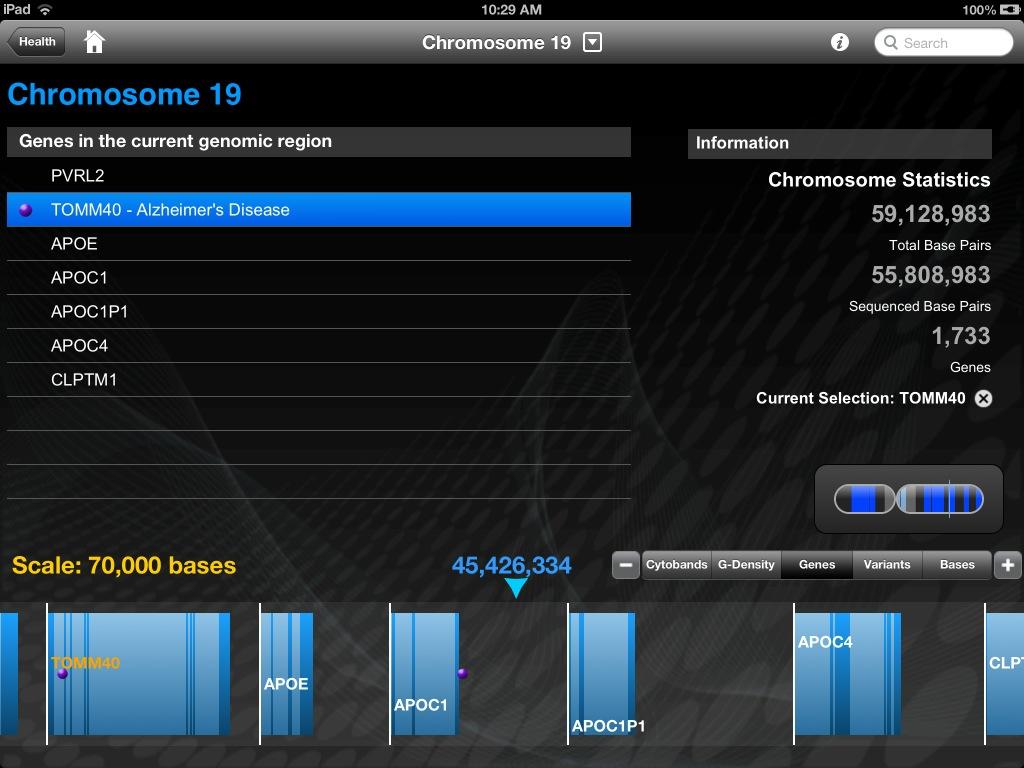
    So many topics and so little time. Focusing on the current challenges in Alzheimer's treatment makes much of this come into focus. A recent story on NPR: Treatment For Alzheimer's Should Start Years Before Disease Sets In raises one of the big challenges in this disease....How do we know if we need to commence treatment for a disease. It seems unlikley that any preventative treatment can be given to everyone so identyfying those at risk will become a major focus in the coming years. As Dr Topol noted in his book and in many of his presentations and discussions on the effectiveness of Plavix varies based on presentation of the genotype CYP2C19. This was subject to an extensive debate and included this posting on the Topolog posting An important miscue in clopidogrel pharmacogenomics and in a perfect example of the use of technology and engagement this videoif this works here otherwise download a verion here)


    Since November 23 is the day after Thanksgiving we will have a re-run on November 23 and Nov 30 from a previous shows

    Hope you can join me 


    Join me on Friday at 2:30 ET on VoiceoftheDoctor

    There are three ways to tune in:

    • Stream the show live – click the Listen Live Now to launch our Internet radio player.
    • You can also call in. A few minutes before our show starts, call in the following number:  Call: 1-559-546-1880; Enter participant code: 840521#
    • HealthcareNOWradio.com is now on iTunes Radio!  Stream the show live – you’ll find this station listed under News/Talk.


    Posted via email from drnic's posterous

    Wednesday, September 5, 2012

    VoiceoftheDoctor for the Month of September

    This month we will be 
    Sep 7

    Brad Tritle (@BTritle)who is currenlty the chair of the HIMSS Social Media Task Force.  He is currently co-editing a forthcoming HIMSS book on consumer engagement and consulting under the Office of the National  Coordinator on consumer engagement for State HIEs and immunization registries. Amongst the areas of focus:
    • Health Information Exchange
    • Consumer e-health
    • Personal Health Records
    • privacy/security
    You can read his interview ith HIMSS here
    We will be discussing the dleivery of patinet care - where the patient and the change in system dleivery and technology innovation to achieve this including telehealth services for consumers, apps and how this relates to PHRs.  

    Sep 14
    ID Experts - Is the EHR a target for Cybercrime.....


    Sep 21

    Clint McClellan (Twitter @clintmc1) who is Sr. Dir. of Strategic Marketing at Qualcomm Life and the President and Chairman of the Continua Health Alliance. HE and I will be talking about the Continua Health Alliance which is a non-profit, open industry organization of healthcare and technology companieswho are collaborating to improve personal healthcare.They are establishing a system of interoperable personal connected health solutions that will help empower everyone to enageg in their own personal health wellness amangement. Take a look at their vision video here


    He and I will be discussing some of the examples and soltuions in the personal health space and how these have eveolved from personal smartphones to dedicated gateways and what opportunities will open up for application developers?

    Sep 28

    Healthstory - Liora Alschuler, CEO of the Lantana Group and co-founder of Healthstory initiative. She is Co-chair, HL7 Structured Documents Work Group responsible for HL7’s Clinical Document Architecture (CDA), the first standard for healthcare based on XML. 

    We will be discussing the Healthstory Intitaive and the recently finalized Meaningful Use Part 2 guidelines


    Join me this Friday at 2:30 ET on VoiceoftheDoctor
    There are three ways to tune in:

    • Stream the show live – click the Listen Live Now to launch our Internet radio player.
    • You can also call in. A few minutes before our show starts, call in the following number:  Call: 1-559-546-1880; Enter participant code: 840521#
    • HealthcareNOWradio.com is now on iTunes Radio!  Stream the show live – you’ll find this station listed under News/Talk.

    Tuesday, August 7, 2012

    Voice of the Doctor - August 10

    This week I will be joined by Clint McClellan (Twitter @clintmc1) who is Sr. Dir. of Strategic Marketing at Qualcomm Life and the President and Chairman of the Continua Health Alliance. HE and I will be talking about the Continua Health Alliance which is a non-profit, open industry organization of healthcare and technology companieswho are collaborating to improve personal healthcare.They are establishing a system of interoperable personal connected health solutions that will help empower everyone to enageg in their own personal health wellness amangement. Take a look at their vision video here

    He and I will be discussing some fo the examples and soltuions in the personal health space and how these have eveolved from personal smartphones to dedicated gateways and what opportunities will open up for application developers?


    There are three ways to tune in:

    • Stream the show live – click the Listen Live Now to launch our Internet radio player.

    • You can also call in. A few minutes before our show starts, call in the following number:  Call: 1-559-546-1880; Enter participant code: 840521#

    • HealthcareNOWradio.com is now on iTunes Radio!  Stream the show live – you’ll find this station listed under News/Talk.

    Voice of the Doctor - August 10

    This week I will be joined by Clint McClellan (Twitter @clintmc1) who is Sr. Dir. of Strategic Marketing at Qualcomm Life and the President and Chairman of the Continua Health Alliance. HE and I will be talking about the Continua Health Alliance which is a non-profit, open industry organization of healthcare and technology companieswho are collaborating to improve personal healthcare.They are establishing a system of interoperable personal connected health solutions that will help empower everyone to enageg in their own personal health wellness amangement. Take a look at their vision video here

    He and I will be discussing some fo the examples and soltuions in the personal health space and how these have eveolved from personal smartphones to dedicated gateways and what opportunities will open up for application developers?


    There are three ways to tune in:

    • Stream the show live – click the Listen Live Now to launch our Internet radio player.

    • You can also call in. A few minutes before our show starts, call in the following number:  Call: 1-559-546-1880; Enter participant code: 840521#

    • HealthcareNOWradio.com is now on iTunes Radio!  Stream the show live – you’ll find this station listed under News/Talk.

    Posted via email from drnic's posterous