Showing posts with label virtual assistant. Show all posts

Tuesday, January 20, 2015

CES 2015 - Turning a techie into a modern-day Odysseus

As a physician and a CMIO, I’m forever seeking the latest technology offerings that might help us solve some of the very complex problems that exist in healthcare. With that goal in mind, I set out across the CES 2015 showroom floor, seeking the best in health innovation.

While it was interesting to see all the fitness and consumer health apps, I found myself spending extra time looking at non-healthcare related technologies, drawn in one direction or the other based on the “oohs” and “ahhs” of crowds marveling at incredible and unfettered innovation. I made countless stops along the way, and spoke to many different creators about the potential healthcare implications of their products, and I quickly realized that the future of health IT innovation will be a combination of various consumer technologies that are carefully sutured together.

Internet of Healthcare Things (IoHCT)

The interconnectivity of devices has been a growing trend in the consumer world, but it is one that has not really made its foray into healthcare. When it does, the potential will be astounding. I spoke with La Crosse Technology,


They collect data from weather systems, such as temperature, humidity, etc. They have developed the ability to leverage this data to adjust home heating and cooling systems according to the current weather conditions. Practical and money-saving for sure, but it is easy to extrapolate the benefits of such technology to patient consumers.


Imagine the impact this could have for someone suffering from chronic respiratory issues or severe asthma: they could receive guidance on what is going on outside and perhaps take extra medication to cope with poor air quality.


Additionally, such data could be used to send important reminders to help patients better cope with their medical issues, for instance, a virtual assistant that says “Heavy snow is on the way for the next three days, and I noticed your drug supply was down to two days, you should refill today so you don’t run out while the weather is bad and traveling is difficult.”

I also met with Butterfleye

a company that develops in-home monitoring systems.

Although there were many players in the home-monitoring space, I found this one compelling as it was easy to install and designed to learn, adapting to daily occurrences and routines as opposed to being programed. Imagine the value of setting this device up in the home of an elderly patient or loved one and using it not for security purposes, but for peace-of-mind, to make sure there is activity and movement and to learn of a fall or worsening condition more quickly.


Because the system is able to learn, it can discern the difference between a dog or cat roaming about the house and a person, so if there was an incident, a pet won’t “trick” the system into thinking the individual is actually walking about the room. While personal alerts are helpful if the individual is conscious and is wearing a medical alert device, a system such as this could help identify more severe life-threatening health conditions, and, with an intelligent virtual assistant, could ask residents if they are okay and call for help, if they get a negative or no response.

A Modern-day Techie Odysseus

Those familiar with the story of Odysseus know that he spent seven years sailing the seas trying to return to his homeland, Ithaca. What started out as a point A to point B trip, became a journey that forced him to see things differently. He was drawn in by all sorts of alluring (and not so alluring) options along the way, and when he finally returned home, he did so a wiser man. Meandering through the labyrinth-like CES showroom floor, I saw everything from robots that attach to windows
Solving that challenging problem of dirty windows on the outside

And clean the outside, to alluring bionic sensor


 Technology that allows users to control devices via subtle muscle movement from behind their ears.

A Nod to 3-D Printing

3D printing is taking off and I saw multiple exciting innovations of the technology on the show floor that included developments around materials and the ability to print metals and food. As you can see from this Geek Beat clip we are heading for a reality of the Star Trek Replicator


Healthcare is just scratching the surface and you can get a sense of some of the excitement in this piece by Dave deBronkart (ePatientdave): The Future Is Leaking In: "The Patient Will See You Now" Is 3D Printed Reality

Health and Fitness Apps Get a MakeOver

As my colleague Rebecca Paquette pointed out in her post on CES we are getting people to talk to things more naturally.
Chances are if you’re into staying fit, you’re into tracking all of the data that goes into keeping you happy and healthy. But tracking that data shouldn’t be a workout unto itself. The amount of time we spend logging meals, activity and sleep could be much better used burning more calories, or, if you’re like me, getting more shut eye (I forget to log it, then scramble to get it in before I fall asleep).
This consumer health prototype app on the Samsung Gear S from Nuance turns the process of interacting with these devices on its head as featured in this interview at CESLive


You lift your wrist, say “I had two eggs with multigrain toast, and coffee,” and voila – meal logged, calories tracked.

But the best thing about wandering the show is that it makes you see things differently, helps you think about things in a new way. It’s about pushing the limits, finding new use cases, new possible technology partnerships to create an even more robust, more powerful solution to address what people need.

Healthcare impacts many different types of people, from patients and clinicians, to administrators, coders and compliance officers— just to name a few. The common denominator, regardless of who you are, is that we all seek the best possible health outcomes. Having the opportunity to not only see, but experience, all different types of technology with untapped healthcare potential was incredible. It wasn’t about finding the health-specific applications and devices that would magically solve any one challenge, but about seeing the copious options available to consumers en masse, and talking with innovators about the potential cross-over and blending of technologies to advance healthcare today and in the future

This post originally appeared on WhatsNext


Wednesday, November 12, 2014

Speech and Medical Intelligence – Allowing Doctors to Focus on Patients Not Technology

I am at Medicine 2.0 this week and will be participating on the panel Bridging the Digital Divide and will then be presenting: Speech and Medical Intelligence – Allowing Doctors to Focus on Patients Not Technology

This is an exciting time for mobile devices and while we know there is a discrepancy in the accessibility of mobile technology (I’ll be participating on the panel Bridging the Patient Digital Divide) some of this divide in access can be linked to the complexity of this technology.
With ubiquitous technology comes ubiquitous complexity - adn this is especially true for doctors who face challenging User Interfaces - captured here in this post: How Bad UX Killed Jenny. As doctors we feel we are loosing touch with the Art of Medicine


Which for many of us was the reason we started on the journey to being a healer. Physicians don’t go to medical school because they want to document and code clinical information. Doctors choose their path because of their compassion and desire to deliver care to patients in need. There are increasing physician frustrations with technology and their struggle to keep the focus on patients and not data entry.

Medicine is part science, part art. The relationship between physicians and patients is at the core of healing. This begins with hearing and understanding but is followed by focusing on the patient not the technology. I will be presenting our prototype “Florence” that combines artificial intelligence and speech recognition to offer innovative new speech technologies that help capture and understand not just what the clinician says but what they mean. With new tools that speech enabled systems we simplify access and empower clinicians to capture information and thoughts as they occur. Through the innovative use of natural language tools, context awareness and the generation of high-value clinically actionable medical information clinical systems become efficiently integrated into care delivery process offering the opportunity for doctors to return to the Art of Medicine and focus on the patient.

Here’s a video showing off Florence


Thursday, August 14, 2014

Speech and the Digital healthcare Revolution at #SpeechTek

Come join me in the conversation with my colleagues at the SpeechTek 2014 conference in Marriott Hotel in Time Square, Manhattan New York.

The Panel: C103 – PANEL: The Digital Healthcare Revolution at 1:15 p.m - 2:00 p.m. The panel moderator Bruce Pollock, Vice-President, Strategic Growth and Planning at West Interactive and on Social Media @brucepollock

I will be joined by Daniel Padgett, Director, Voice User Experience at Walgreens and on Social Media at @d_padgett and David Claiborn, Director of Service Experience Innovation at United Health Group.

We will be discussing the opportunities and challenges associated with the current digital healthcare revolution and of course how speech plays an essential role in integrating this technology while maintaining the human component of medicine that we all want. Rather than Neglecting the patient in the era of health IT and EMR

We have progressed from the world of Sir Lancelot Spratt


And the Doctor need to look at the patient not the technology perhaps in a cooperative Digital Health world like this


Is this future of Virtual Assistant Interaction good, desirable

Demo Video 140422 from Geppetto Avatars on Vimeo.

We will be discussing

  • What are the biggest obstacles to digital healthcare becoming a reality?
  • Where do speech technologies bring the most value to healthcare?
  • How will health providers, insurers, and payers provide patient support in the world of digital healthcare?


Perhaps the emerging Glass concepts improve this interaction as they are exploring in Seattle

Join us for analysis of the state of digital healthcare today and predictions for its future.

In the end

People forget what you said and what you did but they remember how you made them feel

Come join the discussion as we explore the digital technology and how it should be used in healthcare and how speech can help

Monday, December 2, 2013

Virtual Assistants in your Future - Personal Healthcare Delivered

You can always rely on Hollywood to take concepts and extend them into the future - sometimes correctly (cloaking, holographic TV, forcefields and eco skeletons with mind control), sometimes incorrectly (aluminum dresses, atmosphere that is completely controlled, suspension bridge apartment housing). We have had speech recognition and Spock's request:

So it was no surprise to find the latest Hollywood idea is the "Her" - a lonely writer develops a relationship with a newly developed operation system

Intriguing and challenging our current concepts with an exploration of artificial intelligence, voice and natural language technologies. These new styled avatars understand, listen and decipher what we say and something that Nuance has been developing and reinventing the relationship that people and technology can have. We can engage with our devices on our own terms and we have show these concepts in healthcare with our very own Florence - who is getting ready to launch in 2014

Ambitious you say - maybe but imagine the environment with intelligent personal assistants that hear you, understand you, know your likes and preferences – and in our world exist across your doctors office, the phone, surgery, hospital and elderly care and hospice. Cool? Liberating? Impossible?
If you’re Nuance, the idea is not only brilliant – it’s our focus and drive as we reinvent the relationship between people and technology. It is the chance to connect with your devices on human terms and presents infinite possibilities for intuitive interfaces that adapt to you.
Liberating our clinicians to focus on the patient and providing patients with someone they can talk to, interact with and who does have time for them. That future - coming to a doctors office near you:

Friday, November 15, 2013

Monday, November 11, 2013

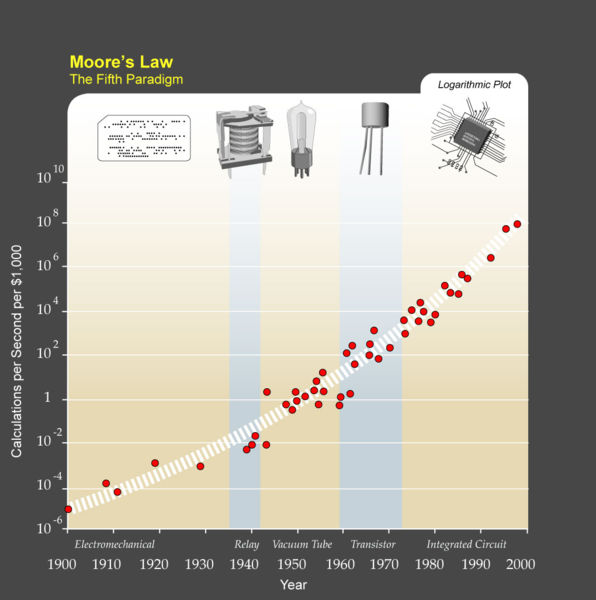
Artificial Intelligence - Good or Bad

I received a link form a friend to this article Robots, Soldiers, & Cyborgs: The Future Of Warfare - I think in part because I post on the value and opportunity of the intelligent agent
In fact I just talked about this recently around the concept of smart shelves instead of selling shelves. It was this comment in the article that stood out
Are we at the beginning of an inevitable process leading to the rise of “killer robots” predicted by science fiction, or can robots actually make war less destructive?
We know technology can be used for good and bad but even with the concern of the possible super soldier ala Terminator and the Rise of the Machines in Judgement Day...as seen in the opening scene from Terminator 2


Remember folks - this is Hollywood. No battery or power issues amongst the many other challenging technical problems. There is a school of thought that we will reach singularity and artificial intelligence will have progressed to the point of a greater-than-human intelligence that will "radically change human civilization, and perhaps even human nature itself.
Critics are also concerned that advanced artificial intelligence (AI) could develop in directions not anticipated by scientists. Because of this unpredictability, the US military has indicated that it will never remove humans from the decision loop completely. While unmanned weapons systems will become gradually more autonomous so that they can carry out very specific missions with less human direction, they may never entirely replace human soldiers on the battlefield.
While there is some potential for the bad I remain optimistic that the inherent good prevails - we develop smarter, faster and better technology to deliver an improved world and a new era of Super Intelligence that will chaperone in a new and exciting era
Meanwhile adding medical intelligence to the systems we interact with to simplify the interaction freeing people up to focus on tasks and the individual - not the technology offers interesting and exciting potential and I found this latest piece Startup Gets Computers to Read Faces, Seeks Purpose Beyond Ads on reading faces another step toward intelligence which like the smart supermarket shelves can be used for good or bad....
Imagine the doctors office or even the hospital waiting area that is using technology to triage patents intelligently based on their needs not the time of their arrival.

Life is good - my glass is always full