Showing posts with label Healthcare Technology. Show all posts

Wednesday, April 15, 2015

MasterChef in Healthcare: Integrating Social Media


Social Media is rapidly becoming an integral part of our lives. Despite the pervasive nature of the communication channel healthcare remains a technology laggard. This presentation from HIMSS15 Wednesday Apr 15) will offer insights to help understand why healthcare professionals should join the community, participate in the discussion and how can do so successfully.



I presented this topic at HIMSS15 on Wednesday Apr 15 - you can find the listing here. As promised I am posting a summary of the points as well as a link to the Slideshare for that presentation


You can find the presentation on my slideshare (nvt) here
####### Add link to uploaded ppt


Technology is all pervasive in our lives and Social media is everywhere - in fact in a recent survey of 3,000 people conducted in the US, UK and Germany to help counter the limited time with their physicians, patients are seeking information and embracing technology outside of the doctor’s office to come to appointments prepared. Approximately 80 percent of patients feel engaged in their own health:
  • 68 percent of patients bring a list of questions to each doctor's consult;
  • 39 percent have checked WebMD or another online source in advance; and
  • 20 percent bring personal health data from outside monitors.


You can see some 87%o f US adults are online in this Pew internet research so if you are not on board you are missing a huge opportunity but more importantly your patients are forming an opinion about you before they meet you


 What is Social Media
  • It’s a conversation, not a lecture
  • It’s an extension of everyday interaction
  • It’s group driven, not top-down
  • It’s messy, disorganized & hard to control
  • It’s a tool, not an end-point
  • But most of all…


If you have not already - go to twitter and sign up for an account


What to Tweet
  • What you have read that you want to share with others
  • When and where you are speaking
  • Something you post on your blog
  • A link to a Web site that you find interesting
  • Listen to conversations happening online using keywords (hashtags, lists and searches) – learn from your colleagues, friends and patients
  • Befriend people – and then earn their trust by solve problems, answering queries, helping and providing useful information
  • Share information, valuable content with them
  • Questions and Requests for information and help – crowdsourcing answers
  • At a minimum – Lurk, Listen and Learn
There are many HashTags to follow and starting by assign friends and colleagues what they follow is a a good start but then get involved - join an online chat and community and take a look at the listing of healthcare hash tags from symplur. Listed below are a few of the healthcare hash tags I follow:
#hcsm (h/c social media)
#HCLDR (healthcare leaders)
#HITsm (health IT social media)#MedEd (medical education)
#mHealth
#eolchat (end of life/elder chat)
#BCSM (breast-cancer social media)
#LCSM (lung-cancer social media)
#BTSM (brain tumor social media)
#S4PM (Society for participatory medicine)
But I received a aggregated list when I polled my followed that included all these:
Others
#QuantifiedSelf
#KareoChat
#HITChicks
#HIT
#healthIT
#hcrefor
#ACA
#ONC
#HL7
#Interop
#IoT
#HIMSS15
#POWHIT - People & Organizations improving Workflow w/HIT
#RareDisease
#foodallergy
#rheum
#bcsm
#gyncsm
#medx
#BlueButton
#patientengagement
Chats
#JACR 4th Thurs 12pm EST
#LCSM Every other Thurs 8pm EST
#BCSM Mon 9pm ET
#HCLDR Tues 8:30pm EST
#MedEd Thurs 9pm EST
and
@twubs @hashtracking or @tweetreachapp

My thanks to all my twitter friends who contributed
@HealthcareWen @HIMSS @lsaldanamd @sjdmd @HealthcareWen @DrJosephKim @dirkstanley @dlschermd @Docweighsin @RossMartin @CraigJoseph @RobertWahMD @ishakir @SteltsMD @JenniferJoeMD @StevenChanMD @CIBR_News @Jim_Rawson_MD @aussiclydesdale @ACRselect @AdamFuhriman @Gregmogel @ruthcarlosmd @techguy @MandiBPro @HITshrink @ahier @RandaPerkinsMD @motorcycle_guy @wareflo @susannahfox @Lygeia @ePatientDave @CMichaelGibson @Colin_Hung @annelizhannan @MelSmithJones @Paul_Sonnier @JennDennard @HIStalk @JohnNosta @2healthguru @lsaldanamd @lisagualtieri @EricTopol @ShahidNShah @DanMunro @Daniel_Kraft

Put yourself somewhere on the Social Media Adoption Curve


Add LinkedIn and Facebook - they offer a different channel and voice - Facebook tends to be more social and LinkedIn tends to be more professional/business orientated
There are some good examples already out there
The Mayo Clinic has several properties and their own published guide book to social media and the University of Maryland Medical Center that has blended many channels

What Not to Do

The JAMA 2012 report Online posting of unprofessional content by medical students highlighted a high proportion of violations and problems and there are plenty of examples of people who failed use basic common sense - I personally like the 12 word Simple Social Media Policy from the Mayo

Don’t Lie
Don’t Pry
Don’t Cheat
Can’t Delete
Don’t Steal
Don’t Reveal

Conclusion
  • Social Media for Physicians is a Game Changer
  • Social media, when effective, will establish a physician’s brand and connect him/her with those in need of their services
  • With increased deductibles, more consumers will “shop” using social media sites.
  • Social Media will Expand the Physician’s Role with Patients
  • Social media is shaping patient encounters with physicians and that impact is expected to increase significantly
  • Extending the patient experience will foster existing patient relationships and improve patient outcomes, especially for long-term chronic conditions.

Where are you on the social media ladder and are you going to climb higher?


Saturday, March 14, 2015

The intersection of Science Fiction, super-pi, and technology innovation

Celebrating Pi (3.141592653) 3/14/15 at 9:26:53

Today is super-pi day, a day that comes but once a century and extends to a specific time at 9:26:53 seconds (although when that occurs will depends on your time zone. While pi is an infinite non-repeating decimal, there are still mathematicians and scientists seeking to build computers that can run the computation and see how far they can plot the number. As Spock put it:

"Pi as we know the value of Pi is a transcendental figure without resolution"

Here’s to those who choose to defy reality and instead envision a future world – a world that ventures beyond even Mr. Spock’s wildest dreams.

The sad news of Leonard Nimoy’s passing has spurred tributes to not only to his life and craft, but to Star Trek, and what it has meant to so many over the years. In talking with my friends and colleagues, it seems that regardless of age, most Trekkies are also techies.

One of the neatest things about working in technology is that you inhabit two worlds. The first is our everyday reality—with all of its joys, frustrations, celebrations, and inconveniences. This world has soft tender moments tempered by harsh truths; it is simultaneously disappointing and inspiring.
But from this disappointment is born opportunity and a vision for the future world. Here is where Star Trek is a reality, where innovators take those every day frustrations and disappointments as ask themselves how things can be done better.

I’m lucky to work alongside some incredibly innovative, talented minds and whether in R&D or client services, at the core, we all share an inquisitiveness that pulls us from one orbit to another.

“I grew up watching Captain Kirk, Spock, and the Enterprise crew boldly go where no man has gone before. In the 1980s, Star Trek was big in India and it ignited our collective sparks of creativity and imagination. In fact, as school children, we learned to make “communicators” with matchboxes and rubber bands. When I grew up, I realized this type of voice-activated technology could be a reality, and I have dedicated my career to making that vision something that is accessible to everyone. I still wonder how close our technology today is to what Gene Roddenberry had imagined when he created Star Trek.”

- Vivek Kaluskar, Nuance Natural Language Processing Researcher

“Star Trek introduced me to the idea of being able to talk to a computer, and have it understand and respond. That’s actually what got me into speech-recognition technology: it was that sense of wonder about making technology collaborative—where you could ask a device a question and it could parse through vast amounts of data to help you do something faster.
The show also got me interested in science fiction, which has proven to be an enduring affection. It’s amazing to step back and see many ideas that seemed outlandish, like tractor beams, talking computers, matter transmission, and warp drives, are either becoming a reality, or are being researched and developed. Science fiction, in many ways, has created a technological roadmap for the future. It reminds us to keep dreaming and keep asking ‘why can’t we do that?’”

- Ignace Van Caneghem, Nuance Customer Support Specialist


Finding solutions to seemingly impossible situations is what innovators do. It’s why we wake up in the morning. I’m constantly looking for ways to make health IT more connected, accessible, and more intuitive so physicians can focus on treating their patients.

Working in tech isn’t easy, but some of the most worthwhile pursuits are also the most challenging. Thinking outside the box is the key to solving complex problems. There’s an episode of Star Trek (“Wolf in the Fold,” 1967) where Spock forces an alien entity out of the ship’s computer by asking it to calculate pi to the last digit, an impossible feat. At that time, using speech recognition to control a computer was also impossible.


We are a lot closer to the Hollywood vision that’s been in our minds since 1967, creating innovative technology that continues to amaze us at an incredible pace. It was this sense of amazement, instilled by the creative mind of Gene Rodenberry, which helped open my eyes to the potential for healthcare technology to touch not just hundreds, but millions of patients through innovation.

This Saturday is Super Pi Day, a day that comes but once a century. While pi is an infinite non-repeating decimal, there are still mathematicians and scientists seeking to build computers that can run the computation, see how far they can plot the number. Here’s to those who chase the impossible. To those who know there is a better way to do things and dare to keep asking “how?” They choose to live between two worlds and they are building the future. Super-pi day is for you.


This post originally appeared in Whats Next

Tuesday, January 6, 2015

CES 2015 - The Year of Digital Health and Wearables

This year I have the privilege of attending CES2015 in Las Vegas - for those of you who have not been before its big..even by Las Vegas standards.

CES attracts 150,000 visitors (all looking for the same cabs so I’m willing to bet that Uber is not going to work as well), occupies 2,000,000 sq ft of space (35 football fields - American or the rest of the world soccer) and includes 3,500 companies

This year the DigitalHealthCES meeting runs concurrently and I believe is in its 4th year. Further evidence of the merger of health, consumer and the engaged patient equipped with mobile technology and wearables.

As my friend John Lynn said in his post Initial CES 2015 Observations. He sees the top trends as

  • 3D Printers
  • Drones, and
  • Wearables

The first two not closely linked to healthcare (except perhaps this recent recent student suggestion of an Ambulance drone to deliver help to heart attack victims).

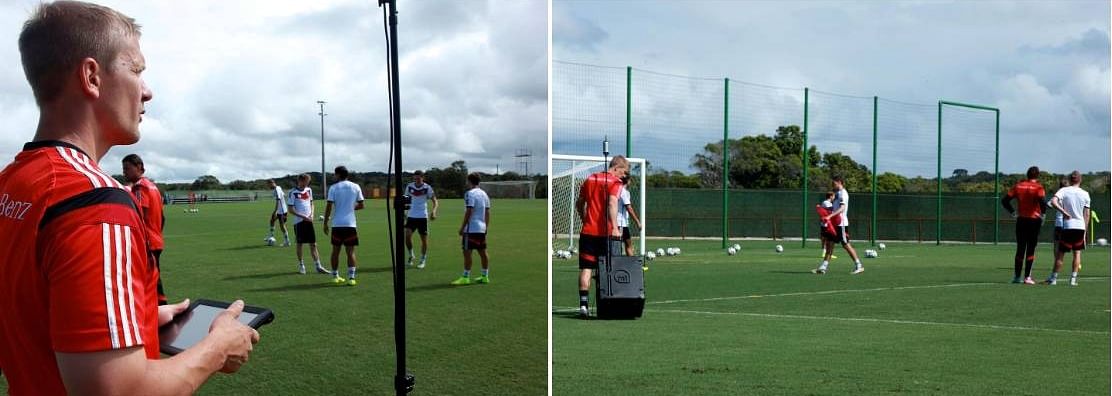
Wearables are front and center and John cites the Amstrip company with a band aid style monitoring concept. I expect clothing and in particular sports to lead this charge with the initial interest in optimizing training and athletic performance as we saw from the World Cup last year and the miCoach system from Adidas that was in use by the winners Germany.


Needless to say others are joining the fray with clothing brands such as Asics, Under Armour and Ralph Lauren now offering clothes to monitor all sorts of parameters

This year may see the emergence of more from the Internet of Things (IoT) - or the new term the Internet of Everything (IoE).


Everything connected and controlled through a consumer friendly hub which will include the wearable and monitoring concepts.

This is as simple as ceiling fans and cooling systems and thermostats but with healthcare making this even more interesting and the learning potential of these intelligent systems and their Artificial Intelligence offering insights into our lives to help turn unhealthy behaviors and activities into healthy choices.

So much of our healthcare expenditure is related to chronic care management, imagine the impact this level of synergy and motivation will have on driving a healthier population while reducing cost.

I’m ready, are you?

Thursday, August 14, 2014

Speech and the Digital healthcare Revolution at #SpeechTek

Come join me in the conversation with my colleagues at the SpeechTek 2014 conference in Marriott Hotel in Time Square, Manhattan New York.

The Panel: C103 – PANEL: The Digital Healthcare Revolution at 1:15 p.m - 2:00 p.m. The panel moderator Bruce Pollock, Vice-President, Strategic Growth and Planning at West Interactive and on Social Media @brucepollock

I will be joined by Daniel Padgett, Director, Voice User Experience at Walgreens and on Social Media at @d_padgett and David Claiborn, Director of Service Experience Innovation at United Health Group.

We will be discussing the opportunities and challenges associated with the current digital healthcare revolution and of course how speech plays an essential role in integrating this technology while maintaining the human component of medicine that we all want. Rather than Neglecting the patient in the era of health IT and EMR

We have progressed from the world of Sir Lancelot Spratt


And the Doctor need to look at the patient not the technology perhaps in a cooperative Digital Health world like this


Is this future of Virtual Assistant Interaction good, desirable

Demo Video 140422 from Geppetto Avatars on Vimeo.

We will be discussing

  • What are the biggest obstacles to digital healthcare becoming a reality?
  • Where do speech technologies bring the most value to healthcare?
  • How will health providers, insurers, and payers provide patient support in the world of digital healthcare?


Perhaps the emerging Glass concepts improve this interaction as they are exploring in Seattle

Join us for analysis of the state of digital healthcare today and predictions for its future.

In the end

People forget what you said and what you did but they remember how you made them feel

Come join the discussion as we explore the digital technology and how it should be used in healthcare and how speech can help

Friday, July 18, 2014

Wearable Technology - An Exploding Segment

I attended a Wearble Technology conference today in Pasadena California: Wearable Tech LA

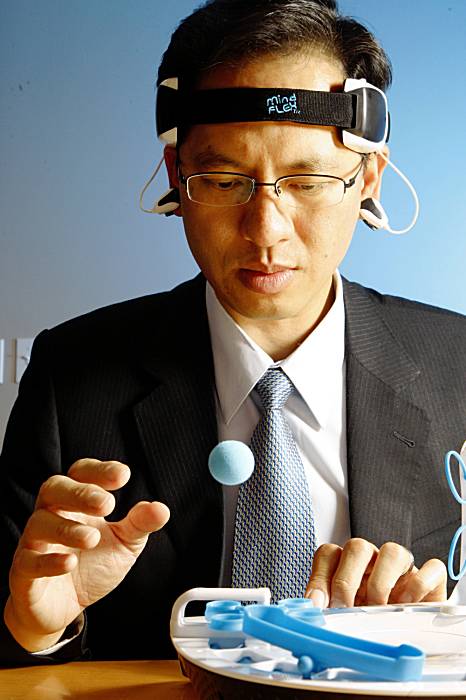
There was a wide range of technologies and innovations - everything from the mind monitoring by IntraXon’sMuse headband. Here’s their online demo video


One of the more interesting concepts takes the challenge we have all faced mastering the mechanics of walking, exercise, running and in some cases rehabilitation by placing sensors in the sole of shoes - Plantiga who have taken force analysis for our feet to a whole new level

The technology takes the static Force Plate sensor and turns into a continuous assessment 3-D tool offering an opportunity to apply this in specific sports and to help rehabilitate people who have been injured or have mechanical challenges (the side effect of capturing all this data is actually creating more comfortable shoes as they now have built in suspension and springs).
Better than this concept!

It might take a while to arrive in healthcare but in the meantime may well show up as another input device for the X-box or PS3 for a more realistic interface.

There was sensors to be placed all over the body for respiration, heart rate, muscle movement, acceleration/deceleration and even some to be ingested

A major challenge highlighted by several speakers facing all of the wearables genre was the issue of battery life
(and ironically it was the same problem I faced as I tried to capture and post social media)

The opening keynote was from Nadeem Kassam - CEO of BioBeats (Founder of Basis which is now an Intel company). His journey was one of classic rise from poor neighborhood in South Africa where he started his entrepreneur sporty selling oranges

He focused on three lessons - the first an essential learning point for everyone especially those facing healthcare challenges
Nothing is stronger than habit

He also suggested that those looking to succeed with innovation should:

  • Look for innovation outside of your industry, and
  • Don’t throw a big team or money at innovation

His story behind this was a classic one of engineers told to build a product who came back with his wearable watch that was a huge device that weighed down his arm and had a velcro battery pack under the arm!


He ended up finding his greatest engineers on Craigslist who’s references and Resume was a cardboard box full of devices that he had built.

The new concept of “Adaptive Media” which is bridging the divide between human emotion, data and the media we consume and should adapt to our mood based on our emotion. His new company has done some interesting research programs including an experiment with machines designed to allow people to hear their own heartbeat and have it set to music in Australia. When people heard their heartbeat for the first time it created a deeply emotional experience and many were moved to share very personal life stories.

They took this a step further and worked to gather heartbeats worldwide - a clever BIGData gathering exercise that amassed large quantities of rate, rhythm and details of millions of people around the world.


His overriding point was

We have to make health fun and engaging - merging it with entertainment to help people achieve what we all want - long tail of healthy life

There was a fascinating blend of the Entertainment industry and Hollywood and a slew of companies taking different approaches to these devices:

Epihany Eyewear tries to make wearables fashionable as well as functional (I’d say it not so much as fashion but blending into society)


Optivent with  powerful wearable glass - but no mention of the interface
They probably had the most fun concept video

Les lunettes d’Optinvent voient plus grand que les Google glass from Rennes, Ville et Métropole on Vimeo.

Enlightened design had the most impressive on stage display with a jacket that had lapels that constantly changing color

Janet Hansen - Founder & Chief Fashion Engineer, Enlightened Designs
Sporting her jacket with lapels that constantly changed color


Sports and Wearable


Given the excitement over the last month wight he World Cup it was fascinating to hear from Stacey Burr from Adidas who revealed that most if not all the teams were using technology to help them train and track in extensive detail - she suggested that there is not a single team or sport that is not using wearable technology in some form or another.

You can see some of the gear below
GPS enabled ECG/EKG monitoring Units plug into the back around the neck area


Paired with watches to offer players feedback


Digital insides of a ball used to sense how well it is struck


These are the professional versions used by major teams but Adidas is releasing commercial versions that will be available to the general public but lack the GPS capability and the analysis tools they offer

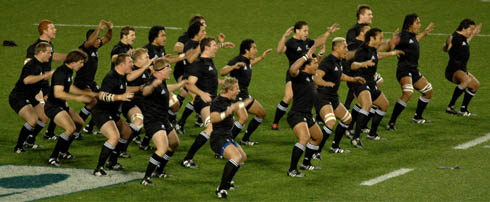
Surprisingly the leaders from a sports and country standpoint are Rugby and Australia and New Zealand who are "light years ahead" of wearable tech in sports
They are ahead in Psyching out their opponents too!


Sensoria demonstrated an exciting interactive future for sports and wearables where we challenge ourselves, other people and are coached by virtual assistants


Sensoria Fitness Shirt with Heart Rate Sensors from Heapsylon on Vimeo.

One of the highlights:Seeing Dick Fosbury of the "Fosbury Flop” Olympic Gold Medal Winner from Mexico 1968 and it turns out he is a Cancer Survivor, has an aneurysm and fully engaged in the intersection between healthcare and wearable technology

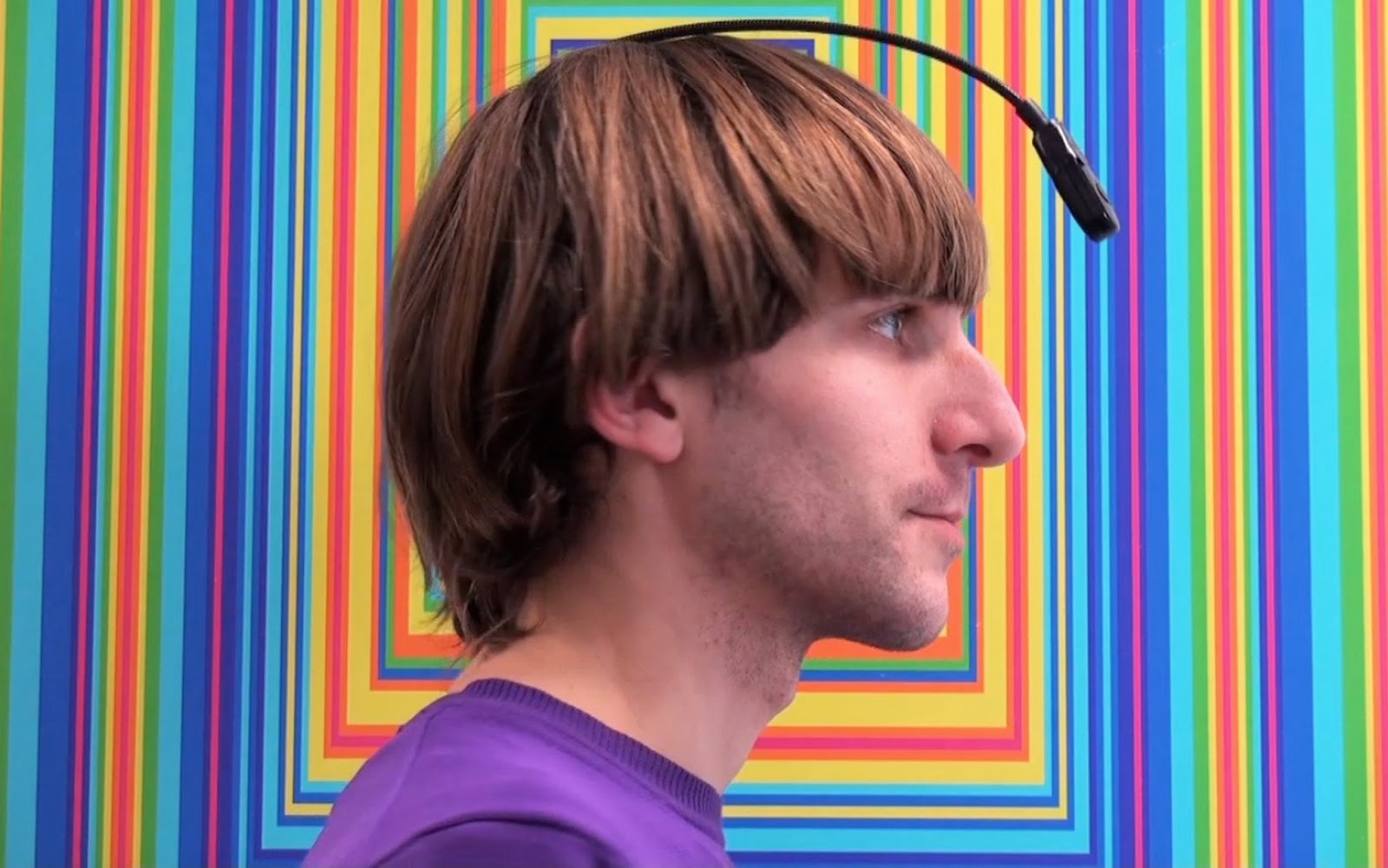
Neil Harbisson - Co-Founder, Cyborg Foundation


who was born totally color blind was definitely at the edge of wearable technology. He has an implanted device that turns color into sound and this is directly fed into his brain. He described that it took 5 weeks for the headaches to stop with this sudden input of data and then 5 months before it just became part of him and he now sees in color.
Here's his TED Talk: I listen in Color

He also has a permanent internet connection in his brain so people cane send him colors and images directly (he joked the address is private - but I did wonder given the ease with which spammers seem to find new addresses how he protects this destination from spam!)
I don't wear technology I am technology, I can't tell the difference between the software & my brain

The healthcare focused panel: Emerging Wearable 2.0 Health Platforms:

The furthest along and well know was probably Misfit wearables (Sonny Vu, CEO) who try and make sensors “disappear” but still simple sensors

OMSignal (Jesse Slade Shantz - Chief Medical Officer) was the most interesting as they are trying to change the monitoring from attached sensors to using fabric that can be loose fitting but can capture physiological information.

Breathometer (Charles Michael Yim - CEO) focus on analyzing your breath and have a range of products directed at health (over and above their simplistic alcohol breathalyzer available today) that assessed fat burning (using acetone) and asthma

NeuroSky (Stanley Yang - CEO) offer a system that other manufacturers can integrate into their wearables. Typically found in mobile phones or headsets

LUMO (Monisha Perkash - CEO & Co-founder) offering a discreet sensor that is designed to help improve your body posture and works as a tracker.

It's an exciting future with some fascinating technology to come - one thing for sure - with ubiquitous technology comes ubiquitous complexity and your voice will become an essential tool for successfully managing and navigating. Dragon Assisatnt is one of several tools built to assist in using and navigating technology that is reinventing the relationship between people and technology


Tuesday, May 27, 2014

Getting Value from the EHR - Yes it is Possible

I have the privilege of spending a lot of time on the road interacting with clinicians around the country (and world). I hear with too much frequency many doctors complaining about the Electronic Medical Record and how it fails to help them and in many cases makes their work harder. Some of this is a hangover from the past and the inadequate technology and in some cases hardware at the time
In fact I’ve told this story a number of times that I can date to around 1995/6 and in this piece: Clinical documentation in the EHR
Many years ago, an excited friend who worked for one of the electronic health record (EHR) vendors at that time — it was really more of a billing and patient tracking and management system than an EHR — was desperate to show me some of their latest applications. In particular, a new module they had developed to capture clinical data.
My friend pulled out his laptop, fired up the application, selected a patient and proceeded to enter blood pressure (BP). Some 20-plus clicks later, he had entered a BP of 120/80. While he was excited, I was dumbfounded. When it comes to patient care, doctors didn’t have time for 20 clicks to record BP years ago and they definitely don’t have that luxury in today’s demanding medical environment.
There is still some of that going on and not enough focus on the User Interface design and turning the technology into a barrier - this is the focus of the Art of Medicine campaign we launched some weeks ago


This article on Government HealthIT Are electronic health records already too cluttered? highlights a rising problem and one I hear about frequently. This is not just a healthcare problem and it is the focus of the work by Edward Tufte an American statistician and professor emeritus of political science, statistics, and computer science at Yale University who is well known for his books on information design which are bets acquired by attending one of his frequent courses on data visualization
Here is a recent overview of visualization on the iPhone


He has a section on healthcare but many of his principles apply

For Brian Jacobs the problem was even more acute working in a Pediatric ICU:
The ICU is a very toxic and tech-laden environment….because of that, it offers the opportunity to make a lot of mistakes
As he points out much of the cutter derives form the multiple notes entered into the EHR every day. "It’s not uncommon in teaching hospitals to have six to seven notes per day on one patient, by the time the attending physician, residents, consultants, other doctors and fellows check on the patient."
So they instituted a policy of One Note per day

Actually its
It’s actually one note per team per patient per day; one giant multi-contributor note. They still may be all writing their components, but it’s one note
With a template to hold the content generated each morning by the resident and then everyone contributing to that one note, adding and amending as necessary

So in addressing the issue clutter they also addressed usability and design turning the note into a living breathing document that is updated and maintained by the team that now takes care of patients
But he addressed some other important issues - especially when it comes to quality of care and the quality of the medical note

Copy Forward is subject to some warranted scrutiny from a billing and audit standpoint. Much of the repetitive and “clutter” in the note comes form the copying forward of past information. But:
These notes should never be the same
And as part of that message they moved to an "End-of-day note” that was a fresh summary of the patient.
Add to that an updated and well maintained Problem List and integration with the billing system to allow doctors to select their code for the work carried out that day and they moved to a valuable addition to the healthcare team in delivering quality healthcare with their EHR
EHRs are: more complete, legible, accessible and can be auto-populated and searched. They can provide diagnosis codes and they’re good for billing. On the other hand, they can sometimes lack quality information and are by far, too cluttered.
I said this back in 2003 (yikes!) - The Future of Technology is already here - Who’s on Board the train and who’s left at the station. I still believe it and understand that the technology does need to get better and be more integrated into the existing workflow

The next generation of health care technology is here, with visionaries and futurists pushing the envelope to enhance, create and generate the newest cutting edge in health care delivery. Advances in technology, like advances in medicine, are a shared entity that enhances life expectancy and the quality of life.

Wednesday, May 7, 2014

Patients Prefer Electronic Documentation

Software Advice recently published this survey: Do Patients Really Care if You Use Your EHR in the Exam Room? It was very revealing! It turns out contrary to the perception that the intrusion of EMR’s in the office patients prefer electronic documentation to alternatives
Most Patients Don’t Mind Electronic Note-Taking During Exams
In each case, more than 80 percent of respondents indicated they would not be bothered. On a sliding scale, patients indicated the least concern for doctors using tablets during the exam.


What was more surprising was the push back by patients on having scribes


But worst of all - recording devices


Ultimately, over one-third of patients said they’d be bothered by doctors using tape recorders to assist in charting medical notes. Specifically, patients at the furthest end of the spectrum—those who chose “would bother me a lot”—were more prevalent when it came to tape recordings than with any other method of charting during an exam.


There was a big preference to Electronic documentation at the point of care


They asked about reasons for dissatisfaction

Its not the technology that causes the dissatisfaction but in order of importance (for patients)

  • long wait times at the doctor’s office,
  • unfriendly staff
  • short duration of visits with the doctor
  • Trouble Scheduling Appointment

And coming in with a sliver of dissatisfaction at 5% “Doctor using a Computer in the exam room"


Friday, March 28, 2014

Getting Doctors Back to the Patient - Part 1


The Panel "The Art of Medicine" Panel (part of the Art of Medicine campaign) took place yesterday from 9 - 11am at the Boston's W Hotel, 100 Stuart St, Boston, MA


Our panelists from Left to Right
  • John D. Halamka, MD, MS, CIO of Beth Israel Deaconess Medical Center (and Life as  healthcare CIO blog and @jhalamka)
  • Keith Dreyer, DO, PhD, FACR, Vice Chairman of Department of Radiology, Massachusetts General Hospital 
  • Adam Landman, MD, MS, MIS, MHS, CMIO, Health Information and Integration at Brigham and Women's Hospital (@landmaad)
  • Steven J. Stack, MD, past chair of the American Medical Association (AMA); served on multiple federal advisory groups for ONC on HIT, practicing emergency physician  
and at the far right moderated by Paul Weygandt, MD, JD, MPH, MBA, CCS, CPE, Vice President of Physician Services, Nuance Communications

And it was very well attended:


Today, physicians are struggling to serve their patients’ needs in a healthcare system that seems to work against them at every turn. While technology has the potential to vastly improve healthcare overall, issues remain when it comes to usability, data-entry and complementing patient care vs. competing with it.

In part 1 I have attempted to capture the underlying sentiments and thoughts form our panelists together with some thoughts on potential ways to help resolve these areas and problems.

The panel opened with the original Art of Medicine video:

The session was divided into several separate discussions - the first of which the Issues of today:

There has been an increasing burden placed on physicians to document more and more detail but no additional time to do this and in fact probably less and they struggle with the increasing information over load and the challenge of processing - As John Halamka put it:
"We need wisdom and today's #EHR make that hard to get from patient info to give me what I need now" 
"3 petabytes of patient data...overwhelmed with data, we just need information, knowledge"


This is combined with the increasing regulations which the panel viewed as directly linked to the increasing need for HealthIT tools to help deal with these regulations. As Adam Landmaan put it the design of the EHR’s is based on the design focus and in the current fee for service health system is designed largely support the physicians to capture and document optimize for bill not for patient care


But I thought Keith Dreyer captured the sentiment well when he described technology as decreasing our ability to communicate

“I couldn't imagine dictating into a microphone in talking with my family "


And we are seeing declining capture off the patient’s story in the EHR

Some snapshots of ideas thoughts from our panelists included:

  • IT tools driving “note bloat” of information that is non-specific to the patient
  • Physicians need timely “wisdom” to positively effect patient care at the time of encounter
  • “Big bang” of government funding for EHR adoption has generated massive amounts of information that is, at present, unmanageable
  • At stage now of EHRs where they are “one size fits all,” so not customized to specific specialty/setting needs
  • Need to identify the smallest number of moving parts (IT tools) to facilitate patient care
  • Need for monolithic (“one size fits all”) IT solutions is driven by babel of nomenclature
  • Quality measures show that there is a problem, but not the causality

There was much more discussions and thoughts on solutions but one of the concepts that stood out for me was this one from Adam Landmaan straight out of the Television Reality show - copying the Shark Tank concept


That will be an interesting panel and team event and look forward to hearing the results

 We need to return to the Art of Medicine and as one panelist put it:

People sought out Doctors in the past even when they actively hurt you and bled you


They did this because the doctor provided compassion and care that had the best intentions - they cared about their patient and the Art of Medicine

Physicians don’t act on business motives. They act on patient care motives.

You can see the #ArtofMedicine HashTag Social Media Statistics here and analytics here

Tuesday, February 25, 2014

The Art of Medicine CIO Breakfast - What Needs to Change to Get Doctors Back to the Patient?

Medicine is part science.... Part art.

The relationship between physicians and patients is at the core of healing. This begins with hearing and understanding. We want to reimagine healthcare—where physicians can get back to the art of medicine and were delighted to be joined by panelists:

Dr. Mark Kelemen, Senior Vice President, CMIO, University of Maryland Medical System
Dr. Charles H. Bell, Vice President, Advanced Clinical Applications, Hospital Corporation of America (HCA)
Stuart James, CIO, Sutter Health
Dr. Andrew Watson, CMIO, University of Pittsburgh Medical Center (UPMC) (@arwmd)


The panel was moderated by our very own
Dr. Paul Weygandt, Vice President, Physician Services, Nuance
Keith Belton, Senior Director, Clinical Documentation Solutions Marketing, Nuance

and attended by some 50 attendees with varying backgrounds and perspectives

The underlying question:

How do return the focus to the patient. How can physicians navigate the changes and challenges of today’s complex healthcare environment while doing what matters most to them – listening and caring for patients?

The panel discussion addresses current physician frustrations with technology and what needs to change to keep them focused on patients and not data entry. It was clear that the physician’s voice and medical decision making is what matters most in practicing the art of medicine and how do physicians and patients both benefit?

 We know from surveys that
  • 36% of physicians say that EHRs interfere with face-to-face communication during patient care
  • 80% of physicians say “patient relationships” are the most satisfying part of practicing medicine
  • 28% of an average ER physician’s time is spent directly with patients
  • and from a recent HIMSS session interesting Patients prefer doctors to have an EHR
This is about the changing face of healthcare – it’s not just about technology. It’s about how we envision healthcare. How do we explain to providers that this isn’t about technology – this is about a new world order coming to healthcare
Posting every patients Magnesium level multiple times in a note is not good clinical care #artofmedicine #himss14
One of our panelists asked the audience:

How many Docs would go to facility with no #EMR and used paper - no hands went up
We do see value in Health Information Technology

One of the overriding concerns was the need for cultural change. The office or hospital based physician system is struggling to meet the patient needs today. They want to have the right nurse or physician there for them at the right time and indeed at the right place with telemedicine. It’s about cloud-based/consumer-based healthcare.

More consumer-friendly healthcare

We need to get back to that local physician practice – with technology in the middle as a supporting actor but not the main event

Technology cannot be an impediment to taking care of patients

Many physicians are in this field because we are trying to drive change but are struggling with the existing system that fail them. When I see a patient I have to review 10 systems, carry out at least 4 major systems examinations before I can submit a claim that properly reflects the care I delivered:
 I am not taking care of the patient I am taking care of a computer

Dr Andrew Watson told the story of a patient under his care with a terrible antibiotic resistant infection that a patient developed in hospital and he was now under constant supervision adn intensive therapy. But as he said - he never needed to come into hospital - he could have been treated at home. Poignant reminder that Telemedicine is not just about reducing cost - it can be better for the patient and offer better results.

Dr Bell is waiting for the MIDI (musical instrument digital interface) moment so that he can plug into the medical record and go.
As a musician he remembers the implementation of the MIDI interface in the early 1980’s that allowed music manufacturers to create one standard that was royalty free and widely adopted for the benefit of the user musicians and the vendors. He wants that in healthcare - so do I.
Until we change the mandate on clinicians to document 8 of 10 systems to be fairly compensated for the care given  
And importantly the concept of Bring Your Own Device (BYOD) is bringing functional tools into the healthcare setting and will/is revolutionize the care being delivered. As one panelist put it:

my iPad never complains, is always there, has the latest information and access to latest medical updates

To summarize:


  • We need strategies for bringing the focus back to the physician-patient interaction and removing impediments to that relationship
  • Healthcare organizations should be and are encouraging/valuing physician professionalism
  • This is about the changing face of healthcare – it’s not about technology. It’s about how we envision healthcare. How do we explain to providers that this isn’t about technology – this is about a new world order coming to healthcare


Come join the conversation at The Art of Medicine or come to the panel session Thursday, March 27, 2014, 9:00 - 11:00 am EST at the W Hotel,100 Stuart Street, Boston, 02116


Sunday, February 23, 2014

Physician Symposium #DrHIT #HIMSS14

The Physician (#DrHIT) Symposium at #HIMSS14
Opening session was eloquently covered by Robert Wah, MD (@RobertWahMD) detailing the spectrum of issues ranging from the new Healthcare System:

The challenge of SGR “fix(es)” and the evolution of the systems we are implementing and the value proposition. As he put it
Quality of care is improved with better information — saving lives and money
But Health Technology is not easy to implement:
And layered on top is the increasing challenge of securing the data with hackers seeing healthcare data as 15x more valuable than financial hacked data!
What we need is coordinated care and Dr Wah offered this visual of the way forward

Christine Bechtel focused on the Activate Evidence Based Patient Engagement and as she reported - Patients like doctors who have an EHR
Patients think EHRs help doctors deliver better care
  • Timely access to information, sharing info across care team, med history, managing health conditions
  • Overall, EHRs were rated between 23%-37% points higher than paper on these elements
Interesting since doctors have been reported as saying they dislike the EHR but patients like seeing their doctors with an EHR

The sad thing was this session was concurrent with @ePatientDave in another room - The Connected Patient: Learning How Patients Can Help in Healthcare only social media united these sessions
As for Jonathan Teich and his session Improving Outcomes with CDS - he used his personal experience where peer pressure (as he described it 3rd time he was pressured to take on an expert triple diamond ski slope) he finally agreed and ended up in a serious ski accident fracturing multiple vertebrae. Interesting analogy relative to the Clinical Decision Support System and the pressure this applies to clinical practice sometimes inappropriately...
Interesting look at alerts and the potential for providing more than just alerts but actually providing intelligent data that distill down to 10 types of CDS interactions
  1. Immediate Alerts: warnings and critiques
  2. Event-driven alerts and reminders
  3. Order Sets, Care Plans and Protocols
  4. Parameter Guidance
  5. Smart Documentation Forms Improving Outcomes with Clinical Decision Support: An Implementer’s Guide (HIMSS, Second edition, 2011)
  6. Relevant Data Summaries (Single-patient)
  7. Multi-patient Monitors and Dashboards
  8. Predictive and Retrospective Analytics
  9. Filtered Reference Information and Knowledge Resources
  10. Expert Workup Advisors

And the important summary slide was the CDS Five Rights (Right information, people, formats, channels and times)

And returned to one of the core opportunities - Patient Engagement with a a session by Henry Feldman, MD FACP: Informatics Enabling Patient Transparency. He asked the same questions as another presenter - how many fo the audience considered themselves a patient (Still only a shabby 80%) and then took this further asking

  • You feel that you know exactly what your provider was thinking in making his decisions
  • You think the clinical systems helped your provider understand comprehensively everything about you
  • You build clinical systems or are a provider
  • With the inevitable decline in hands up
  • You think your (or anyone else’s) software truly helps the patient or even the provider understand comprehensively or transparently what is going on

Sadly we are not near this and the reality is much further with physicians thinking patients are unsophisticated. Yes at he pointed out the airline industry gets it and even the DMV/MVA gets it offering customer engagement models:
Their experience and stats blow the unfounded resistance out of the water

  • Only 2% of patients found notes more confusing than helpful
  • Only 2% found the note content offensive
  • 92% said they take better care of themselves
  • 87% were better prepared for visits

Importantly we need to turn data into information for patients and he cited the Wired example of a Laboratory test (Blood Test Gets a Makeover Steve Leckart) and the makeover for
Basic Labs

Cardiology Result

and the PSA result

I know where I'd like to be receiving my care (and lab results) from! Great finish to the session. So as he summarized where we should be with patient engagement an data
  • Open your data to your patients
  • Patients understand more than we think
  • Teach patients how to use data effectively – This can save you time in the long run
  • Put your patients to work on their own health!
  • Vendor work on how patients will view big data
  • It’s a new drug, research the risks and benefits
Great start to what will be a busy HIMSS