Showing posts with label EMR. Show all posts

Monday, October 27, 2014

The #EMR, #Ebola and #Bigdata - what Can We Learn

After all the hype and knee jerk politics and media I was delighted to read this piece Ebola US Patient Zero: lessons on misdiagnosis and effective use of electronic health records by Upadhyay,  Sittig and Singh (PDF file here)

A thoughtful piece that drilled in to the detail of events surrounding the arrival and subsequent consultations, admission and treatment of Thomas Eric Duncan

who sadly died on October 8 succumbing to the ravages of the Ebola virus

As the authors state
The mishandling of US Patient Zero is receiving widespread media attention highlighting failures in disaster management, infectious disease control, national security, and emergency department (ED) care.....also brought decision-making vulnerabilities in the era of the Electronic Health Record (EHR) into the public eye
Much of the commentary generated "fear, uncertainty, and doubt about the competence of our health care delivery system" and while there were problems I agree with the authors that this is a “teachable moment”  and a chance to identify the missed opportunities and key issues that we can learn from

The authors used the publicly available documents and testimony in their quest and it is important to note that they did not have access to the full record, the EMR used or indeed all the pieces of the puzzle and made up for this in some areas with educated guesses.

It is interesting to note that in the first visit to the ED the patient's temperature spiked to 103 degrees accompanied by pain described by the patient as 8/10 in severity.
This from a Malaria Study but typical of the Spike in Temperature found with this disease

He was diagnosed on initial discharge included sinusitis but "but that CT scans of “head and abdomen” ordered during the ED visit showed no evidence of sinusitis" and perhaps with more attention and importantly time made available to the clinical staff would offer them the opportunity to focus on the history and examination and less on high tech investigation. In many cases clinicians are forced into their use not by clinical practice but rather to meet the production pressures - as the authors put it
A host of system-related factors detract from optimal conditions for critical thinking in the ED, leading clinicians to lose situational awareness. These include production pressures, distractions, and inefficient processes
The upshot was a discharge and subsequent return days later at and even then:
even after the second ED visit which led to hospitalization, strict Ebola isolation precautions were not followed for 2 days, until the diagnosis was confirmed by the CDC
Offering a window into the events that is made so much easier with the benefit of 20/20 hindsight

The authors offer some learning opportunities that are worth highlighting

Top of the list in would be working with software developers to improve EHR usability
As this case illustrates, EHR-based clinical workflows often fail to optimize information sharing amongst various team members, leading to lapses in recognizing specific clinical findings that could aid in rapid and accurate diagnosis
As an interesting addition none of the systems (or incentives) have any form of feedback loop built in to allow clinicians to learn from their actions.

As for the process of information capture - we have lost site of the information that is relevant in the fog of billing and regulatory driven template driven charting.
Condition-specific charting templates, drop-down selection lists, and checkboxes developed in response to billing or quality reporting requirements potentially distort history-taking, examination, and their accurate and comprehensive recording.. Clinicians also tend to ignore template-generated notes in their review process; often the signal-to-noise ratio in these notes is low. EHRs can lead to less verbal exchange, which is all the more needed and more effective when dealing with complex tasks and communicating critical information 
Right on except to say this does not "potentially distort history-taking" - it does distort history-taking and
not "EHRs can lead to less verbal exchange" - EHRs do lead to less verbal exchanges

The data entry requirements place an enormous burden on our clinical professionals

who are tasked and measured not on clinical practice and the delivery of great care but on specific content of documentation that is mandated to capture clinical information in specific ways determined by the reimbursement, coding and regulatory system.
Other factors, such as heavy data entry requirements and frequent copy-and-paste from previous notes, detract from critical thinking during the diagnostic decision-making process... For EHRs to be most effective, they need to be able to automatically sort through patient data, identify the pertinent findings, and present them in an easy to understand manner. Computer algorithms could combine patient-specific information with the latest evidence-based clinical knowledge to help clinicians reach the correct diagnosis
This is the next frontier of Healthcare technology and in particular clinical documentation - we know we can sort through patient data, identify the pertinent findings - focused in these examples on quality of care and evidence based guidelines and we know computer algorithms can use patient specific information combined with evidence based knowledge to help

Technology can help but there are some fundamental flaws in the design and management of healthcare that are fed by the current incentives. Many initiatives attempting to improve patient safety and value-based purchasing but don't focus on accuracy and timeliness of diagnosis and in particular Outpatient reimbursement policies do not reward diagnostic decision-making, teamwork, or quality time spent with the patient in making a diagnosis.

What you incent is what you get and this needs to be changed as well.


Wednesday, October 15, 2014

Connected Health and Accelerating the Adoption of #mHealth

I attended the Connected Healthcare Conference in San Diego yesterday
Accelerate mHealth Adoption: Deliver Results through Data Driven Business Models for End-User Engagement

Never has there been so much to play for in the mobile health landscape, a revolution is just round the corner with key players from the health care and consumer markets coming together to develop the mHealth industry. This Connected Health Summit will create a bridge bringing together hospitals, clinicians, providers, payers, software and hardware innovators, consumer groups and the wireless industry.

You can find the agenda here and the organizers will be publishing the presentations - there were many interesting insights

Andrew Litt, MD (@DrAndyLitt) (Principal at Cornice Health Ventures, LLC) opened the conference with a great overview of the industry and a slew of challenges and opportunities.

He sees our industry in Phase 1 - the Capture and Digitization of records
and we have yet to really move and explore Phase 2:
Move and Exchnage Data AND Analyze and Manage Data that is linked to Information Driven decision Making
And Phase 3:
Managing Patient Health
In our need to move from data to analysis and information he cited a statistic from a white paper: Analytics: The Nervous System of IT-Enabled Healthcare that sadly puts 80% of data in the EMR unstructured.
This is a fixable problem today with Clinical Language Understanding and we are seeing some results and a change in the industry to stop looking to doctors to be data entry clerks
He also cited Hospitals:
Technology offers tremendous scope to not only fix these problems but get ahead of the problem (as is done in other industries like the Airline industry that has rebooked your flights before you even land and miss your connection). As he suggested could we use data to understand who is likely to develop a heart attack in the next 2 hours and try and change this outcome

But integrating mHealth into our workflow requires an mHealth Ecosystem:

mHealth needs an ecosystem that improves workflow and integrates data to reduce clinicians workload. This is why doctors and clinicians are resisting mHealth - they don’t like the change to the workflow that has little if any positive effect (for the doctor - they may have a positive effect for the individuals health) of reducing clinicians workload

Interesting comment on wearables and the perspective of doctors on these devices:
What bothers the doctor - mostly the people who are buying and using wearable fitness/activity trackers are the people that are young healthy fit and want to prove to (themselves/others) that they are young fit and healthy?
His graphic on Security and privacy was on the money:


Essential to balance Privacy of Health with interoperability but trust is the imperative
The stats he presented were troubling (at best)

  • 96% - Percentage of all healthcare providers that had at least one data breach in the past two years
  • 18 Million - Number of patients whose protected health information was breached between 2009 and 2011
  • 60% - Proportion of healthcare providers that have had 2 or more breaches in the past 2 years
  • 65% - Proportion of breaches reported involving mobile devices
  • $50 - Black market value of a health record

The healthcare industry is under attack and is the most attacked industry today:


You might find these figures of the value of Healthcare data as it is valued on the black-market

Another interesting data point:

HIMSS records a total of 11,000 Healthcare Technology companies - less than 100 are large size and the balance of 10,900 are small business that are essentially capturing and scattering your data across many systems and data repositories...
Multiple other presentations and panelists that were all insightful. As always Jack Young (@youngjhmb) from Qualcomm Life Venture fund had some great insights - impossible to capture all of them but here are some:

Healthcare is moving out of the hospital into the home for many reasons but cost is a big driver:


and he suggested there was at least $1.5 Trillion in economic value as the industry shifts (shifting vs replacement?)


Many were surprised by his stat that users check their smart phone at least 150 times per day (just looking around my world this seems low) - in fact a quick check online suggests this is no longer valid and it is probably 221 times per day. Given this device is the one thing we will not leave home without and it now contains a range of sensors including:

  • Accelerometer
  • Gyroscope
  • Magnetometers
  • GPS
  • Cameras
  • Infrared
  • Touchscreen
  • Finger print
  • Force
  • NFC
  • WiFi/Bluetooth/Cellular

We have the potential for more passive compliance with our patients (and as many stated in their presentations likely more accurate as self reported data is notoriously inaccurate)
He predicted a a 10x growth in wearables from 2014 - 2018 with 26% of this growth attributable to smart watches (I know hard to believe at this point but I think if you looked back 4 years ago the iPad had nothing like the level of penetration it does today)
iPad Growth Rate

I liked his assessment of the werable market place by researching the eBay Discount against the price of the new device:
and even worse for Smart Watches


I also presented “mHealth Reimbursement - Who Will Pay:
You can see it here at Slideshare or below:


Thursday, August 14, 2014

Speech and the Digital healthcare Revolution at #SpeechTek

Come join me in the conversation with my colleagues at the SpeechTek 2014 conference in Marriott Hotel in Time Square, Manhattan New York.

The Panel: C103 – PANEL: The Digital Healthcare Revolution at 1:15 p.m - 2:00 p.m. The panel moderator Bruce Pollock, Vice-President, Strategic Growth and Planning at West Interactive and on Social Media @brucepollock

I will be joined by Daniel Padgett, Director, Voice User Experience at Walgreens and on Social Media at @d_padgett and David Claiborn, Director of Service Experience Innovation at United Health Group.

We will be discussing the opportunities and challenges associated with the current digital healthcare revolution and of course how speech plays an essential role in integrating this technology while maintaining the human component of medicine that we all want. Rather than Neglecting the patient in the era of health IT and EMR

We have progressed from the world of Sir Lancelot Spratt


And the Doctor need to look at the patient not the technology perhaps in a cooperative Digital Health world like this


Is this future of Virtual Assistant Interaction good, desirable

Demo Video 140422 from Geppetto Avatars on Vimeo.

We will be discussing

  • What are the biggest obstacles to digital healthcare becoming a reality?
  • Where do speech technologies bring the most value to healthcare?
  • How will health providers, insurers, and payers provide patient support in the world of digital healthcare?


Perhaps the emerging Glass concepts improve this interaction as they are exploring in Seattle

Join us for analysis of the state of digital healthcare today and predictions for its future.

In the end

People forget what you said and what you did but they remember how you made them feel

Come join the discussion as we explore the digital technology and how it should be used in healthcare and how speech can help

Tuesday, May 27, 2014

Getting Value from the EHR - Yes it is Possible

I have the privilege of spending a lot of time on the road interacting with clinicians around the country (and world). I hear with too much frequency many doctors complaining about the Electronic Medical Record and how it fails to help them and in many cases makes their work harder. Some of this is a hangover from the past and the inadequate technology and in some cases hardware at the time
In fact I’ve told this story a number of times that I can date to around 1995/6 and in this piece: Clinical documentation in the EHR
Many years ago, an excited friend who worked for one of the electronic health record (EHR) vendors at that time — it was really more of a billing and patient tracking and management system than an EHR — was desperate to show me some of their latest applications. In particular, a new module they had developed to capture clinical data.
My friend pulled out his laptop, fired up the application, selected a patient and proceeded to enter blood pressure (BP). Some 20-plus clicks later, he had entered a BP of 120/80. While he was excited, I was dumbfounded. When it comes to patient care, doctors didn’t have time for 20 clicks to record BP years ago and they definitely don’t have that luxury in today’s demanding medical environment.
There is still some of that going on and not enough focus on the User Interface design and turning the technology into a barrier - this is the focus of the Art of Medicine campaign we launched some weeks ago


This article on Government HealthIT Are electronic health records already too cluttered? highlights a rising problem and one I hear about frequently. This is not just a healthcare problem and it is the focus of the work by Edward Tufte an American statistician and professor emeritus of political science, statistics, and computer science at Yale University who is well known for his books on information design which are bets acquired by attending one of his frequent courses on data visualization
Here is a recent overview of visualization on the iPhone


He has a section on healthcare but many of his principles apply

For Brian Jacobs the problem was even more acute working in a Pediatric ICU:
The ICU is a very toxic and tech-laden environment….because of that, it offers the opportunity to make a lot of mistakes
As he points out much of the cutter derives form the multiple notes entered into the EHR every day. "It’s not uncommon in teaching hospitals to have six to seven notes per day on one patient, by the time the attending physician, residents, consultants, other doctors and fellows check on the patient."
So they instituted a policy of One Note per day

Actually its
It’s actually one note per team per patient per day; one giant multi-contributor note. They still may be all writing their components, but it’s one note
With a template to hold the content generated each morning by the resident and then everyone contributing to that one note, adding and amending as necessary

So in addressing the issue clutter they also addressed usability and design turning the note into a living breathing document that is updated and maintained by the team that now takes care of patients
But he addressed some other important issues - especially when it comes to quality of care and the quality of the medical note

Copy Forward is subject to some warranted scrutiny from a billing and audit standpoint. Much of the repetitive and “clutter” in the note comes form the copying forward of past information. But:
These notes should never be the same
And as part of that message they moved to an "End-of-day note” that was a fresh summary of the patient.
Add to that an updated and well maintained Problem List and integration with the billing system to allow doctors to select their code for the work carried out that day and they moved to a valuable addition to the healthcare team in delivering quality healthcare with their EHR
EHRs are: more complete, legible, accessible and can be auto-populated and searched. They can provide diagnosis codes and they’re good for billing. On the other hand, they can sometimes lack quality information and are by far, too cluttered.
I said this back in 2003 (yikes!) - The Future of Technology is already here - Who’s on Board the train and who’s left at the station. I still believe it and understand that the technology does need to get better and be more integrated into the existing workflow

The next generation of health care technology is here, with visionaries and futurists pushing the envelope to enhance, create and generate the newest cutting edge in health care delivery. Advances in technology, like advances in medicine, are a shared entity that enhances life expectancy and the quality of life.

Tuesday, February 25, 2014

The Art of Medicine CIO Breakfast - What Needs to Change to Get Doctors Back to the Patient?

Medicine is part science.... Part art.

The relationship between physicians and patients is at the core of healing. This begins with hearing and understanding. We want to reimagine healthcare—where physicians can get back to the art of medicine and were delighted to be joined by panelists:

Dr. Mark Kelemen, Senior Vice President, CMIO, University of Maryland Medical System
Dr. Charles H. Bell, Vice President, Advanced Clinical Applications, Hospital Corporation of America (HCA)
Stuart James, CIO, Sutter Health
Dr. Andrew Watson, CMIO, University of Pittsburgh Medical Center (UPMC) (@arwmd)


The panel was moderated by our very own
Dr. Paul Weygandt, Vice President, Physician Services, Nuance
Keith Belton, Senior Director, Clinical Documentation Solutions Marketing, Nuance

and attended by some 50 attendees with varying backgrounds and perspectives

The underlying question:

How do return the focus to the patient. How can physicians navigate the changes and challenges of today’s complex healthcare environment while doing what matters most to them – listening and caring for patients?

The panel discussion addresses current physician frustrations with technology and what needs to change to keep them focused on patients and not data entry. It was clear that the physician’s voice and medical decision making is what matters most in practicing the art of medicine and how do physicians and patients both benefit?

 We know from surveys that
  • 36% of physicians say that EHRs interfere with face-to-face communication during patient care
  • 80% of physicians say “patient relationships” are the most satisfying part of practicing medicine
  • 28% of an average ER physician’s time is spent directly with patients
  • and from a recent HIMSS session interesting Patients prefer doctors to have an EHR
This is about the changing face of healthcare – it’s not just about technology. It’s about how we envision healthcare. How do we explain to providers that this isn’t about technology – this is about a new world order coming to healthcare
Posting every patients Magnesium level multiple times in a note is not good clinical care #artofmedicine #himss14
One of our panelists asked the audience:

How many Docs would go to facility with no #EMR and used paper - no hands went up
We do see value in Health Information Technology

One of the overriding concerns was the need for cultural change. The office or hospital based physician system is struggling to meet the patient needs today. They want to have the right nurse or physician there for them at the right time and indeed at the right place with telemedicine. It’s about cloud-based/consumer-based healthcare.

More consumer-friendly healthcare

We need to get back to that local physician practice – with technology in the middle as a supporting actor but not the main event

Technology cannot be an impediment to taking care of patients

Many physicians are in this field because we are trying to drive change but are struggling with the existing system that fail them. When I see a patient I have to review 10 systems, carry out at least 4 major systems examinations before I can submit a claim that properly reflects the care I delivered:
 I am not taking care of the patient I am taking care of a computer

Dr Andrew Watson told the story of a patient under his care with a terrible antibiotic resistant infection that a patient developed in hospital and he was now under constant supervision adn intensive therapy. But as he said - he never needed to come into hospital - he could have been treated at home. Poignant reminder that Telemedicine is not just about reducing cost - it can be better for the patient and offer better results.

Dr Bell is waiting for the MIDI (musical instrument digital interface) moment so that he can plug into the medical record and go.
As a musician he remembers the implementation of the MIDI interface in the early 1980’s that allowed music manufacturers to create one standard that was royalty free and widely adopted for the benefit of the user musicians and the vendors. He wants that in healthcare - so do I.
Until we change the mandate on clinicians to document 8 of 10 systems to be fairly compensated for the care given  
And importantly the concept of Bring Your Own Device (BYOD) is bringing functional tools into the healthcare setting and will/is revolutionize the care being delivered. As one panelist put it:

my iPad never complains, is always there, has the latest information and access to latest medical updates

To summarize:


  • We need strategies for bringing the focus back to the physician-patient interaction and removing impediments to that relationship
  • Healthcare organizations should be and are encouraging/valuing physician professionalism
  • This is about the changing face of healthcare – it’s not about technology. It’s about how we envision healthcare. How do we explain to providers that this isn’t about technology – this is about a new world order coming to healthcare


Come join the conversation at The Art of Medicine or come to the panel session Thursday, March 27, 2014, 9:00 - 11:00 am EST at the W Hotel,100 Stuart Street, Boston, 02116


Sunday, February 23, 2014

Physician Symposium #DrHIT #HIMSS14

The Physician (#DrHIT) Symposium at #HIMSS14
Opening session was eloquently covered by Robert Wah, MD (@RobertWahMD) detailing the spectrum of issues ranging from the new Healthcare System:

The challenge of SGR “fix(es)” and the evolution of the systems we are implementing and the value proposition. As he put it
Quality of care is improved with better information — saving lives and money
But Health Technology is not easy to implement:
And layered on top is the increasing challenge of securing the data with hackers seeing healthcare data as 15x more valuable than financial hacked data!
What we need is coordinated care and Dr Wah offered this visual of the way forward

Christine Bechtel focused on the Activate Evidence Based Patient Engagement and as she reported - Patients like doctors who have an EHR
Patients think EHRs help doctors deliver better care
  • Timely access to information, sharing info across care team, med history, managing health conditions
  • Overall, EHRs were rated between 23%-37% points higher than paper on these elements
Interesting since doctors have been reported as saying they dislike the EHR but patients like seeing their doctors with an EHR

The sad thing was this session was concurrent with @ePatientDave in another room - The Connected Patient: Learning How Patients Can Help in Healthcare only social media united these sessions
As for Jonathan Teich and his session Improving Outcomes with CDS - he used his personal experience where peer pressure (as he described it 3rd time he was pressured to take on an expert triple diamond ski slope) he finally agreed and ended up in a serious ski accident fracturing multiple vertebrae. Interesting analogy relative to the Clinical Decision Support System and the pressure this applies to clinical practice sometimes inappropriately...
Interesting look at alerts and the potential for providing more than just alerts but actually providing intelligent data that distill down to 10 types of CDS interactions
  1. Immediate Alerts: warnings and critiques
  2. Event-driven alerts and reminders
  3. Order Sets, Care Plans and Protocols
  4. Parameter Guidance
  5. Smart Documentation Forms Improving Outcomes with Clinical Decision Support: An Implementer’s Guide (HIMSS, Second edition, 2011)
  6. Relevant Data Summaries (Single-patient)
  7. Multi-patient Monitors and Dashboards
  8. Predictive and Retrospective Analytics
  9. Filtered Reference Information and Knowledge Resources
  10. Expert Workup Advisors

And the important summary slide was the CDS Five Rights (Right information, people, formats, channels and times)

And returned to one of the core opportunities - Patient Engagement with a a session by Henry Feldman, MD FACP: Informatics Enabling Patient Transparency. He asked the same questions as another presenter - how many fo the audience considered themselves a patient (Still only a shabby 80%) and then took this further asking

  • You feel that you know exactly what your provider was thinking in making his decisions
  • You think the clinical systems helped your provider understand comprehensively everything about you
  • You build clinical systems or are a provider
  • With the inevitable decline in hands up
  • You think your (or anyone else’s) software truly helps the patient or even the provider understand comprehensively or transparently what is going on

Sadly we are not near this and the reality is much further with physicians thinking patients are unsophisticated. Yes at he pointed out the airline industry gets it and even the DMV/MVA gets it offering customer engagement models:
Their experience and stats blow the unfounded resistance out of the water

  • Only 2% of patients found notes more confusing than helpful
  • Only 2% found the note content offensive
  • 92% said they take better care of themselves
  • 87% were better prepared for visits

Importantly we need to turn data into information for patients and he cited the Wired example of a Laboratory test (Blood Test Gets a Makeover Steve Leckart) and the makeover for
Basic Labs

Cardiology Result

and the PSA result

I know where I'd like to be receiving my care (and lab results) from! Great finish to the session. So as he summarized where we should be with patient engagement an data
  • Open your data to your patients
  • Patients understand more than we think
  • Teach patients how to use data effectively – This can save you time in the long run
  • Put your patients to work on their own health!
  • Vendor work on how patients will view big data
  • It’s a new drug, research the risks and benefits
Great start to what will be a busy HIMSS

Art of Medicine at #HIMSS14

The new Art of Medicine campaign is focused on getting physicians back to their original roots - the reason we all stepped over the threshold of medical education and into an honorable profession to serve our community. Its all about the patient but changes in the healthcare system and in particular changes with technology have taken the focus away from our patients and onto the technology in our office. Recent study conducted by Northwester University highlighted the distraction physicians feel away form their patients by the EMR

As Steve Schiff, MD a practicing cardiologists puts it
As far back as I can remember, there was never a time when I didn’t want to be a physician. It’s a choice in which there is no equivocation: either you want to be a doctor or you don’t.
The campaign includes an e-Guide: The Art of Medicine in A Digital World replete with thoughts, suggestions and concepts to manage the digital world while remaining focused on the most important person in the examination room - the patient. The release was covered in this piece by HIT Consultant and referenced the panel taking place next month in Boston.
Many of the thoughts and ideas were captured in the Top 38 lessons from Digital Health CEO’s from Rock Health. I picked a few choice quotes that capture the spirit and intent fo the Art of Medicine for me:
“Healthcare is yet to be transformed by technology.” - Joshua Kushner
“You need a degree of foolishness to cause disruptive change in healthcare. Dare to dream.” - Vinod Khosla
“If you’re going to re-invent healthcare you have to start from scratch.” - Vinod Khosla
“The key to good product is invisibility for the user.”
“Partnership is going to be absolutely key to taking healthcare to the next transition in evolution.” - Sue Siegel
  The campaign kicked off this week with this resource page - The Art of Medicine and a short video highlighting the challenges and opportunites

There will be much discussion at HIMSS14 around the topic and we are looking forward to hosting the panel on Thursday, March 27, 2014, 9:00-11:00 a.m. at Boston’s W Hotel. You can find out more and/or register here or come by our booth 3765 at HIMSS14.
“The science of medicine goes nowhere if you leave the human element out of the equation. Curing our patients starts with listening to them.”


Tuesday, February 11, 2014

Clinical Documentation in the Electronic Health Record

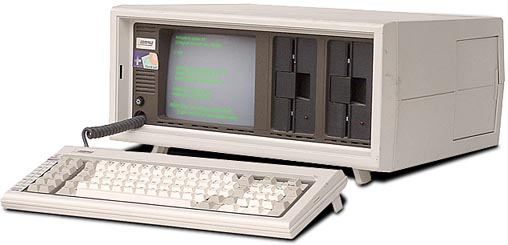
Many years ago I remember an excited friend who worked for one of the vendors of electronic medical records (really this was more of a billing and patient tracking and management system than and Electronic Health record) desperate to show me some of their new applications – in particular a module they had developed to capture clinical data. He pulled out his “laptop” (it was more of a luggable)


Fired up the application, selected a patient and proceeded to enter a blood pressure: click, click, click, click, click, click, click, click…..some 20 clicks later he had entered a blood pressure of 120/80. He was excited and I was not.
I am constantly reminded of this as I watch doctors interact with systems and especially with the ongoing focus on blood pressure (Did you know that May is the National High Blood Pressure Education Month) and the video challenge from ONC
“To create an under 2 minute compelling video sharing how they use health IT or consumer e-health tools to manage high blood pressure”
The winners can be seen here
Key to the challenge is having the data for monitoring as emphasized in the Six Sigma techniques of DMAIC
  • Define
  • Measure
  • Analyze
  • Improve
  • Control
Capturing that data without burdening our clinical staff who should be focused on the patient not on intrusive and distracting tasks of data entry. I made this point a number of years ago "Doctor Please Look at Me not Your EMR" that came from a personal experience in our local practice and as my then 10 year old succinctly put it at the time
“I wish the doctor had spent as much time with me as she did with her PC”
But data is essential and getting this into our medical record is essential to derive the value from these systems. So the study published in Journal of the American Medial Informatics Association (JAMIA): "Method of electronic health record documentation and quality of primary care" who’s conclusion implied that dictating clinical notes “appeared to have worse quality of care than physicians who used structured EHR documentation”.

Digging into the details suggested this was based on old data (2004 – 2008), measured the quality of documentation not the care and that choice in tools is the key to success in EHR implementations and clinicians satisfaction

There are good reasons that dictation as a means of capturing clinical documentation has been so successful for such a long time – it is easy to do, efficient and saves time. But the gap between the narrative text created and the clinical data we need to manage our patients widens with each report created. The JAMIA report highlighted the impact this can have on care, offering some insight into the potential decrease in the quality of care that results in disconnecting the clinician from the interaction and clinical decision support tools and data that is built into the EHR. But the process of entering this data must not intrude into the clinical interaction with patients. All is not lost – Natural Language Processing (NLP) tools are bridging this divide allowing clinicians to use their preferred method to capture the patient’s clinical information in narrative form and extracting out the discreet data that is essential for the EHR systems that need the data to drive the decision support tools and workflow processes.

So clinicians can have their cake and eat it too and best of all it allows them to return to the art of medicine and focus on the patient not the technology.

Thursday, April 4, 2013

Clinical Documentation Lifeblood of Healthcare

Awesome video put together showcasing the various aspects of clinical documentation and why it is so important to capture the complete patient story in narrative form


Putting all the details means capturing the diabetes and loss of consciousness

Everything from Assure and the ability to capture anywhere and the exploding area of mobile integration of voice and all the follow up in the back end for HIM

Tuesday, February 12, 2013

Doc Tornado's Quest for Clinical Documentation

CLINICAL DOCUMENTATION

NOW I'LL TELL YOU WHAT I WANT, WHAT I REALLY REALLY WANT
Enough bitching like a Spice Girl, it's time to structure my wish list and share it with you, dear vendors. Let's start with my favorite topic if you don't mind: Clinical Documentation and Data Input.

So here's my story from A to Z...if you wanna get with me, you gotta listen carefully.

In his review of what he really really wants Doc Tornado's laid out his requirements that include....choice
No one size fits all and failure to provide clinicians choice is a recipe for problems

Sometimes a form fits, sometimes it doesn't. And of course includes the range of speech tools from mobile dictation to speech recognition that offes flexibility between, as he puts it


On my end, I’ll feel like front-end on Mondays and back-end on Fridays

It should include intelligent understanding and interaction.

The good news is much of this is here today both in terms of the choice for the technology but also the intelligent interaction. This teaser video gives a good sense of what's possible:

So I would say that's "Alohomora":

Come visi our booth at HIMSS to see this in action at Booth 4025 (view a floor plan here

Posted via email from drnic's posterous

Wednesday, February 6, 2013

Digital Health Needs To Be More Than Just Digital Data

This last week – the widely read Dr. Rob Lamberts lamented the usability of his Electronic Medical Record (EMR) software for his new primary care practice. It’s worth reading (here) as it highlights the larger systemic problem of EMR software generally and then specifically as EMR software is overlaid onto a new payment model.

In Dr. Lamberts case, a software solution – one that was built specifically around billing mechanics (namely ICD-9 and CPT “codes”) – was overlaid onto a new practice model that bills patients a flat monthly fee for “all-they-can-eat” primary health care. Almost all EMR/EHR software has been purpose-built to support billing as the primary function. Clinical data capture is the secondary objective – and the EMR/EHR software vendor landscape is 100% reflective of that priority (as is the entire system). At last count, there were over 600 EHR “vendors” and over 300 that had reported at least one doctor or practice that ”attested” to “meaningful use” with their software (a requirement for HITECH Act payment). To date, we’ve spent over $10B on “digitizing” health records.

I’m struggling to find the right analogy, but I imagine the effect Dr. Lamberts (and others) are feeling is similar to putting a V-8 engine onto a bicycle. Yes, you could (conceivably) engineer that solution – but why would you – and then why would you expect any kind of usable experience? You simply wouldn’t (unless, perhaps, you were Evel Knievel). Even Felix Baumgarten carefully employed a team of 300 (including 70 engineers and doctors) in his lone (and breathtaking) leap from the edge of space.

Forbes colleague David Shaywitz wrote more broadly (and brilliantly) about this in his piece earlier today: Handle With Care: Success of Digital Health Threatened by Power of Its Technology. This too is well worth worth reading as it relates to the “quick-fix” mentality that is pervasive in both our culture and our wheezing health care system. It’s everywhere – and short-sighted. For providers, let’s cram-down EHR solutions so that we can “capture” the downstream data/analytics that we so desperately need to control costs – with little interest, attention or concern to the consequence on the front-end patient dynamics (including both patient AND provider experience). For employers, let’s add “gamification” and “wellness” programs (with “behavioral economics” of course) to the HR/Benefits equation. While we’re at it – let’s automate low-acuity, primary care as much as we possibly can. There – all done. We’ve digitized, gamified and automated the whole mess.

The effect – as evidenced by Dr. Lamberts plight (and flight) – is to eject altogether. The fundamental hope (and risk) of this “direct-to-consumer” model is that personal (and fiscal) sanity will return to the private (often solo) practice of primary care. I’m not sure it’s the right hope (or exit), but I do understand the motivation and it is a worthwhile experiment because, more than ever, we need primary care physicians to stay engaged as we work through our health care transformation. I argue that Medscape’s chart on ”average” physician compensation highlights the broader dilemma – namely that primary care (the very entry point for health care) is the lowest paid.

We pay primary care in much the same way that we pay tellers at the bank. Tellers aren’t dead – nor is their survival at risk – but it’s tilting heavily toward the retail economy. So are primary care physicians. These are all the ”gatekeepers.” In fact, that may well be the exact path we’re on as we attempt to automate (and further minimize) the dynamics of primary care. Several companies (eg: Healthspot – which I wrote about in my CES coverage earlier this month) are building the physical Kiosk’s specifically targeting low-acuity, primary care. As a primary care physician – the assault is relentless – from every direction.

  • Current payment rates that are unsustainable to a practice
  • Further cuts to payment rates in the forecast
  • Increasing demand for “accountability” (both regulatory and ACO’s)
  • Complete subjugation by other specialties – where primary care is treated as the “funnel” or “filter” to higher-rate specialties
  • Kiosk’s and eVisits as the final automation of primary care altogether (do we know who the doc-in-a-box is? Should we care?)
  • Ever increasing volume as more people join the ranks of the “insured”

The technology overlay is simply the gamification and behavioral economics to support an increasingly desperate need for lower cost, but it’s unrelated to any metrics that support either better health outcomes or better care delivery. We don’t know. It’s entirely experimental.

All of which speaks to the huge need for more systemic changes around payment reform. As it stands today, the Affordable Care Act (ACA) does little more than tweak the current payment model. Yes, Accountable Care Organizations (a by-product of the ACA) are scaling broadly, but adding a risk component to the payment of care doesn’t fundamentally change the “fee-for-service” model – or mentality. As Paul Levy highlighted, ACO’s are “Neither Accountable nor Caring nor Organized”. Ouch. Yes, provider compensation will absolutely be tied to outcome (including things like “re-admissions”), but is that really the biggest, the best and only lever?

Don Berwick has suggested three ”triple aims.” We all know the first – better care, better health and lower cost, which is the ultimate goal, but there are two others. The second is:

  1. We can get to better care, better health and lower cost – but we’re going to have to improve our way there.
  2. The 1st Law of Improvement is that every system is perfectly designed to achieve the results it gets (ie: the current system is performing as built).
  3. Improvement science is a system science – not an economic science.

The third is that there are 3 types of product improvements (and we need all 3):

  1. Defect removal (ie: reducing hospital infections, fraud and waste)
  2. Reducing costs (while leaving the customer the same or better)
  3. Creating a new product or service (ie: a new model)

Don’s preferred example of a new model is the (Malcolm Baldridge National Quality Award winning) Nuka system in Alaska– but it’s not the only example. I wrote about the success of “worksite healthcare” last year. Using back-of-the envelope math – SAS (#2 for 2013 – and on the list of Top 100 Companies to Work for – 10 times) estimates that they save about $6M per year on healthcare costs. It’s not just lower cost either. They continuously demonstrate much happier, more productive employees – who also enjoy better health.

When describing either model, Nuka or worksite, there is almost no reference to digitized workflow. There is no reference to “gamification” or ”behavioral economics.” There’s also no reference to ”payment risk” or EMR “woes.” There is just improved healthcare – and the result is threefold. Better care, better health and lower cost. Triple aim. It does exist – and there’s even more than one model. We can get there but it’s through improvement. As Don Berwick suggests – that’s a system science – not an economic one. Unless and until we see that – I question how much healthcare transformation we’re actually getting. I’m just asking.

Dan's right - it is not just about the data and coding. There are no quick fixes but listening to the clinicians and individuals enduring some of these changes is a good starting point and his point about primary care physicians is important - the key to helping patients manage their care. I would suggest that perhaps that what will happen is individuals will take on more of this role, supported by technology and clinical professionals (and not just doctors)

Posted via email from drnic's posterous

Friday, January 18, 2013

Restyling the Mundane Medical Record Could Improve Health Care

Media_httpwwwwiredcom_vhgli

Too good to not follow up to the previous post as another great article on re-workign the medical record (perhaps medical "record" is not a great term?). Personal Health Story/Personal Health History/Personal Health Chronicle...
Whatever we call it this will be is the way our health information will be stored and shared

Posted via email from drnic's posterous

The Future of Medical Records - Great Outline of Possible Future

Media_httpcdntheatlan_jvyza

Nice post on the possible future of medical records - there has been a lot fo traffic on my e-mail on the lack of value of EMR's and several folks commented on the lack of innovation in the systems. Several noted that just digitizing the paper process will unlikely bring any satisfaction or even major progress to Healthcare
Which is why this piece is so timely - some great concepts, visually pleasing and offering some interesting ideas

Posted via email from drnic's posterous

Monday, November 5, 2012

How Speech Recognition Improves Military Medical Care

Media_httpwwwfedtechm_efhjd

Dr Robert walker among a growing band of physicians finding benefit in dictating in front of his patients. As he puts it:


Before I started dictating in front of patients, I would have said I don’t make many mistakes. But now once or twice a week they correct me — they say it was their left knee, not their right, or that the accident happened two weeks ago, not last week. In that way, the patient verifies what’s going into their medical record, and it gives them ownership of it.

Speech brings efficiencies that saved the Army $3 Million but the process of creating the medical record in front of the patient brings additional quality control and greater detail in the medical record.

The tips to help successful adoption are good but I would include the primary requirement is good training and configuration

Posted via email from drnic's posterous

Monday, October 29, 2012

November Voice of the Doctor Guests

An exciting month for Voice of the Doctor with the following guests appearing

November 2: Terri Mitchell, MSN RN
Director, Clinical Informatics Solutions at Nuance Communications 


We will be talking about The Healthcare Data Imperative and the challenge of capturing Healthcare data and the importance of capturing information at the point of care when the information is fresh in the mind and the value this brings to affecting a postive change in healthcare quality outcomes and appropriate reimbursement. We will discuss the need to focus on real time vs retrospective analysis and how this can be achieved in our new digital world of electronic medical records and the value of patient engagement as part of this process.


November 9: Dr Ashish Jha, MD
The C. Boyden Gray Associate Professor of Health Policy and Management at the Harvard School of Public Health and blogs at An Ounce of Evidence


He wrote this piece:  Asking the Wrong Questions About the Electronic Health Record that was a response to the article posted recently on the Wall Street Journal: A Major Glitch for Digitized Health-Care Records that stated:

Now, a comprehensive evaluation of the scientific literature has confirmed what many researchers suspected: The savings claimed by government agencies and vendors of health IT are little more than hype.

And was subject to many active discussions on several of the listservs. Dr Ashish Jha and I will be discussing some of the fundamental issues of our broken system and the challenges faced in our archaic paper based system which most can agree do nothing to empower clincians to provide excellent care. Technology on its own cannot provide all the answers but must be part of a broader based solution.

The problem is that some Health IT boosters over-hyped EHRs.  They argued that simply installing EHRs will transform healthcare, improve quality, save money, solve the national debt crisis, and bring about world peace.  We are shocked to discover it hasn’t happened – and it won’t in the current healthcare system.

 We need to leverage the potential by asking and answering other related questions

  • How do we create incentives in the marketplace that reward physicians who are high quality?
  • How do we allow physicians to capture efficiency gains?
  • What to do about fee for service - are ACO's the answer?
  • How does technology play an effective part in this transformation

As Dr Jha said:

The debate over whether we should have EHRs is over.  Can we fix our broken healthcare system without a robust electronic health information infrastructure? We can’t.  Instead of re-litigating that, we need to spend the next five years figuring out how to use EHRs to help us solve the big problems in healthcare.

Should be a great discussion

And to close out November I am excited to announce that I will be joined by Dr Eric Topol, MD


November 16, Dr Eric Topol, MD
Professor of Genomics at The Scripps Research Institute
Follow him on twitter @EricTopol

He is also the author of
The Creative Destruction of Medicine: How the Digital Revolution Will Create Better Health Care and has named in the list of the Top 100 Most Influential Physician Executive in Healthcare, 2012 by Modern Healthcare

If you have not read the book, you should. You can read the First Chapter here: The Digital Landscape: Cultivating a Data-Driven, Participatory Culture to get a taste for the wide open opportunites many of which are here and even more coming in the very near future. With so many topics to choose from:

  • The Current state of medicine and the challenges
  • Individualized medicine vs Group Thinking
  • Patient Engagement and the power of mobile Health technology
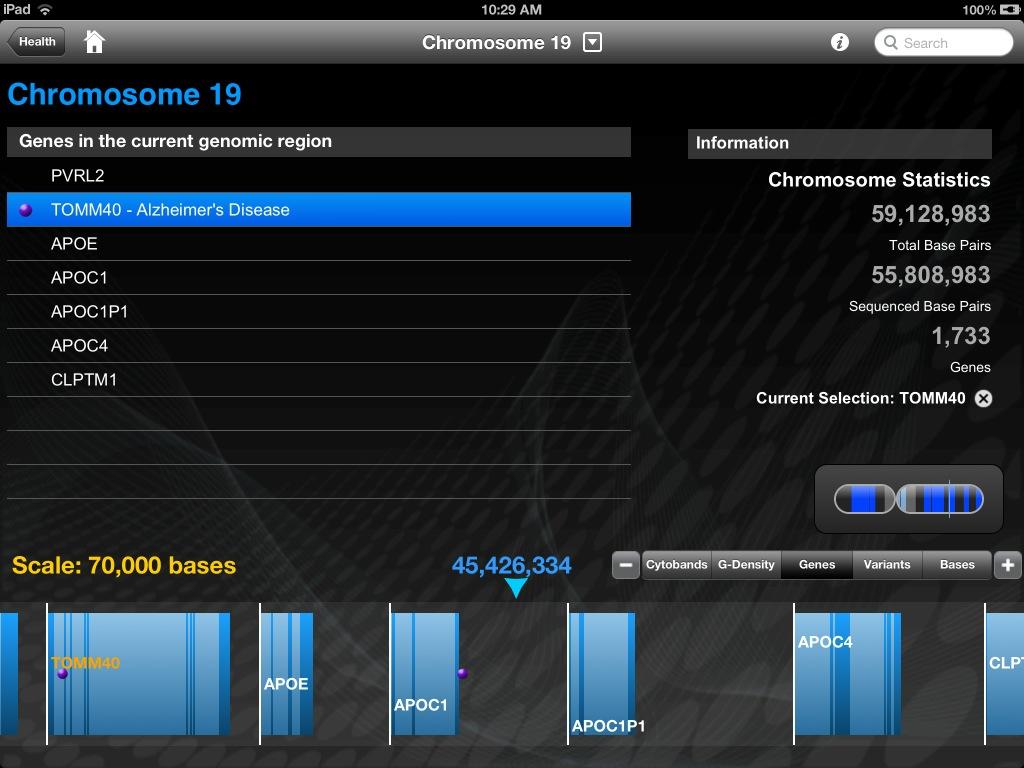
  • The Genome and Sequencing (Dr Topol recently had his genome sequenced - one of an expanding number of people to do so):

And Posted some initial analysis with a 99c App!


So many topics and so little time. Focusing on the current challenges in Alzheimer's treatment makes much of this come into focus. A recent story on NPR: Treatment For Alzheimer's Should Start Years Before Disease Sets In raises one of the big challenges in this disease....How do we know if we need to commence treatment for a disease. It seems unlikley that any preventative treatment can be given to everyone so identyfying those at risk will become a major focus in the coming years. As Dr Topol noted in his book and in many of his presentations and discussions on the effectiveness of Plavix varies based on presentation of the genotype CYP2C19. This was subject to an extensive debate and included this posting on the Topolog posting An important miscue in clopidogrel pharmacogenomics and in a perfect example of the use of technology and engagement this videoif this works here otherwise download a verion here)


Since November 23 is the day after Thanksgiving we will have a re-run on November 23 and Nov 30 from a previous shows

Hope you can join me 


Join me on Friday at 2:30 ET on VoiceoftheDoctor

There are three ways to tune in:

• Stream the show live – click the Listen Live Now to launch our Internet radio player.
• You can also call in. A few minutes before our show starts, call in the following number:  Call: 1-559-546-1880; Enter participant code: 840521#
• HealthcareNOWradio.com is now on iTunes Radio!  Stream the show live – you’ll find this station listed under News/Talk.


Posted via email from drnic's posterous

Wednesday, October 24, 2012

Will Nuance's Nina Do What Apple's Siri Won't? - Forbes

A series of  Forbes Insights profiles of thought leaders changing the business landscape: Gary Clayton, Chief Creative Officer, Nuance

Apple’s Siri iPhone voice-based App interface has forever changed consumer expectations of how to interact with their computing devices.  But Nuance’s Nina may represent an even bigger transformation—the consumerization of IT.  Nuance has over 10,000 employees, $1.4 billion in revenue in FY ‘11, $7.65 billion market cap company, headquartered in Burlington, Massachusetts and is best known for its Dragon Naturally Speaking voice recognition software. They just might be the biggest, most successful company you never heard of before. They describe themselves as “focused on developing the most human, natural intuitive ways to use your voice to take command of information.”

Gary Clayton, Chief Creative Officer, Nuance

Gary Clayton, Chief Creative Officer, Nuance

Siri is cool.  But Nina may represent a true leap forward in man-machine learning and artificial intelligence. I recently spoke with Gary Clayton, Nuance’s Chief Creative Officer about his role in bringing Nina to life and his thoughts on how Nina is already bringing a welcome change into how businesses put the tool he helped to create to work to better serve their customers.  He’s the guy responsible for turning some of the world’s most sophisticated software algorithms and artificial intelligence into engaging and user-friendly interfaces.  He also oversees innovation, strategy and design at Nuance.  “I wear a lot of hats,” said the understated Clayton.

The major innovation behind Nina is its capability to retain context over time.  People can interact with Nina, the virtual assistant for customer service apps, and carry on a complex set of instructions within the same conversation flow.  Its artificial intelligence learns and anticipates the user’s interests and requests over time—using natural language understanding.  For example: a person can ask Nina what their checking account balance is, then a person can ask Nina to show them the charges over $200 and then for the month of August, or one could go through the bill paying process by simply stating “I would like to pay the balance on my cable bill on Friday from my savings account.” Humans communicate through context, not through complex, detailed step-by-step instructions that have always been the hallmark of human to computer interaction.

Imagine calling your insurance company and having a pleasant and successful interaction with an always friendly voice.  No more yelling and swearing into the phone “Operator”!!  Nina can also interact across devices and applications, so that customers can choose to connect by voice, mobile device or web page or any combination and still retain the context of the interaction.  In fact, one such enlightened financial services company USAA, is implementing Nina to create a better customer experience.  “USAA is extraordinarily responsive to their customers; one of the very best in their field and represent a gold standard in managing the customer experience,” said Clayton.

“People like to anthropomorphize technology,” stated Clayton. He knows it’s a basic human need to understand and control the world around us. Nina is one expression of meeting that need. That’s what drives Clayton in what he calls his never-ending quest to understand the creativity behind science and art. He started his quest as a physics undergrad at SUNY and later ventured to San Francisco for interdisciplinary studies and eventually earned his BA in communication from San Francisco StateUniversity.  He sees creativity as the synthesis of art and science.

This led to a fascinating career path that began with the explosion of Silicon Valley technology drawing the film business toNorthern California. There, Francis Ford Coppola, George Lucas and others set up shop. Clayton worked with all of them but most notably Lucas and his Skywalker Ranch studios inMarin County,California, where he engineered sound recordings, which included the first recordings at Skywalker Sound with the San Francisco Ballet Orchestra.  He founded and ran his own multi-media production company from 1985 to 2000 and worked on many Academy Award winning films, Grammy winning albums and Emmy winning TV shows. There he worked on projects with Michael Jackson, Dave Brubeck, The Cure, Brian Eno, David Bowie, Mel Torme, Sam Shepard, David Byrne, Norman Mailer, Apple Computer (Knowledge Navigator,Newton) and many others. After a succession of consulting projects at Pacific Bell and a start-up gig at TellMe, (acquired by Microsoft for a reported $800 million in 2007) he spent time at Yahoo where he headed up their speech strategy.  From there he landed at Nuance in 2008.  Clayton is the owner of eight patents and is considered one of the leaders in the digital speech recognition movement.

As one of the key developers of the Dragon Go! and Nina product lines, he is helping to push Nuance into the forefront of turning mobile device personal assistants into personal advisers.  His vision of the synthesis of art and science may be a never-ending process, but his work on Nina just may be the full fruition of a lifetime of trying.


Imagine that - a User friendly EMR interface that uses the power of your voice and a natural exchange to navigate and interact with. The long term memory (or retaining of context) offers a more natural and engaging exchange


The major innovation behind Nina is its capability to retain context over time. People can interact with Nina, the virtual assistant for customer service apps, and carry on a complex set of instructions within the same conversation flow.

The example cited is for your banking exchange but imagine this in healthcare
"Nina show me my patients for today"
"What are the latest laboratory results for Mr Jones"
"Are there any new results on my patients marked abnormal"

You get the picture

Changing the interaction with technology, especially in the mobile world but also in every human/computer interface shielding the user from the complexity of the technology by providing an easy conversational speech front end.

I can hear Scotty now..."a keyboard...how quaint"

Posted via email from drnic's posterous