Tuesday, November 24, 2015
Taming the Dragon
Check out this post: Taming the Dragon
http://drnick.vanterheyden.com/taming-the-dragon
After an exciting 5 years with Nuance, I am saying goodbye to pursue a new opportunity. As is often the case with major decisions like this, I have had a chance to reflect on how far we have come and how many people I have had the privilege of working with in what has been an exhilarating and fulfilling journey.
.... After an exciting 5 years with Nuance, I am saying goodbye to pursue a new


Tuesday, November 17, 2015
mHealth - The Small Matter of Price
Check out this post: mHealth - The Small Matter of Price
http://drnick.vanterheyden.com/mhealth-the-small-matter-of-price
T
....This week I had the fortune of speaking at the Connected Health - Healthcare Reinvented -
Tuesday, November 10, 2015
Healthcare Technology need to include Patients
Check out this post: Healthcare Technology need to include Patients
http://drnick.vanterheyden.com/healthcare-technology-need-to-include-patients
A survey conducted at HIMSS15 found that patient satisfaction
and patient engagement rank among the top priorities for CIOs. In fact, they rank above improving care coordination, streamlining operational efficiencies, and achieving Meaningful Use.
The tides are clearly changing. We’ve all been talking about what the shift to a value-based care model means for healthcare organizations.
....A survey conducted at HIMSS15 found that patient satisfaction and patient engagement rank
Monday, November 9, 2015
Our Remote Future in Healthcare
Here\'s my latest blogpost: Our Remote Future in Healthcare
http://drnick.vanterheyden.com/our-remote-future-in-healthcare
Its an exciting time to be in healthcare and medicine - technology is bringing so much innovation and opportunity to improve the delivery, quality and reduce the cost of healthcare. Much remains to be done
At our our recent DellWorld conference we captured insights into this exciting future
As Dr.
.......Its an exciting time to be in healthcare and medicine - technology is bringing so much
Wednesday, October 28, 2015
Why All Doctors Should be on Twitter

Tuesday, October 27, 2015
Memorial Weekend - Be Happy
Check out this post: Memorial Weekend - Be Happy
http://drnick.vanterheyden.com/memorial-weekend-be-happy
This memorial day is a good time to reflect and give thanks - in fact this visual gives a great sense of the sacrifices of so many for our freedoms and life today
Original from Facebook
Here's one for the SHARE button. A truly powerful image that tells it like it is.
....This memorial day is a good time to reflect and give thanks - in fact this visual gives a
Thursday, October 22, 2015
DellWorld and Healthcare Disruption
Here\'s my latest blogpost: DellWorld and Healthcare Disruption
http://drnick.vanterheyden.com/backtothefuturedellworld
B
.......Back in 1985 the world was introduced to the Doc and Marty McFly in the iconic movie
Wednesday, October 21, 2015
Healthcare Disruption
Here\'s my latest blogpost: Healthcare Disruption
http://drnick.vanterheyden.com/backtothefuturedellworld
B
.......Back in 1985 the world was introduced to the Doc and Marty McFly in the iconic movie
Tuesday, October 20, 2015
HITMC Conference Review First Day
Check out this post: HITMC Conference Review First Day
http://drnick.vanterheyden.com/hitmc-conference-review-first-day
I
....I attended the Health IT Marketing and PR Conference Schedule (HITMC) brought to you by
Thursday, October 15, 2015
Calling Doctor Data
Here\'s my latest blogpost: Calling Doctor Data
http://drnick.vanterheyden.com/calling-doctor-data
With a nod to Star Trek, Bones, Data and even the Holo Doctor
Much of medical practice is as much a mystery to doctors as it is to patients.
Human physiology is so complex, and the external variables so numerous, that we often have no sure knowledge of why one patient did well or another patient didn't. Every physician longs for some way to really know what will work for each patient.
....... With a nod to Star Trek, Bones, Data and even the Holo Doctor Much of medical practice
Tuesday, October 6, 2015
Please Join me for #NHITWeek Tweetchat Thu Oct 8 at 3pm ET #connectedPatient

HIMSS15 The Year of DigitalHealth, Interoperability and Security
Check out this post: HIMSS15 The Year of DigitalHealth, Interoperability and Security
http://drnick.vanterheyden.com/himss15-the-year-of-digitalhealth-interoperability-and-security
HIMSS is finally upon us and like the 20,000+ people heading Chicago there is a lot to take in, many options and far too much for any one person to see or catch up with.
....HIMSS is finally upon us and like the 20,000+ people heading Chicago there is a lot to
Friday, May 29, 2015
Healthcare Technology need to include Patients
A survey conducted at HIMSS15 found that patient satisfaction

and patient engagement rank among the top priorities for CIOs. In fact, they rank above improving care coordination, streamlining operational efficiencies, and achieving Meaningful Use.
The tides are clearly changing. We’ve all been talking about what the shift to a value-based care model means for healthcare organizations. What we haven’t been talking about is how this shift is transforming our patients into “prosumers.”
There’s a saying, “To a worm in horseradish, the world is horseradish,”

meaning we are predominantly aware of that which we are surrounded by on a daily basis. Health IT, in all its intricacies and expansiveness, has become hyper focused on making sense of its nebulous infrastructures, working hard to prepare healthcare organizations for next new wave of regulations. Our world, while not horseradish, is composed of goals and milestones that are 100 percent contingent upon these systems.
But, as yet one more unintended consequence of this pursuit, we have become myopic. The business of healthcare is no longer simply confined to a hospital or an IDN site map.
Patients are reaching for their phones, not to call their doctors, but to research their symptoms. They’re educated buyers, looking up reviews before seeing a new specialist, just as they would before buying the latest gadget on Amazon. And, as we enter the era of the Internet of Everything (IoE), they want their wearable devices to meaningfully connect as simply as when they use their phones to play songs from the playlist on their laptop.
It becomes a challenge of sustaining the momentum of the moment. As the wearable trend continues to grow, it is not merely enough to count steps or measure the amount of UV rays absorbed. That won’t keep patients engaged. We need statistics and personal health trends that can be used to foster a richer, ongoing dialogue between patients and their physicians.
Consider the positive health implications for patient who receives a treatment plan from her doctor, which is entered into the EMR during the visit and connected to a three-question daily check-in for three months via a mobile device. The patient could provide a thumbs-up, thumbs-down, or neutral rating (think Pandora playlist) on how the treatment is working, with perhaps an option to enter free text should she choose to expound upon her responses. These daily reports could be aggregated into trends and reviewed by a clinician to make adjustments to the treatment plan as needed, extending patient care beyond confines of the four walls and the 12 minutes of an office visit.
Connectivity and personalization is the zeitgeist. CIOs know this. We are all unique snowflakes, and as more and more people submit their genes for analysis and mapping, we’re proving the increased drive for individuality. While the industry is pushing for population health (a laudable vision indeed), patients are looking not to be considered in aggregate, but to be treated with the same personalized attention they experience when they go to a favorite restaurant where the wait staff recalls their usual order or when they go to a website that remembers all their previous preferences. It’s about not starting from square one every time.
 Patients aren’t going to tolerate the disconnect in healthcare forever. And as digital natives,some generations won’t tolerate it at all. The day is coming where a patient will ask her doctor, “Did you notice that that my headaches seemed to lessen on those days I go to the gym? I’m wondering if there’s a connection?” If her physician isn’t paying attention to her, she will find a physician, or perhaps even an intelligent medical assistant, who will.
This post originally featured on HISTalk
and patient engagement rank among the top priorities for CIOs. In fact, they rank above improving care coordination, streamlining operational efficiencies, and achieving Meaningful Use.
The tides are clearly changing. We’ve all been talking about what the shift to a value-based care model means for healthcare organizations. What we haven’t been talking about is how this shift is transforming our patients into “prosumers.”
There’s a saying, “To a worm in horseradish, the world is horseradish,”
meaning we are predominantly aware of that which we are surrounded by on a daily basis. Health IT, in all its intricacies and expansiveness, has become hyper focused on making sense of its nebulous infrastructures, working hard to prepare healthcare organizations for next new wave of regulations. Our world, while not horseradish, is composed of goals and milestones that are 100 percent contingent upon these systems.
But, as yet one more unintended consequence of this pursuit, we have become myopic. The business of healthcare is no longer simply confined to a hospital or an IDN site map.
Patients are reaching for their phones, not to call their doctors, but to research their symptoms. They’re educated buyers, looking up reviews before seeing a new specialist, just as they would before buying the latest gadget on Amazon. And, as we enter the era of the Internet of Everything (IoE), they want their wearable devices to meaningfully connect as simply as when they use their phones to play songs from the playlist on their laptop.
It becomes a challenge of sustaining the momentum of the moment. As the wearable trend continues to grow, it is not merely enough to count steps or measure the amount of UV rays absorbed. That won’t keep patients engaged. We need statistics and personal health trends that can be used to foster a richer, ongoing dialogue between patients and their physicians.
Consider the positive health implications for patient who receives a treatment plan from her doctor, which is entered into the EMR during the visit and connected to a three-question daily check-in for three months via a mobile device. The patient could provide a thumbs-up, thumbs-down, or neutral rating (think Pandora playlist) on how the treatment is working, with perhaps an option to enter free text should she choose to expound upon her responses. These daily reports could be aggregated into trends and reviewed by a clinician to make adjustments to the treatment plan as needed, extending patient care beyond confines of the four walls and the 12 minutes of an office visit.
Connectivity and personalization is the zeitgeist. CIOs know this. We are all unique snowflakes, and as more and more people submit their genes for analysis and mapping, we’re proving the increased drive for individuality. While the industry is pushing for population health (a laudable vision indeed), patients are looking not to be considered in aggregate, but to be treated with the same personalized attention they experience when they go to a favorite restaurant where the wait staff recalls their usual order or when they go to a website that remembers all their previous preferences. It’s about not starting from square one every time.
Patients aren’t going to tolerate the disconnect in healthcare forever. And as digital natives,some generations won’t tolerate it at all. The day is coming where a patient will ask her doctor, “Did you notice that that my headaches seemed to lessen on those days I go to the gym? I’m wondering if there’s a connection?” If her physician isn’t paying attention to her, she will find a physician, or perhaps even an intelligent medical assistant, who will.This post originally featured on HISTalk
Saturday, May 23, 2015
Memorial Weekend - Be Happy
This memorial day is a good time to reflect and give thanks - in fact this visual gives a great sense of the sacrifices of so many for our freedoms and life today

Original from Facebook
Here's one for the SHARE button. A truly powerful image that tells it like it is.
Posted by Madison Rising on Thursday, October 30, 2014
So while thinking about how lucky we are we should try hard to be happy as Bobby McFerrin suggested: “Don’t Worry, Be Happy” So in the spirit of focusing on happiness which is well proven to improve your life this piece in Time Magazine: Happy Thoughts: Here Are the Things Proven To Make You Happier choked full of great ideas and principles - starting with Gratitude which
Showing gratitude for the good things you have is the most powerful happiness boosting activity there is....which seemed a perfect match for today. But there are many other elements starting with
Doing what you are good at - no matter what that might be as often as possible - Starving Artists are happier with their jobs which goes a long way to explain the power of Regina Holliday and her amazing presence and power in medical advocacy (She’s just a published her first book “The Writing on the Wall” which should be required reading and would definitely be on Oprah's book list if that were still thing)
As for you time - spend it with the people you like - the happiest people are social with strong relationships and that describes much of the online community around Healthcare and Patient advocacy that i consider myself very lucky to be part of. There have been some studies that suggest a causation between happy social networks influencing others and helping them to be happier (I know could just as easily be correlation but either way Happiness is infectious)
Money can help but is not essential to happiness and it is not good to focus on money or the desire for it.
Well known that giving is better for happiness than receiving - notable during the holiday that the giving of gifts is more satisfying than receiving. Interestingly striving for ambitious goals has a positive effect and being optimistic (even bordering on delusional) has positive effects but it is this list of “big life regrets” that is worth highlighting
- I wish I’d had the courage to live a life true to myself, not the life others expected of me.
- I wish I didn’t work so hard.
- I wish I’d had the courage to express my feelings.
- I wish I had stayed in touch with my friends.
- I wish that I had let myself be happier.
and as someone pointed out - no one says as they near death - I wish I had worked much harder and spent more time at work.
Relish the time off, enjoy your life, family and friends, savor the positive experiences and do so frequently even in small doses.
Wednesday, April 15, 2015
MasterChef in Healthcare: Integrating Social Media
Social Media is rapidly becoming an integral part of our lives. Despite the pervasive nature of the communication channel healthcare remains a technology laggard. This presentation from HIMSS15 Wednesday Apr 15) will offer insights to help understand why healthcare professionals should join the community, participate in the discussion and how can do so successfully.

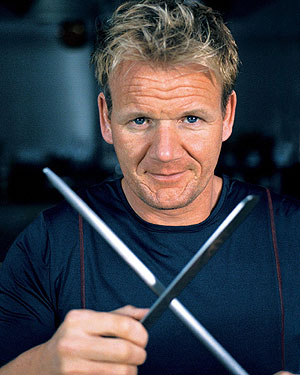
I presented this topic at HIMSS15 on Wednesday Apr 15 - you can find the listing here. As promised I am posting a summary of the points as well as a link to the Slideshare for that presentation
You can find the presentation on my slideshare (nvt) here
####### Add link to uploaded ppt

Technology is all pervasive in our lives and Social media is everywhere - in fact in a recent survey of 3,000 people conducted in the US, UK and Germany to help counter the limited time with their physicians, patients are seeking information and embracing technology outside of the doctor’s office to come to appointments prepared. Approximately 80 percent of patients feel engaged in their own health:
- 68 percent of patients bring a list of questions to each doctor's consult;
- 39 percent have checked WebMD or another online source in advance; and
- 20 percent bring personal health data from outside monitors.

You can see some 87%o f US adults are online in this Pew internet research so if you are not on board you are missing a huge opportunity but more importantly your patients are forming an opinion about you before they meet you


What is Social Media
- It’s a conversation, not a lecture
- It’s an extension of everyday interaction
- It’s group driven, not top-down
- It’s messy, disorganized & hard to control
- It’s a tool, not an end-point
- But most of all…
If you have not already - go to twitter and sign up for an account
What to Tweet
- What you have read that you want to share with others
- When and where you are speaking
- Something you post on your blog
- A link to a Web site that you find interesting
- Listen to conversations happening online using keywords (hashtags, lists and searches) – learn from your colleagues, friends and patients
- Befriend people – and then earn their trust by solve problems, answering queries, helping and providing useful information
- Share information, valuable content with them
- Questions and Requests for information and help – crowdsourcing answers
- At a minimum – Lurk, Listen and Learn
There are many HashTags to follow and starting by assign friends and colleagues what they follow is a a good start but then get involved - join an online chat and community and take a look at the listing of healthcare hash tags from symplur. Listed below are a few of the healthcare hash tags I follow:
#hcsm (h/c social media)
#HCLDR (healthcare leaders)
#HITsm (health IT social media)#MedEd (medical education)
#mHealth
#eolchat (end of life/elder chat)
#BCSM (breast-cancer social media)
#LCSM (lung-cancer social media)
#BTSM (brain tumor social media)
#S4PM (Society for participatory medicine)
But I received a aggregated list when I polled my followed that included all these:
Others
#QuantifiedSelf
#KareoChat
#HITChicks
#HIT
#healthIT
#hcrefor
#ACA
#ONC
#HL7
#Interop
#IoT
#HIMSS15
#POWHIT - People & Organizations improving Workflow w/HIT
#RareDisease
#foodallergy
#rheum
#bcsm
#gyncsm
#medx
#BlueButton
#patientengagement
Chats
#JACR 4th Thurs 12pm EST
#LCSM Every other Thurs 8pm EST
#BCSM Mon 9pm ET
#HCLDR Tues 8:30pm EST
#MedEd Thurs 9pm EST
and
@twubs @hashtracking or @tweetreachapp
My thanks to all my twitter friends who contributed
@HealthcareWen @HIMSS @lsaldanamd @sjdmd @HealthcareWen @DrJosephKim @dirkstanley @dlschermd @Docweighsin @RossMartin @CraigJoseph @RobertWahMD @ishakir @SteltsMD @JenniferJoeMD @StevenChanMD @CIBR_News @Jim_Rawson_MD @aussiclydesdale @ACRselect @AdamFuhriman @Gregmogel @ruthcarlosmd @techguy @MandiBPro @HITshrink @ahier @RandaPerkinsMD @motorcycle_guy @wareflo @susannahfox @Lygeia @ePatientDave @CMichaelGibson @Colin_Hung @annelizhannan @MelSmithJones @Paul_Sonnier @JennDennard @HIStalk @JohnNosta @2healthguru @lsaldanamd @lisagualtieri @EricTopol @ShahidNShah @DanMunro @Daniel_Kraft
Put yourself somewhere on the Social Media Adoption Curve

Add LinkedIn and Facebook - they offer a different channel and voice - Facebook tends to be more social and LinkedIn tends to be more professional/business orientated
There are some good examples already out there
The Mayo Clinic has several properties and their own published guide book to social media and the University of Maryland Medical Center that has blended many channels
What Not to Do
The JAMA 2012 report Online posting of unprofessional content by medical students highlighted a high proportion of violations and problems and there are plenty of examples of people who failed use basic common sense - I personally like the 12 word Simple Social Media Policy from the Mayo
Don’t Lie
Don’t Pry
Don’t Cheat
Can’t Delete
Don’t Steal
Don’t Reveal
Conclusion
- Social Media for Physicians is a Game Changer
- Social media, when effective, will establish a physician’s brand and connect him/her with those in need of their services
- With increased deductibles, more consumers will “shop” using social media sites.
- Social Media will Expand the Physician’s Role with Patients
- Social media is shaping patient encounters with physicians and that impact is expected to increase significantly
- Extending the patient experience will foster existing patient relationships and improve patient outcomes, especially for long-term chronic conditions.
Where are you on the social media ladder and are you going to climb higher?

Friday, April 10, 2015
HIMSS15 The Year of DigitalHealth, Interoperability and Security
HIMSS is finally upon us and like the 20,000+ people heading Chicago there is a lot to take in, many options and far too much for any one person to see or catch up with. So what do you do?

First off - download the HIMSS Mobile APP that now comes with GPS intelligence which hopefully will start to provide keen insights into activities and opportunities that are nearby as you move around Chicago, the convention center and beyond
Download and print (I know not very environmentally friendly but there is a lot to absorb) the HIMSS Conference Guide (72 Pages) - or if you are feeling really clever send it to you iDevice, Pocket, Kindle or some other reading device
Or use the online version of the HIMSS of the guide - here
For the physician centric guide - head on over to this living breathing dynamic Google Document - put together by Wen Dombrowski (@HealthcareWen)
For the HIT Centric Guide from John Lynn (@TechGuy)
For the latest and greatest news be sure to follow the #HIMSS15 hashtag, and others linked to the conference including #DrHIT
And your best option for keeping up with the latest and greatest from Symplur tracking system on #HIMSS15 and that page features additional topics and tags worth following and tracking
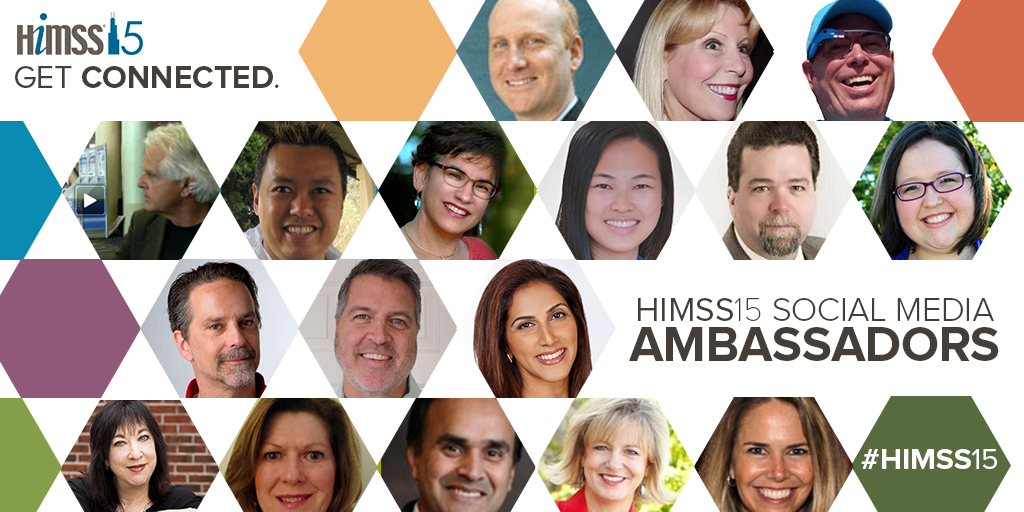
And of course follow your Social Media (#SoMe) Ambassadors can all be found in this list on twitter

First off - download the HIMSS Mobile APP that now comes with GPS intelligence which hopefully will start to provide keen insights into activities and opportunities that are nearby as you move around Chicago, the convention center and beyond
Download and print (I know not very environmentally friendly but there is a lot to absorb) the HIMSS Conference Guide (72 Pages) - or if you are feeling really clever send it to you iDevice, Pocket, Kindle or some other reading device
Or use the online version of the HIMSS of the guide - here
For the physician centric guide - head on over to this living breathing dynamic Google Document - put together by Wen Dombrowski (@HealthcareWen)
For the HIT Centric Guide from John Lynn (@TechGuy)
For the latest and greatest news be sure to follow the #HIMSS15 hashtag, and others linked to the conference including #DrHIT
And your best option for keeping up with the latest and greatest from Symplur tracking system on #HIMSS15 and that page features additional topics and tags worth following and tracking
And of course follow your Social Media (#SoMe) Ambassadors can all be found in this list on twitter
Tuesday, March 24, 2015
Digital Health Technology Trends from SXSW
Great graphic that HITConsultant posted in this update SXSW Health Tech Trends

Health and fitness apps, smart devices and connected products are making us more aware of our own health—and more active participants in our efforts to stay healthy. At the same time, health providers are looking to technology for smarter ways to deliver quality care, whether we are in the hospital or at home.

- Wearable technology - 80% of consumers would benefit from the use of wearable technology
- Connected devices - Using remote monitoring to reduces readmissions
- EHRs - 71% of physicians now use EHRs and 85% meeting current meaningful standards
- Telehealth 70% patients comfortable communicating with their doctor using digital technology vs hauling themselves in to the officer
- Predictive analytics - More than 80% of standard tasks (BP, glucose etc) and even complex testing (e.g. genomics) will change the way we deliver care as described by Eric Topol in "The Patient Will See You Now"
- Population health management - 70% of providers reporting patient care benefits from population health initiatives
- mHealth apps - 71% of want providers to use mobile apps not least of because they do...going where everyone else is
- Data security - rightly ranked as a major issue among consumers given the ongoing debacle of healthcare related security breaches (Premera and Anthem Blue Cross, the HHS wall of shame)
- Partnerships - increasing healthcare companies entering new healthcare partnership - Tenet seem to be the latest
- Cloud-based technology - importantly seen in conjunction with "Data Security" expect this to grow at a staggering 20% rate and heading to $5.4 billion in annual revenue.
Saturday, March 14, 2015
The intersection of Science Fiction, super-pi, and technology innovation
Celebrating Pi (3.141592653) 3/14/15 at 9:26:53

Today is super-pi day, a day that comes but once a century and extends to a specific time at 9:26:53 seconds (although when that occurs will depends on your time zone. While pi is an infinite non-repeating decimal, there are still mathematicians and scientists seeking to build computers that can run the computation and see how far they can plot the number. As Spock put it:
"Pi as we know the value of Pi is a transcendental figure without resolution"
Here’s to those who choose to defy reality and instead envision a future world – a world that ventures beyond even Mr. Spock’s wildest dreams.
The sad news of Leonard Nimoy’s passing has spurred tributes to not only to his life and craft, but to Star Trek, and what it has meant to so many over the years. In talking with my friends and colleagues, it seems that regardless of age, most Trekkies are also techies.
One of the neatest things about working in technology is that you inhabit two worlds. The first is our everyday reality—with all of its joys, frustrations, celebrations, and inconveniences. This world has soft tender moments tempered by harsh truths; it is simultaneously disappointing and inspiring.
But from this disappointment is born opportunity and a vision for the future world. Here is where Star Trek is a reality, where innovators take those every day frustrations and disappointments as ask themselves how things can be done better.
I’m lucky to work alongside some incredibly innovative, talented minds and whether in R&D or client services, at the core, we all share an inquisitiveness that pulls us from one orbit to another.
“I grew up watching Captain Kirk, Spock, and the Enterprise crew boldly go where no man has gone before. In the 1980s, Star Trek was big in India and it ignited our collective sparks of creativity and imagination. In fact, as school children, we learned to make “communicators” with matchboxes and rubber bands. When I grew up, I realized this type of voice-activated technology could be a reality, and I have dedicated my career to making that vision something that is accessible to everyone. I still wonder how close our technology today is to what Gene Roddenberry had imagined when he created Star Trek.”
- Vivek Kaluskar, Nuance Natural Language Processing Researcher
“Star Trek introduced me to the idea of being able to talk to a computer, and have it understand and respond. That’s actually what got me into speech-recognition technology: it was that sense of wonder about making technology collaborative—where you could ask a device a question and it could parse through vast amounts of data to help you do something faster.
The show also got me interested in science fiction, which has proven to be an enduring affection. It’s amazing to step back and see many ideas that seemed outlandish, like tractor beams, talking computers, matter transmission, and warp drives, are either becoming a reality, or are being researched and developed. Science fiction, in many ways, has created a technological roadmap for the future. It reminds us to keep dreaming and keep asking ‘why can’t we do that?’”
- Ignace Van Caneghem, Nuance Customer Support Specialist
Finding solutions to seemingly impossible situations is what innovators do. It’s why we wake up in the morning. I’m constantly looking for ways to make health IT more connected, accessible, and more intuitive so physicians can focus on treating their patients.
Working in tech isn’t easy, but some of the most worthwhile pursuits are also the most challenging. Thinking outside the box is the key to solving complex problems. There’s an episode of Star Trek (“Wolf in the Fold,” 1967) where Spock forces an alien entity out of the ship’s computer by asking it to calculate pi to the last digit, an impossible feat. At that time, using speech recognition to control a computer was also impossible.
We are a lot closer to the Hollywood vision that’s been in our minds since 1967, creating innovative technology that continues to amaze us at an incredible pace. It was this sense of amazement, instilled by the creative mind of Gene Rodenberry, which helped open my eyes to the potential for healthcare technology to touch not just hundreds, but millions of patients through innovation.
This Saturday is Super Pi Day, a day that comes but once a century. While pi is an infinite non-repeating decimal, there are still mathematicians and scientists seeking to build computers that can run the computation, see how far they can plot the number. Here’s to those who chase the impossible. To those who know there is a better way to do things and dare to keep asking “how?” They choose to live between two worlds and they are building the future. Super-pi day is for you.
This post originally appeared in Whats Next
Monday, March 2, 2015
Would you swipe left on a healthier you?
2015 health IT innovation holds the promise of turning massive amounts of personal health data into usable information that can keep you healthier -- and it's conveniently accessible on your phone.

It’s always comical to watch movies from the 1980s, not only for the distinct style choices that typified that decade, but to see the type of technology most of us can still recall using. It’s nearly impossible to believe we used to happily lug around three pound mobile phones with antennas and back-up battery packs, but they offered a convenience the likes of which we had never seen before. While heading to the 2015 Mobile World Congress (MWC)

one of the most prominent tradeshows in the tech industry, I couldn’t help but think about the pace of change and get excited about the digital health innovations that will be showcased.
We tend to take for granted the conveniences and time-saving effects such innovation has on our lives. Prior to the pervasiveness of mobile technology, if you were walking down the street and you saw someone collapse, you would need to find the nearest store or phone booth to call for help. In fact, most of us probably knew which corners on our daily commute had pay phones. Now, even if you’ve left your phone in the car (an unthinkable these days) you can comfortably rely on the fact that someone nearby will have theirs in the case of an emergency.

From a healthcare perspective, the interconnectivity of devices is fascinating and holds a lot of potential for engaging patients and improving health outcomes. Innovations such as smart watches, which are being outfitted with fitness trackers and heart rate monitoring sensors, can alert the wearer he has achieved 10,000 steps that day or that a runner has reached her target heart rate

While innovations such as these are always exciting, the bigger picture is about creating a healthier population. According to the World Health Organization, cardiovascular disease is the number one cause of death in the world today. Factors such as poor diet and lack of physical activity are some of the main contributors to the disease— and they are also elements most of us struggle to balance. In other words Lifestyle is the biggest contributor to your health as you can see in this video
Wearable devices designed with intuitive interfaces hold the possibility of helping us maintain that balance, remind us of our inactivity, track our daily caloric intake, remind us of how many hours, minutes, and days it has been since our last cigarette (even Spock spoke out against smoking)
When smart watches and fitness bands are tethered to mobile devices, we can layer on more practical applications for personal health management. What if you were walking down the street and your wearable could sense you were having a minor heart arrhythmia, send a signal to your phone, and have it call for help or advice? Or, perhaps, much like our phones can now alert us to poor traffic for our daily commute, what if your wearable, knowing you are diabetic, could sense low blood sugar, sync this data with your phone and tell you some appropriate restaurants and grocery stores nearby? They will be able to translate personal health data into steps and actions we, as patients, can take to better manage our care and keep ourselves healthier.
We’ve come a long way from the shoe-box sized mobile phones of the ‘80s and it will be interesting to see a glimpse of our future technologies, widgets and devices on display at CES 2015. One thing is certain: whether you’re a physician or a patient, we’re all still consumers and our expectations for efficiency and conveniences on mobile devices will play a large role in the next phase our health evolution. In fact, I imagine the current wearable will be considered clunky and dated in as little as 10 years. We might find our lives equipped with even more svelte tools integrated with all of our healthcare data and real-time advisors, apps or avatars that coach, coerce or cheer us on through daily choices to keep our lives and health on the ideal track.
The original article appeared in WhatsNext

It’s always comical to watch movies from the 1980s, not only for the distinct style choices that typified that decade, but to see the type of technology most of us can still recall using. It’s nearly impossible to believe we used to happily lug around three pound mobile phones with antennas and back-up battery packs, but they offered a convenience the likes of which we had never seen before. While heading to the 2015 Mobile World Congress (MWC)

one of the most prominent tradeshows in the tech industry, I couldn’t help but think about the pace of change and get excited about the digital health innovations that will be showcased.
We tend to take for granted the conveniences and time-saving effects such innovation has on our lives. Prior to the pervasiveness of mobile technology, if you were walking down the street and you saw someone collapse, you would need to find the nearest store or phone booth to call for help. In fact, most of us probably knew which corners on our daily commute had pay phones. Now, even if you’ve left your phone in the car (an unthinkable these days) you can comfortably rely on the fact that someone nearby will have theirs in the case of an emergency.
Is your heart in it?
From a healthcare perspective, the interconnectivity of devices is fascinating and holds a lot of potential for engaging patients and improving health outcomes. Innovations such as smart watches, which are being outfitted with fitness trackers and heart rate monitoring sensors, can alert the wearer he has achieved 10,000 steps that day or that a runner has reached her target heart rate

While innovations such as these are always exciting, the bigger picture is about creating a healthier population. According to the World Health Organization, cardiovascular disease is the number one cause of death in the world today. Factors such as poor diet and lack of physical activity are some of the main contributors to the disease— and they are also elements most of us struggle to balance. In other words Lifestyle is the biggest contributor to your health as you can see in this video
Wearable devices designed with intuitive interfaces hold the possibility of helping us maintain that balance, remind us of our inactivity, track our daily caloric intake, remind us of how many hours, minutes, and days it has been since our last cigarette (even Spock spoke out against smoking)
When smart watches and fitness bands are tethered to mobile devices, we can layer on more practical applications for personal health management. What if you were walking down the street and your wearable could sense you were having a minor heart arrhythmia, send a signal to your phone, and have it call for help or advice? Or, perhaps, much like our phones can now alert us to poor traffic for our daily commute, what if your wearable, knowing you are diabetic, could sense low blood sugar, sync this data with your phone and tell you some appropriate restaurants and grocery stores nearby? They will be able to translate personal health data into steps and actions we, as patients, can take to better manage our care and keep ourselves healthier.
Engagement ROI
The benefits of an engaged patient population are numerous. Not only will people be healthier, but consider the above World Health Organization cardiovascular disease statistics and the associated costs of care, medication, and lost productivity, not to mention the personal impact on each of us. For coronary heart disease alone, the U.S. spends $108.9 billion. If people were more dialed in to their health— tracking, monitoring, and being rewarded by insurance companies for adherence to healthy lifestyle activities— imagine the savings both in lives and dollars. And with the pervasiveness of health IT innovation, we are seeing more consumer-facing health apps, such as Sharecare’s AskMD, becoming standard features on mobile devices. People can now use these apps to walk them through their symptoms, offer guidance on managing chronic conditions, and remind them to check in with their doctors.We’ve come a long way from the shoe-box sized mobile phones of the ‘80s and it will be interesting to see a glimpse of our future technologies, widgets and devices on display at CES 2015. One thing is certain: whether you’re a physician or a patient, we’re all still consumers and our expectations for efficiency and conveniences on mobile devices will play a large role in the next phase our health evolution. In fact, I imagine the current wearable will be considered clunky and dated in as little as 10 years. We might find our lives equipped with even more svelte tools integrated with all of our healthcare data and real-time advisors, apps or avatars that coach, coerce or cheer us on through daily choices to keep our lives and health on the ideal track.
The original article appeared in WhatsNext
Saturday, February 28, 2015
Honor Spock's Logic - Follow the Science

Like many I was saddened to hear the loss of one of my heroes growing up - Leonard Nimoy was Spock to me as he was to many others. He epitomized the value of science and logic in the resolution of problems
As my good Friend Jane Sarasohn-Kahn highlighted in her tribute on Healthpopuli: Learning from Mr. Spock and Leonard Nimoy about living long and prospering. Her selection of this iconic moment with Spock were right on target - from one of the great movies from the franchise - Wrath of Khan
Spock: “Do not grieve, Admiral. It is logical: the needs of the many outweigh…”He spoke out on smoking - something that in the end killed him before his time in this tweet from January 2014:
Kirk: “The needs of the few…”
Spock: “Or the one.”
I quit smoking 30 yrs ago. Not soon enough. I have COPD. Grandpa says, quit now!! LLAP
I quit smoking 30 yrs ago. Not soon enough. I have COPD. Grandpa says, quit now!! LLAP
— Leonard Nimoy (@TheRealNimoy) January 30, 2014
30% of people will suffer serious Chronic Obstructive Airways Disease (COPD) as a result of smoking - and that's just one of a slew of diseases inextricable linked to smoking. Smoking while in decline in some countries is on the rise in others and this major health risk remains one a negative impact on personal healthYou can explore WHO data in this interactive chart from who here
But don't limit the application of science to health and smoking - you can put Vaccines in the same category of Science and Logic. Jimmy Kimmel captured the sentiments aptly in this segment featuring real doctors
So much of your health boils down to Lifestyle choices that was so elegantly captured by Brigitte Piniewski, MD in this chart
Where would you rather be - fun or no fun
Spock the Hero with Super Powers
We may wish for the seriously cool vulcan Nerve Pinch
But we don’t need the vulcan nerve pinch. He and his character have taught us that science while not infallible has been working for us for millennium. We have started to tap into the power of science and the opportunity offered to our health and well being.
When it comes to science and healthcare Doctors are your trusted advisor - the relationship may be changing from the paternalistic role to a collaborative role as Eric Topol so eloquently describes in his latest book - The Patient will See you Now. But as captured in this piece by this Trauma Surgeon (@DocBastard) on the Daily Beast: Why You Trust the Internet More Than Your Doctor
...for god’s sake don’t think that you know as much as a doctor because you Googled something. Medical training takes up to a decade or longer (depending on the specialty), so a 0.452 second Google search does not substitute for consulting with an actual physician whose only interest is your health.We are only at the beginning - what comes next and in our future is unimaginable. Our innovation, inventiveness and abilities continue to expand our universe and our understanding. Science wins- every time. Be logical with that splash of human emotion and honor his legacy - open your mind, analyze the facts and apply the science. As Jesse: Yeah, Mr. White! Yeah, science!

Live Long and Prosper (LLAP)
or perhaps
Live Long, Logically and Prosper (L3AP)
On a side note - if you are interested in the history of the Spock Vulcan Salute - Live Long and Prosper you can watch his explanation of his Jewish Origins here (derived from the Hebrew letter shin and the first letter of several hebrew words Shaddai (god), Shalom (hello/goodbye/peace) and Shekhinah (feminine word for god) - How Fascinating!
Subscribe to:
Posts (Atom)


