Wednesday, November 14, 2012

Topol on 5 Devices Physicians Need to Know About

Welcome to this new series, Topol on The Creative Destruction of Medicine, which is named for my new book, The Creative Destruction of Medicine. I'm Dr. Eric Topol, Director of the Scripps Translational Science Institute and Editor-in-Chief of Medscape Genomic Medicine and theheart.org. In this series I will detail the driving forces behind what I believe is the biggest shakeup in the history of medicine.

What I'll be doing in these segments is outlining the parts of my book that represent the digital revolution occurring in the practice of medicine and how this revolution can radically improve the healthcare of the future. In this segment, I'd like to play the role of Dr. Gizmodo and show you many of the devices that I think are transforming medicine today. These devices represent an exciting opportunity as we move forward in the practice of medicine.

Let me just run through some of these. This is 2012, obviously, and this is something that we're going to build upon. You're used to wireless devices that can be used for fitness and health, but these are now breaking the medical sphere. One device you may have already noticed turns your smartphone into an electrocardiogram (ECG). The ECG adaptor comes in the form of a case that fits on the back of a smartphone or in a credit card-size version. Both contain 2 sensors. With the first model, you put the smartphone into the case and then pull up the app -- in this case I'm using the AliveCor app -- and put 2 fingers on each of the sensors to set up a circuit for the heart rhythm. Soon you'll see an ECG. What's great about this is you don't just get a cardiogram, which would be like a lead II equivalent; using the "credit card" version, you get all the V-leads across the chest as well. I have found this to be really helpful. It even helped me diagnose an anterior wall myocardial infarction in a passenger on a flight. It was supposed to be a nonstop flight, but, because of my diagnosis, it wound up stopping along the way. As an aside, after the passenger was taken off the plane to get reperfusion catheter-based therapy at a hospital, the pilots and flight attendants all wanted to have their cardiograms checked.

The second device I will show you is another adaptation of the smartphone, but this one is for measuring blood glucose. Obviously we do that now with finger-sticks, but the whole idea is to get away from finger-sticks. I'm wearing a sensor right now that can be worn on the arm. It also can be worn on the abdomen. What's nice about this is that I can just turn on my phone, and every minute I get an update of my blood glucose right on the opening screen of the phone. It's a really nice tool, because then I can look at the trends over the course of 3, 6, 12, or even 24 hours. It plays a big behavioral modification type of a role, because when you're looking at your phone, as you would be for checking email or surfing the Web, you also are integrating what you eat and your activity with how your glucose responds. This is going to be very helpful for patients -- not only those with diabetes, but also those who are at risk for diabetes, have metabolic syndrome, or are considered to be in the prediabetic state.

The third device I'd like to talk about is another device from the cardiovascular arena that comes in the form of an adhesive patch. It's called the iRhythm, and I tried this out on myself. It's really a neat device, because the results are sent by mail to the patient. You put it on your chest for 2 weeks, and then you mail it back. It's the Netflix equivalent of a cardiovascular exam. The company then sends the patient 2 weeks' worth of heart rhythm detection. I think it's a far better, practical way, as compared to the Holter monitor wireless device. It's not as time-continuous as the ECG or glucose device, but it's in that spectrum.

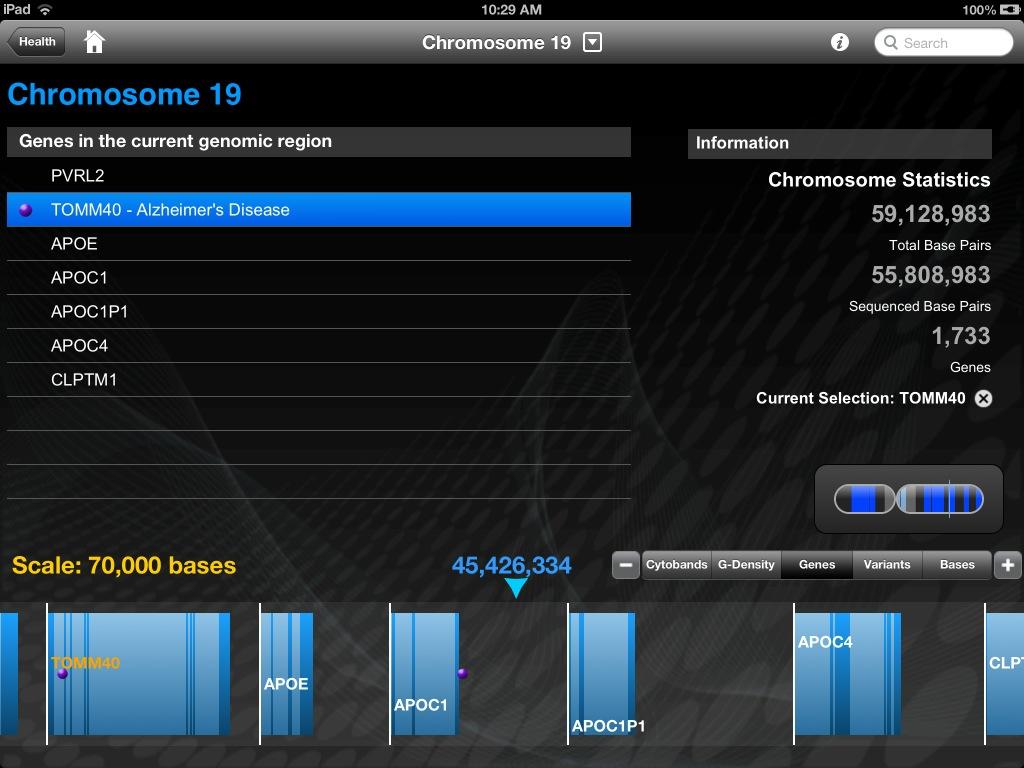
I want to now explain a fourth device, which I use on my iPad. This device allows physicians the ability to monitor patients in the intensive care unit on their iPads. I use it to monitor patients at the Scripps ICU. You can use it for any ICU that allows for the electronic transmission of data. Right now, I'm monitoring 4 patients simultaneously. You can change the field to monitor up to 8 patients simultaneously. This is a great way to monitor patients in the ICU because you can do it remotely and from anywhere in the world where you have access to the Web. This is just to give you a sense of what this innovative software sensor can do to change the face of medicine.

Finally, I wanted to describe is something that I've become reliant upon, and that's this high-resolution ultrasound device known as the Vscan. I use this in every patient to listen to their heart. In fact, I haven't used a stethoscope for over 2 years to listen to a patient's heart. What's really striking about this is that it's a real stethoscope. "Scope" means look into. "Steth" is the chest. And so now I carry this in my pocket, and it's just great. I still need a stethoscope for the lungs, but for the heart this is terrific. You just pop it open, put a little gel on the tip of the probe, and get a quick, complete readout with the patient looking on as well. I'm sharing their image on the Vscan while I'm acquiring it and it only takes about a minute. We validated its usefulness in an Annals of Internal Medicine paper, in July 2011,[1] describing how it compares favorably to the in-hospital ultrasound echo lab-type image. This could be another very useful device in emergency departments, where the wireless loops could be sent to a cardiologist. Another application it could be used for is detecting an abdominal aortic aneurysm. Paramedics who are out in the field, or at a trauma case, could use this to wirelessly send these video loops to get input from a radiologist or expertise from any physician for interpretation.

These are just a few of the gadgets that give you a feel for the innovative, transformative, and really radical changes that will be seen going forward in medicine. Thanks for watching this segment. We'll be back soon with more on The Creative Destruction of Medicine. Until next time, I'm Dr. Eric Topol.

I am excited to be talking with Dr Eric Topol on Friday and hope you will be able to join me. To help prepare you for the conversation and the breadth of areas that Dr Topol covers I am posting his vide presentations from Medscape that provide quick intros to different areas. This one looks at 5 devices that will change the future of Medicine.


  • Smartphone as an ECG

  • Stickless Glucometers for Continuous Monitoring

  • The NetFlix Cardiovascular exam - worn for 2 weeks and mailed for Review

  • Mobile ICU Monitoring

  • The Mobile Ultrasound

  • Posted via email from drnic's posterous

    Tuesday, November 6, 2012

    Turning the smartphone from a telephone into a tricorder

    AliveCor

    Share This article

    Earlier this year, well known cardiologist Eric Topol published his highly successful book, “The Creative Destruction of Medicine.” In it he describes several examples where smartphones, particularly the iPhone, have been morphed into first-rate medical devices with the potential to put clinical-level diagnostics in the hands of everyday users. Coincidentally, Topol was on a flight not long ago, returning from a lecture where he had spoken about a new device made by AliveCor. The pilot intoned an urgent, “is there a doctor on board?” In response, Topol took out the AliveCor prototype, recorded a highly accurate electrocardiogram (ECG) of an ailing passenger, and made a quick diagnosis from 35,000 feet.

    BGStar and iPhone

    As the leader in the smartphone revolution, the iPhone has been the platform of choice for early adopters in the health and quantified self arenas. Even so, there are a few shortcomings to development on the iPhone which, at least among DIYers, has led to Android becoming the path forward. Apple’s single-vendor solution and sequestering of many low-level input/output details behind the premise of ease of use have made interfacing the device to external sensors both a difficult and expensive proposition.

    While it can be nearly impossible to write an Android app that will work on every device out there, writing an app to work on one’s own smartphone or tablet is fairly straightforward. Another challenge to the smartphone as a medical device is that many important sensor variables are analog in nature. It is possible to use the analog-to-digital converter on the audio input for data acquisition, however in the absence of sophisticated multiplexing one is limited to a single channel (unless some kind of expansion device is used).

    Run tracking and calorie counting apps can certainly be regarded among the successes of the smartphone, but without dedicated sensor hardware, the philosophy of “there’s an app for that” only goes so far. A host of products now available for Android let users with a little bit of technical know-how create powerful devices previously found only in the domain of hospitals and law enforcement. One of the most successful expansion boards that allows Android devices to control external instruments and to orchestrate the collection of a variety of sensor data is the IOIO board. The system works well in wireless mode with most Bluetooth dongles, and its on-board FPGA gives 25 I/O channels, including plenty for analog input. It also handles analog output via pulse width modulation (PWM).

    Vendors like Sparkfun, a popular supplier for the Arduino developer market, have realized the power inherent in readily programmable smartphones. They provide inexpensive heart monitors, as well as CO2 gas, dissolved oxygen, and blood alcohol content (BAC) sensors. These sellers provide documentation and, most importantly, access to the source code. With this information, interfacing with a BAC sensor, for example, is relatively straightforward and, if appropriately calibrated by the user, very accurate.

    MK802

    MK802 Android PC

    USB stick computers running Android 4.0 (Ice Cream Sandwich) or newer, like the MK802, readily connect to boards like the IOIO, and can take the cost out of dedicating a phone or tablet to a sensor. They can log data to any of several storage mediums and cut a nice form factor when keyboards and displays are shed.

    Despite the advances, a few ugly details in the smartphone-based health field are no longer capable of being ignored. The FDA will be increasingly faced with the task of deciding when a phone or tablet becomes a medical device that needs to be regulated as such, and when it is simply the front end for another device. Manufacturers of products for the seemingly straightforward task of monitoring glucose or insulin will have to tread carefully. Others seeking to enhance the absorption of medications through the skin by opening transient microchannels with current or ultrasound, perhaps built into a smartwatch, even more so.

    In just a few years children wearing smart devices could become the norm. These gadgets could monitor variables like ambient peanut allergen using nanopore immunosensors with processing power to spare for forming dynamic early warning networks as conditions indicate. Without an efficient governance dispensing timely permission to use devices like the AlivecCor in humans, the initiation of life-saving care may too often begin with hardware designed and approved only for our pets. But if our regulatory structure organizes on the side of opening technological advancement, the future of these medical gadgets will be bright.

    Now read: X Prize offers $10 million for a real-life Star Trek medical tricorder

    Share This Article

    The X-Prize amanged ot jump start the commercial space program and has taken the same principles to medicine offering $10 million to create a real world Star Trek Tricorder
    We are closer than you think


  • Alive Cor has the ECG monitor

  • Calorie and Activity Trackers (multiple but my personal favorite FitBit)

  • Glucose Monitoring for Diabetics, and

  • recently continuous vital sign monitoring

  • There are standards out there - notably the Continua Alliance

    Exciting times as we add increasing functionality and capabilities to these devices and tremendous opportunities for engaging patients in the continuous management of their health.

    I will be discussing this and related topics with my guest @EricTopol on my >a href="http://www.healthcarenowradio.com/programs/voice-of-the-doctor/">Nov 16 Voice of the Doctor Show

    Posted via email from drnic's posterous

    Monday, November 5, 2012

    How Speech Recognition Improves Military Medical Care

    Media_httpwwwfedtechm_efhjd

    Dr Robert walker among a growing band of physicians finding benefit in dictating in front of his patients. As he puts it:


    Before I started dictating in front of patients, I would have said I don’t make many mistakes. But now once or twice a week they correct me — they say it was their left knee, not their right, or that the accident happened two weeks ago, not last week. In that way, the patient verifies what’s going into their medical record, and it gives them ownership of it.

    Speech brings efficiencies that saved the Army $3 Million but the process of creating the medical record in front of the patient brings additional quality control and greater detail in the medical record.

    The tips to help successful adoption are good but I would include the primary requirement is good training and configuration

    Posted via email from drnic's posterous

    Visualizing an e-Patient’s Medical Life History

    Media_httpepatientsne_hwhyn

    What a great post from Katie McCurdy on the new age of medicine and the fact that the medical record needs to be more than single points of data recorded when we stop by a healthcare facility or clinical office.

    Katie comes at this as an interaction designer so is able to create a coherent and easy to digest record which might be harder for others. But as she rightly points out


    a patient-generated timeline, if that artifact makes the storytelling process easier for the patient & more coherent for the doctor, it adds a lot of value even if the doctor doesn’t want to take time to carefully analyze it.

    Agreed - and as many of the e-Patients have demonstrated capturing and understanding data is helpful in the successful management of their care. And importantly as Edward Tufte has demonstrated repeatedly clear presentation of data is the key to understanding.

    Doctors may not have the time to assemble the record in these formats and while there is a challenge presentation of multiple formats the process of capturing and documenting alone is valuable and likely to lead better understanding for the patient and the clinical care team.

    What a great resource to have an engaged e-Patient who has a background in interaction design working on a project like this.

    Posted via email from drnic's posterous

    Monday, October 29, 2012

    Burning Health IT Issues - Discussion with John Lynn

    Video interview wiht John Lynne (@Techguy and @EHRandHIT) on topics ranging from EHR Upcoding, Meaningful Use Stage 2, Interoperability, EHR Consolidation, and ACOs (originally posted here):

    Posted via email from drnic's posterous

    November Voice of the Doctor Guests

    An exciting month for Voice of the Doctor with the following guests appearing

    November 2: Terri Mitchell, MSN RN
    Director, Clinical Informatics Solutions at Nuance Communications 


    We will be talking about The Healthcare Data Imperative and the challenge of capturing Healthcare data and the importance of capturing information at the point of care when the information is fresh in the mind and the value this brings to affecting a postive change in healthcare quality outcomes and appropriate reimbursement. We will discuss the need to focus on real time vs retrospective analysis and how this can be achieved in our new digital world of electronic medical records and the value of patient engagement as part of this process.


    November 9: Dr Ashish Jha, MD
    The C. Boyden Gray Associate Professor of Health Policy and Management at the Harvard School of Public Health and blogs at An Ounce of Evidence


    He wrote this piece:  Asking the Wrong Questions About the Electronic Health Record that was a response to the article posted recently on the Wall Street Journal: A Major Glitch for Digitized Health-Care Records that stated:

    Now, a comprehensive evaluation of the scientific literature has confirmed what many researchers suspected: The savings claimed by government agencies and vendors of health IT are little more than hype.

    And was subject to many active discussions on several of the listservs. Dr Ashish Jha and I will be discussing some of the fundamental issues of our broken system and the challenges faced in our archaic paper based system which most can agree do nothing to empower clincians to provide excellent care. Technology on its own cannot provide all the answers but must be part of a broader based solution.

    The problem is that some Health IT boosters over-hyped EHRs.  They argued that simply installing EHRs will transform healthcare, improve quality, save money, solve the national debt crisis, and bring about world peace.  We are shocked to discover it hasn’t happened – and it won’t in the current healthcare system.

     We need to leverage the potential by asking and answering other related questions

    • How do we create incentives in the marketplace that reward physicians who are high quality?
    • How do we allow physicians to capture efficiency gains?
    • What to do about fee for service - are ACO's the answer?
    • How does technology play an effective part in this transformation

    As Dr Jha said:

    The debate over whether we should have EHRs is over.  Can we fix our broken healthcare system without a robust electronic health information infrastructure? We can’t.  Instead of re-litigating that, we need to spend the next five years figuring out how to use EHRs to help us solve the big problems in healthcare.

    Should be a great discussion

    And to close out November I am excited to announce that I will be joined by Dr Eric Topol, MD


    November 16, Dr Eric Topol, MD
    Professor of Genomics at The Scripps Research Institute
    Follow him on twitter @EricTopol

    He is also the author of
    The Creative Destruction of Medicine: How the Digital Revolution Will Create Better Health Care and has named in the list of the Top 100 Most Influential Physician Executive in Healthcare, 2012 by Modern Healthcare

    If you have not read the book, you should. You can read the First Chapter here: The Digital Landscape: Cultivating a Data-Driven, Participatory Culture to get a taste for the wide open opportunites many of which are here and even more coming in the very near future. With so many topics to choose from:

    • The Current state of medicine and the challenges
    • Individualized medicine vs Group Thinking
    • Patient Engagement and the power of mobile Health technology
    • The Genome and Sequencing (Dr Topol recently had his genome sequenced - one of an expanding number of people to do so):

    And Posted some initial analysis with a 99c App!


    So many topics and so little time. Focusing on the current challenges in Alzheimer's treatment makes much of this come into focus. A recent story on NPR: Treatment For Alzheimer's Should Start Years Before Disease Sets In raises one of the big challenges in this disease....How do we know if we need to commence treatment for a disease. It seems unlikley that any preventative treatment can be given to everyone so identyfying those at risk will become a major focus in the coming years. As Dr Topol noted in his book and in many of his presentations and discussions on the effectiveness of Plavix varies based on presentation of the genotype CYP2C19. This was subject to an extensive debate and included this posting on the Topolog posting An important miscue in clopidogrel pharmacogenomics and in a perfect example of the use of technology and engagement this videoif this works here otherwise download a verion here)


    Since November 23 is the day after Thanksgiving we will have a re-run on November 23 and Nov 30 from a previous shows

    Hope you can join me 


    Join me on Friday at 2:30 ET on VoiceoftheDoctor

    There are three ways to tune in:

    • Stream the show live – click the Listen Live Now to launch our Internet radio player.
    • You can also call in. A few minutes before our show starts, call in the following number:  Call: 1-559-546-1880; Enter participant code: 840521#
    • HealthcareNOWradio.com is now on iTunes Radio!  Stream the show live – you’ll find this station listed under News/Talk.


    Posted via email from drnic's posterous

    Adding Voice Recognition To Mobile EHRs

    Media_httptwimgscomin_efqia

    The new world of Mobile Healthcare will include an integral component in efficiency - the power of he clinicians voice. Cerner and Epic are


    The new mobile-native electronic health records (EHRs) systems of Epic and Cerner are being voice-enabled via recent deals with Nuance Communications

    Not only easy access to the world's leading speech recognition platform but as Joe Petro (SVP for R&D at Nuance) puts it:


    it's form-factor neutral and can be used with iOS, Android, or other mobile or desktop devices, as well as thick- and thin-client systems

    Great news for the mobile platform making these devices as productive as they can be

    Posted via email from drnic's posterous

    Wednesday, October 24, 2012

    Will Nuance's Nina Do What Apple's Siri Won't? - Forbes

    A series of  Forbes Insights profiles of thought leaders changing the business landscape: Gary Clayton, Chief Creative Officer, Nuance

    Apple’s Siri iPhone voice-based App interface has forever changed consumer expectations of how to interact with their computing devices.  But Nuance’s Nina may represent an even bigger transformation—the consumerization of IT.  Nuance has over 10,000 employees, $1.4 billion in revenue in FY ‘11, $7.65 billion market cap company, headquartered in Burlington, Massachusetts and is best known for its Dragon Naturally Speaking voice recognition software. They just might be the biggest, most successful company you never heard of before. They describe themselves as “focused on developing the most human, natural intuitive ways to use your voice to take command of information.”

    Gary Clayton, Chief Creative Officer, Nuance

    Gary Clayton, Chief Creative Officer, Nuance

    Siri is cool.  But Nina may represent a true leap forward in man-machine learning and artificial intelligence. I recently spoke with Gary Clayton, Nuance’s Chief Creative Officer about his role in bringing Nina to life and his thoughts on how Nina is already bringing a welcome change into how businesses put the tool he helped to create to work to better serve their customers.  He’s the guy responsible for turning some of the world’s most sophisticated software algorithms and artificial intelligence into engaging and user-friendly interfaces.  He also oversees innovation, strategy and design at Nuance.  “I wear a lot of hats,” said the understated Clayton.

    The major innovation behind Nina is its capability to retain context over time.  People can interact with Nina, the virtual assistant for customer service apps, and carry on a complex set of instructions within the same conversation flow.  Its artificial intelligence learns and anticipates the user’s interests and requests over time—using natural language understanding.  For example: a person can ask Nina what their checking account balance is, then a person can ask Nina to show them the charges over $200 and then for the month of August, or one could go through the bill paying process by simply stating “I would like to pay the balance on my cable bill on Friday from my savings account.” Humans communicate through context, not through complex, detailed step-by-step instructions that have always been the hallmark of human to computer interaction.

    Imagine calling your insurance company and having a pleasant and successful interaction with an always friendly voice.  No more yelling and swearing into the phone “Operator”!!  Nina can also interact across devices and applications, so that customers can choose to connect by voice, mobile device or web page or any combination and still retain the context of the interaction.  In fact, one such enlightened financial services company USAA, is implementing Nina to create a better customer experience.  “USAA is extraordinarily responsive to their customers; one of the very best in their field and represent a gold standard in managing the customer experience,” said Clayton.

    “People like to anthropomorphize technology,” stated Clayton. He knows it’s a basic human need to understand and control the world around us. Nina is one expression of meeting that need. That’s what drives Clayton in what he calls his never-ending quest to understand the creativity behind science and art. He started his quest as a physics undergrad at SUNY and later ventured to San Francisco for interdisciplinary studies and eventually earned his BA in communication from San Francisco StateUniversity.  He sees creativity as the synthesis of art and science.

    This led to a fascinating career path that began with the explosion of Silicon Valley technology drawing the film business toNorthern California. There, Francis Ford Coppola, George Lucas and others set up shop. Clayton worked with all of them but most notably Lucas and his Skywalker Ranch studios inMarin County,California, where he engineered sound recordings, which included the first recordings at Skywalker Sound with the San Francisco Ballet Orchestra.  He founded and ran his own multi-media production company from 1985 to 2000 and worked on many Academy Award winning films, Grammy winning albums and Emmy winning TV shows. There he worked on projects with Michael Jackson, Dave Brubeck, The Cure, Brian Eno, David Bowie, Mel Torme, Sam Shepard, David Byrne, Norman Mailer, Apple Computer (Knowledge Navigator,Newton) and many others. After a succession of consulting projects at Pacific Bell and a start-up gig at TellMe, (acquired by Microsoft for a reported $800 million in 2007) he spent time at Yahoo where he headed up their speech strategy.  From there he landed at Nuance in 2008.  Clayton is the owner of eight patents and is considered one of the leaders in the digital speech recognition movement.

    As one of the key developers of the Dragon Go! and Nina product lines, he is helping to push Nuance into the forefront of turning mobile device personal assistants into personal advisers.  His vision of the synthesis of art and science may be a never-ending process, but his work on Nina just may be the full fruition of a lifetime of trying.


    Imagine that - a User friendly EMR interface that uses the power of your voice and a natural exchange to navigate and interact with. The long term memory (or retaining of context) offers a more natural and engaging exchange


    The major innovation behind Nina is its capability to retain context over time. People can interact with Nina, the virtual assistant for customer service apps, and carry on a complex set of instructions within the same conversation flow.

    The example cited is for your banking exchange but imagine this in healthcare
    "Nina show me my patients for today"
    "What are the latest laboratory results for Mr Jones"
    "Are there any new results on my patients marked abnormal"

    You get the picture

    Changing the interaction with technology, especially in the mobile world but also in every human/computer interface shielding the user from the complexity of the technology by providing an easy conversational speech front end.

    I can hear Scotty now..."a keyboard...how quaint"

    Posted via email from drnic's posterous

    Tuesday, October 23, 2012

    Doctors Using Electronic Health Records Provide Higher Quality Healthcare | Government Health IT

    The use of electronic health records is linked to significantly higher quality care, according to a new study by Lisa Kern and her team, from the Health Information Technology Evaluation Collaborative in the US. Their work appears online in the Journal of General Internal Medicine, published by Springer.

    Electronic health records (EHRs) have become a priority in the US, with federal incentives for 'meaningful' use of EHRs. Meaningful use entails tracking and improving specific patient outcomes, as well as gathering and storing information.

    Kern and colleagues examined the effect of EHRs on ambulatory care quality in a community-based setting, by comparing the performance of physicians using either EHRs or paper records. They assessed performance on nine specific quality measures for a total of 466 primary care physicians with 74,618 patients, from private practices in the Hudson Valley region of New York.

    The quality measures included: eye exams, hemoglobin testing, cholesterol testing, renal function testing for patients with diabetes, colorectal cancer screening, chlamydia screening, breast cancer screening, testing for children with sore throat, and treatment for children with upper respiratory infections.

    Approximately half of the physicians studied used EHRs, while the others used paper records. Overall, physicians using EHRs provided higher rates of needed care than physicians using paper, and for four measures in particular: hemoglobin testing in diabetes, breast cancer screening, chlamydia screening, and colorectal cancer screening.

    The specific quality measures included in this study are highly relevant to national discussions. Of the seven quality measures expected to be affected by EHRs, all seven are included as clinical quality measures in the federal meaningful use program. There has been little evidence previously that using EHRs actually improves quality for these measures.

    This study took place in a community with multiple payers. This is in contrast to integrated delivery systems, such as Kaiser Permanente, Geisinger, and the Veterans Administration, all of which have seen quality improvements with the implementation of health information technology. Most health care is delivered in “open” rather than integrated systems, thus increasing the potential generalizability of this study.

    The authors conclude: "We found that EHR use is associated with higher quality ambulatory care in a multi-payer community with concerted efforts to support EHR implementation. In contrast to several recent national and statewide studies, which found no effect of EHR use, this study's finding is consistent with national efforts to promote meaningful use of EHRs."

    Study: Kern LM et al (2012). Electronic health records and ambulatory quality of care. Journal of General Internal Medicine; DOI 10.1007/s11606-012-2237-8


    Brian Ahier works as Health IT Evangelist for Information Systems at Mid-Columbia Medical Center. He is a City Councilor in The Dalles, Oregon and also serves on the Board of Mid-Columbia Council of Government, and Q-Life, an intergovernmental agency providing broadband capacity to the area. He blogs regularly at Healthcare Technology & Government 2.0.

    There's been a lot of coverage recently suggesting the Meaningful Use incentive program has failed to deliver value, EHR's have actually induced more cost in healthcare and EHRs have decreased quality of healthcare....
    But as Brian Ahier rightly points out there is evidence that supports the value proposition
    This study demonstrated value in a typical community setting with multiple players and found real positive impact delivering higher quality care measured by specific measures such as screening and testing for chronic diseases


    We found that EHR use is associated with higher quality ambulatory care in a multi-payer community with concerted efforts to support EHR implementation. In contrast to several recent national and statewide studies, which found no effect of EHR use, this study's finding is consistent with national efforts to promote meaningful use of EHRs

    Expect more studies that will demonstrate the value

    Posted via email from drnic's posterous

    Tuesday, October 16, 2012

    The Terrifying State of "Unaccountable" Healthcare

    Media_httpsiwsjnetpub_dkarw

    The latest book exposing the healthcare system and how broken it is from Dr Makary a surgeon from Johns Hopkins. As he says


    Meet 'Shrek,' a doctor who insists on surgery in every case—and has a surgical-incision infection rate of 20%.

    and more troubling


    He quotes a recent Hopkins survey of employees of 60 high-quality hospitals, where more than half of the respondents said they would not feel comfortable receiving care in the unit in which they work

    He makes the case for flat rate payment that removes the incentive for steering care to individual specialties devoid of any decision making that is for the benefit of the patient.


    Take pancreatic cancer, half of Dr. Makary's practice at Hopkins. With only a 15% cure rate, surgery is the only hope. But if the cancer is inoperable, patients may be offered chemo and radiation, which confer minimal benefit and yet make money for doctors and hospitals

    There are detractors to this and without incentive there is a corresponding decline in efficiency so finding a balance between these two competing ideals seems necessary

    Looks like another book to add to the reading list

    Posted via email from drnic's posterous

    Thursday, October 11, 2012

    The Health Care Revolution Must be Clinician Centered

    The New Yorker author, surgeon, Harvard University faculty member, and health policy adviser Atul Gawande told the President's Council of Advisors on Science and Technology (PCAST) today that checklists could help improve the quality of health care and lower costs. PCAST members seemed enamored with the idea of standardizing treatment and procedures, and also discussed how to raise the academic status of those working in the field. But another PCAST member—Google CEO Eric Schmidt—saw what Gawande was peddling as a potentially lucrative new market for the search engine giant.

    Here's Schmidt's dream of what a visit to the doctor will look like in 2015. It came during a question-and-answer session following Gawande's 15-minute presentation, drawn from his new book, The Checklist Manifesto: How to Get Things Right. You can judge for yourself whether it's sensible or scary.

    "My question has to do with the model of health care that we'll be facing in 5 or 10 years," Schmidt began. "It's pretty clear that we'll have personalized health records, and we'll have the equivalent of a UPC sticker with your medical history. So when you show up at the doctor with some set of symptoms, in my ideal world what would happen is that the doctor would type in the symptoms he or she also observes, and it would be matched against the data in this repository. Then this knowledge engine would use best practices, and all the knowledge in the world to give physicians some sort of standardized guidance. This is a generalized form of the checklists that you're talking about."

    Then Schmidt made clear what was troubling him. "As computer scientists, this is a platform database problem, and we do these very, very well, as a general rule. And it befuddles me why medicine hasn't organized itself around these platform opportunities."

    Gawande took a shot at responding to the billionaire's bewilderment. "I think part of the bafflement occurs because the folks who know how to make such systems don't understand how the clinical encounter actually operates." But the bigger problem, he said, is that such a search would in all likelihood generate more heat than light for the harried physician, who typically has "15 minutes to manage six problems." According to Gawande, "the three inches of guidance, explaining what the evidence suggests and so on, needs to be turned into a useful form that tells you what you can do."

    But Gawande is no Luddite. He told Schmidt that he'd welcome an app—"for your iPhone or whatever the new Google one is"—that could help him the next time he sees a patient diagnosed with a rare renal tumor.

    Gawande found a receptive audience for his idea that the federal government create a National Institute of Health Systems Innovation to complement the work of the National Institutes of Health, although PCAST members suggested that he consider other administrative solutions. And they also shared his unhappiness with the relatively low status of health systems analysis. "My sense is that we don't respect this stuff," said PCAST co-chair Eric Lander. "We respect the cancer genome, but not checklists. What do we need to do to send a signal to the next generation of researchers that this is a high-class, worthy thing to do? What would it take to move the needle?"

    "You're absolutely right," Gawande replied. "It's not well respected. There's a reason, after all, that I'm still an associate professor."

    Older piece from 2012 but an interesting point made by the ever insightful and eloquent @Atul_Gawande when challenged by a non-clincinas who was "Troubled" by the state of #HealthIT.
    As Dr Gawande said


    I think part of the bafflement occurs because the folks who know how to make such systems don't understand how the clinical encounter actually operates

    There you have it - it is easy to look in to healthcare technology and prescribe solutions based on your experience of finance, computers, C++ coding and any other discipline. But if you don't understand the fundamentals of clinical care, the taking of a history and all the nuances involved in teasing out details from patients you can't prescribe a solution that will work effectively

    And in a notable humbling point Dr Gawande points out that even within the fences there is resistance to much of the application fo this technology


    You're absolutely right...It's not well respected. There's a reason, after all, that I'm still an associate professor

    Posted via email from drnic's posterous

    Tuesday, October 9, 2012

    The Impact of RACs on Your Medical Practice - Physicians Practice

    Please sit down — this will not be an easy article to digest, no matter how carefully I parse my words. Life under the microscope of Recovery Audit Contractors is going to get tougher for physicians. Three recent developments may impact your practice in the next year.

    I have written in the past on RACs and documented their growth from a twinkle in Uncle Sam's eye to the behemoths they have become. Much of the advice offered in prior articles (please see links at the bottom of this article) remains valid and should be heeded.

    Audits of Level 5 E&M services

    CMS has given approval to Connelly, the Region C RAC, to perform complex medical reviews on level 5, E&M services (e.g., 99215, 99205, and 99255). This is the first time CMS has given any RAC permission to target the coding and documentation of E&M services. One impetus for the focus on level 5 E&M services is a shift in providers' use of level 4 and 5 codes. According to the Center for Public Integrity, the percentage of Medicare services coded as level 4 or level 5 increased from 25 percent to 40 percent between 2001 and 2010. This, of course, has increased CMS's financial outlay for these services and made them a much larger budget item (i.e., target).

    Connelly is the RAC for thirteen states: Alabama, Arkansas, Colorado, Florida, Georgia, Louisiana, Mississippi, New Mexico, North Carolina, Oklahoma, South Carolina, Tennessee, Texas, Virginia, and West Virginia. Take note: the other three RACs are expected to follow suit.

    Since early 2009, the Medical Group Management Association, AMA, and 101 state and specialty societies have actively opposed RAC audits. It is unfortunate for all of us that CMS has not heeded their advice.

    There is yet another cause for concern with this initiative. Though it has not been officially confirmed, CMS apparently has given Connelly permission to extrapolate the results of their E&M audits. For instance, if a RAC audit determined that six of twenty (30 percent) level 5 services did not meet coding/documentation guidelines, the RAC would have authority to extrapolate this 30 percent failure rate across all level 5 services provided during the review period.

    If you provide level 5 services, it is prudent to have several of them copiously reviewed by a certified professional coder.

    9th Circuit Court of Appeals verdict

    On September 11, 2012, the U.S. Court of Appeals for the Ninth Circuit rendered a dangerous opinion. It affirmed that RACs are not restricted by regulatory deadlines, statutes of limitations, or time limits. Lead plaintiff attorney Ronald S. Connelly, of Power Pyles Sutter & Verville PC, says "The decision leaves providers with absolutely no finality in their payments from the Medicare program. Contractors could reopen claims that are even 10 or 20 years old, and providers would have no right to challenge the timeliness of the audit."

    Legal minds will weigh in on this opinion in the weeks and months to follow, but again, a scary precedent has been set. It may mean that Medicare patient and billing records should be maintained indefinitely. At a minimum, it means the past is neither safe nor sacred.

    I recommend you contact your medical malpractice insurance carrier to determine if this circuit court opinion will change their recommendations for records retention.

    EHR automated notes

    Last but not least, the HHS's Office of Inspector General has set its focus on whether providers are using automated note generation appropriately in their EHRs. Also known as "cloned notes," automated notes and templates use copied and pasted data on multiple patients to record standard information such as a normal review of systems or physical exam.

    An observer reviewing several such notes would find virtually identical documentation and very little patient-specific information. Herein lies the OIG's concern. They are concerned that cloned notes may lead to over-documentation or a lack of patient-specific information. From a medical malpractice liability perspective, the same concerns apply.

    There is a place for structured notes, and many physicians used them prior to the advent of EHRs. These are acceptable, and EHR-generated notes that contain patient specific documentation should be good to go as well. Your risk lies in over-cloning identical text in your patient notes.

    In summary

    The United States Department of Justice (DOJ) has three top priorities:

    • Terrorism
    • Violent crimes
    • Healthcare fraud

    I wish healthcare fraud were not on this list, but it is, and it is not dropping off the list anytime soon. Government oversight and second-guessing are givens for anyone who practices medicine today; expect fraud identification and enforcement initiatives to grow.

    To get a head start on audit-proofing your practice, read the following articles that offer advice and practical tips for protecting both yourself and your practice:

    • Avoid Medicare Fraud Claims by Coding Correctly

    • Medicare's Fraud and Abuse Program

    • Nine Things to Know About RACs

    Lucien W. Roberts, III, MHA, FACMPE, is vice president of Pulse Systems, Inc., and a former practice administrator. For the past 20 years, he has worked in and consulted with physician practices in areas such as compliance, physician compensation, negotiations, strategic planning, and billing/collections. He can be reached at lroberts@pulseinc.com.

    As the article says - "please sit down, this will not be easy"

    As they used to say "up north" in England: "there's trouble at Mill" and aptly captured in the Monty Python Sketch ""The Spanish Inquisition"

    The recent decision in the 9th circuit court:


    affirmed that RACs are not restricted by regulatory deadlines, statutes of limitations, or time limits

    and


    ..the HHS's Office of Inspector General has set its focus on whether providers are using automated note generation appropriately in their EHRs...They are concerned that cloned notes may lead to over-documentation or a lack of patient-specific information. From a medical malpractice liability perspective, the same concerns apply.

    It will be important to provide a balance of information derived form templates and structured content supplemented with narrative generated efficiently and not just stored as narrative but understood to be included in the structured information essential to managing patients

    Posted via email from drnic's posterous

    Thursday, October 4, 2012

    Accelerating Electronic Information Sharing to Improve Quality and Reduce Costs in Health Care

    A recent conference at the Bipartisan Policy Center:

    Accelerating Electronic Information Sharing to Improve Quality and Reduce Costs in Health Care

    The full agenda is here and you can watch all the proceedings online in the video:


    There are some great sessions but as always Dr Farzad Mostashari, MD, ScM, National Coordinator for Health Information Technology, Department of Health and Human Services makes a very compelling case for the value proposition for Meaningful Use Part 2  and while he understands the pushback on patient engagement in MU2
    "How can we be held accountable for what patients do"
    As he says (around 190 mins)

    If we are to get better health at lower cost - how can we not engage the patient
    The impact of patient engagement in Patient Health - it would be a Blockbuster drug!
    Providers need to stimulate this activity - since patients are the "Best Fact Checkers in the world"

    Quite! He also talks about the new age of quality measures and describes how one hospital used to review quality measures retrospectively; "patients would be discharged from hospital or dead". Before the introduction of real time analysis they would do a retrospective analysis to show what did right (or not).

    More often than not they found they had failed. With the new technology (such as this) they run the quality measures before the patients leave and get the opportunity to fix the missing treatments and care before the patient leaves the facility. Turning error reporting into error catching and correcting. Now that's valuable

    Posted via email from drnic's posterous

    Friday, September 21, 2012

    Asking the Wrong Questions About the Electronic Health Record

    By Ashish Jha, MD

    The wrong question always produces an irrelevant answer, no matter how well-crafted that answer might be.  Unfortunately the debate on health information technology seems to be increasingly focused on the wrong question.  An Op-Ed in the Wall Street Journal argues that we have had a “Major Glitch” in the use of electronic health records (EHRs).  This follows on a series of recent studies that have asked the question “do EHRs save money?” Or “do EHRs improve quality?” with mixed results.  While the detractors point to the systematic review from McMaster, boosters point to the comprehensive review published in Health Affairs that found that 92% of Health IT studies showed some clinical or financial benefit. The debate, and the lack of a clear answer, have led some to argue that the federal investment of nearly $30 billion for health IT isn’t worth it.  The problem is that the WSJ piece, and the studies it points to, are asking the wrong question.  The right question is:  How do we ensure that EHRs help improve quality and reduce healthcare costs?

    The fundamental issue is that our healthcare system is broken – our costs are too high and the quality is variable and often inadequate.  Paper-based records are part of the problem, creating a system where prescriptions are illegible, the system offers no guidance or feedback to clinicians, and there is little ability to avoid duplication of tests because the results from prior tests are never available.  Even more importantly, the paper-based world hampers improvement because it makes it hard to create a learning environment.  I have met lots of skeptics of today’s health information technology systems but I have not yet met many physicians who say they prefer practicing using paper-based records.

    The problem is that some Health IT boosters over-hyped EHRs.  They argued that simply installing EHRs will transform healthcare, improve quality, save money, solve the national debt crisis, and bring about world peace.  We are shocked to discover it hasn’t happened – and it won’t in the current healthcare system.

    Most EHR vendors today sell their products to doctors promising increased “revenue capture” (that is, improved billing resulting in greater payments to physicians and higher costs to the health care system).  In a fee-for-service world, the EHR, which is nothing but a tool, helps you get more “fee” for your “service”.  It’s not surprising that we aren’t seeing huge savings.

    To understand how to best leverage the potential of EHRs to help the US improve care and save money, we will have to answer a series of other related questions:  how do we create incentives in the marketplace that reward physicians who are high quality?  How do we allow physicians to capture efficiency gains?  Today, if a physician becomes more efficient, he/she will likely lose revenue to insurance companies or to government payers.  When Kaiser Permanente installed an EHR and gave patients the ability to use the electronic system to message their physicians, they saw their ambulatory care visit rate fall by 20%.  This is a disaster in a fee-for-service world.  Sure, Kaiser was able to see real financial gains from their EHR – but how do we help the thousands of other physicians and hospitals that are not Kaiser gain efficiencies from their EHR?  That’s the question I’d like to see answered.

    Now that we have made an important investment in EHRs, we need to figure out how to use this new technology to address the fact that the healthcare system is a mess.  We need to figure out how EHRs can promote coordination of care across sites, seamless flow of good clinical information, and smart analytics, to name a few things.  We simply can’t do that in a paper-based world.  I am sure that the healthcare industry single-handedly keeps the fax machine industry alive.  We need to stop. Period.  Every other part of our lives has become electronic and the benefits are clear.  Our lives are better because we bank online, communicate online, shop online.

    The debate over whether we should have EHRs is over.  Can we fix our broken healthcare system without a robust electronic health information infrastructure?  We can’t.  Instead of re-litigating that, we need to spend the next five years figuring out how to use EHRs to help us solve the big problems in healthcare.

    Ashish Jha, MD, MPH is the C. Boyden Gray Associate Professor of Health Policy and Management at the Harvard School of Public Health. He blogs at An Ounce of Evidence.This post first appeared at the Health Affairs Blog.

    Filed Under: Tech, THCB

    Tagged: , , , Sep 19, 2012

    Interesting rebuttal to the WSJ article "Major Glitch" as Dr Jha says

    The fundamental issue is that our healthcare system is broken – our costs are too high and the quality is variable and often inadequate

    Installing an EMR won't change this since there is no silver bullet for our problems. EHRs like many of the technologies and initiatives are one part of the equation but they are definitely part o the soltuion
    What they look like and how we interact with them will probably be very different to the current interactions and will involve current technologies and probably some that have not even been imagined yet or applied in that way to healthcare. Can you imagine wearing Google Glasses in your practice - probably not but I am willing to bet some variant of this will become mainstream at some point in our healthcare delivery system
    Same is true of patient centered content and management. To that end I will be looking forward to talking to Clint McCellan (@clintmc1) this afternoon on this area and how we can push this aspect forward

    Posted via email from drnic's posterous

    Wednesday, September 5, 2012

    VoiceoftheDoctor for the Month of September

    This month we will be 
    Sep 7

    Brad Tritle (@BTritle)who is currenlty the chair of the HIMSS Social Media Task Force.  He is currently co-editing a forthcoming HIMSS book on consumer engagement and consulting under the Office of the National  Coordinator on consumer engagement for State HIEs and immunization registries. Amongst the areas of focus:
    • Health Information Exchange
    • Consumer e-health
    • Personal Health Records
    • privacy/security
    You can read his interview ith HIMSS here
    We will be discussing the dleivery of patinet care - where the patient and the change in system dleivery and technology innovation to achieve this including telehealth services for consumers, apps and how this relates to PHRs.  

    Sep 14
    ID Experts - Is the EHR a target for Cybercrime.....


    Sep 21

    Clint McClellan (Twitter @clintmc1) who is Sr. Dir. of Strategic Marketing at Qualcomm Life and the President and Chairman of the Continua Health Alliance. HE and I will be talking about the Continua Health Alliance which is a non-profit, open industry organization of healthcare and technology companieswho are collaborating to improve personal healthcare.They are establishing a system of interoperable personal connected health solutions that will help empower everyone to enageg in their own personal health wellness amangement. Take a look at their vision video here


    He and I will be discussing some of the examples and soltuions in the personal health space and how these have eveolved from personal smartphones to dedicated gateways and what opportunities will open up for application developers?

    Sep 28

    Healthstory - Liora Alschuler, CEO of the Lantana Group and co-founder of Healthstory initiative. She is Co-chair, HL7 Structured Documents Work Group responsible for HL7’s Clinical Document Architecture (CDA), the first standard for healthcare based on XML. 

    We will be discussing the Healthstory Intitaive and the recently finalized Meaningful Use Part 2 guidelines


    Join me this Friday at 2:30 ET on VoiceoftheDoctor
    There are three ways to tune in:

    • Stream the show live – click the Listen Live Now to launch our Internet radio player.
    • You can also call in. A few minutes before our show starts, call in the following number:  Call: 1-559-546-1880; Enter participant code: 840521#
    • HealthcareNOWradio.com is now on iTunes Radio!  Stream the show live – you’ll find this station listed under News/Talk.

    Nuance Healthcare Asks Developers to Make #HealthIT Smarter

    Media_httpnuancehealt_dsoap

    Nuance wants your help - we want to make #HealthIT smarter and have issued a challenge (similar to the successful challenge from HIMS2012)

    Can you take the Clinical Language Understanding (CLU) software development toolkit and apply this in your application. The opportunity to convert free form narrative content into meaningful clinically actionable data without asking the user to fill in a form, check a box or select from a drop down list.

    $5,000 prize plus additional prizes for the first 20 submissions.

    Posted via email from drnic's posterous

    Khosla says technology will replace 80 percent of doctors - I think not

    Media_httpventurebeat_nefen

    Technology replacing doctors.....
    Still missing The Human Element and besides in the

    Mayo Clinic Proceedings March 2006 vol. 81 no. 3 338-344
    they identified the most most important characteristics patients feel a good doctor must possess

  • confident,

  • empathetic,

  • humane,

  • personal,

  • forthright,

  • respectful, and

  • thorough

  • These facets are entirely human and will be hard for technology to replace

    Posted via email from drnic's posterous

    Tuesday, September 4, 2012

    The Trouble with EHRs - 26% report decrease in productivity #EHR #Speechrecognition #HealthIT

    Recent review by Medscape (Membership required)

    THe advice from EHR users included the suggestions:
    "Learn to Type VERY Well"
    Pastedgraphic-5
    Intelligent integration of speech recognition is a genuine solution to that challenge

    Rankings were interesting - Amazing Charts still hitting the top spot

    In Medscape's 2012 survey, the 5 top-ranked EHRs were Amazing Charts, Practice Fusion, VA-CPRS, and Medent. In Medscape's 2009 survey, the top-ranked EHRs were Amazing Charts, MediNotes, VA-CPRS, Misys (now Allscripts), and Practice Partner and eClinicalWorks tied for fifth place.

    Posted via email from drnic's posterous

    Five Technologies that will Change the Practice of Medicine

    Speech Technology

    Speech recognition offers efficiencies today but recent innovations and new technologies will expand the horizon of opportunity with speech technologies that will change the human computer interface, simplifying the interaction and offering new and innovative tools that increase efficiency and safety of healthcare delivery and reduce the administrative burden and decrease costs.

    Medical Intelligence in the Cloud

    We’re facing a tsunami of patient data. The ability to process and leverage this data at the point of care is gone. Cloud based intelligence, analyzing data content and delivering contextually relevant information in real-time will become essential.


    Continuous Mobile Monitoring

    Our current perspective of a patient’s healthcare record is comprised of snippets of our total healthcare record (imagine a piece of string as the record – all we get is a very short piece when we visit a doctor/facility). Continuous monitoring (wireless, cloud based and automatically monitored and tracked) changes this and offers more complete view of our health record and more important data that is not just single data points but trends and changes.

    Personal Health Management

    This is becoming essential as we move from a system that disconnects the purchaser from the payer. It’s as if we were buying a car but someone else was paying with no personal financial consequence – we would all buy Ferrari’s, Porsche etc. As we move away from this model, personal responsibility, personal health management tools and PHR's will become essential, not just for capturing and holding the data, but for helping people interpret and manage their own care. We will all become our own care coordinators for ourselves and our extended family, but will need the tools and solutions to help – these will come in form of PHP and health management tools.

    Social Media in Healthcare

    If World of Warcraft can engage a generation of young adults and teens to stay online, engaged and spending enormous sums of money, the gaming industry is doing something "right". Applying this to health and getting folks engaged is the next frontier. We have already seen that just giving a patient access to their medical record and putting a definitive Diagnosis of obesity has a positive impact on their behavior and general health. Imagine what else you could do with social media and gaming engagement.


    But as always - don't forget the patient. As I have noted before Doctor Please Look at Me not Your EMR

    This was amplified in a recent article in JAMA: A Piece Of My Mind (JAMA. 2012;307(23):2497-2498. doi:10.1001/jama.2012.4946) that included this drawing from a 7year old girl: