Monday, October 18, 2010

Meaningful Use and Clinical Documentation

We are facing significant changes to the world of clinical documentation with the big push encompassed in the Meaningful Use requirements that push provides and healthcare facilities inexorably towards an electronic medical record (EMR) but there remain significant concerns over the potential impact these solutions can and will have on our clinical documentation.

In this piece in the Archives of Internal Medicine (Subscription required):Time Spent on Clinical Documentation: Is Technology a Help or a Hindrance? (abstract) the review of the excessive burden of clerical work was cited as a detractor to the learning process for residents buried in a quagmire of administrative burdens. While the authors acknowledge the value that EHRs bring including more efficient and safer order entry, easily accessible clinical information, and the ability to facilitate documentation through decision support or documentation templates. While these positive effects can streamline and potentially diminish the low value tasks their experience at the University of Chicago demonstrated that
residents often research a new patient extensively on the EHR prior to the history taking and physical examination, preferring to obtain information via clerical work rather than direct patient assessment. In addition, the well-described habits of "cutting and pasting" notes or copying forward previous notes with minor daily updates are work-arounds that may save time but provide little opportunity for education and reflection about a patient's course

This was further emphasized a recent interview in Healthcare Informatics Medical Documentation and Meaningful Use focusing on the challenges of meaningful use and the loss of the narrative:
Policymakers have been too caught up in discrete data fields, putting the narrative element of the medical transcription process in jeopardy (and) meaningful use rules do not go far enough in guaranteeing that information is robust enough to provide a basis for complex clinical decisions and coordinate patient care. “Granularity and specificity have been overlooked,”

As he point out
It would be unfortunate to sacrifice the nuanced reporting by an overemphasis on discrete data. Structured reporting does not necessarily mean sacrificing the whole, nuanced record

But if you remain unconvinced this excellent paper "Communication of Clinically Relevant Information in Electronic Health Records: A Comparison between Structured Data and Unrestricted Physician Language" in the AHIMA Journal Perspectives carried a study to determine what information is lost when free dictation of data is replaced with structured entry of information?:
If physicians restrict themselves primarily to structured data entry, what happens to the “nuances of patient variability”

According to the authors nobody has yet attempted to answer this particular question which leaves a major gap in our understanding of the long term impact of the EMR on our clinical knowledge in the context of data, information, knowledge, wisdom (DIKW). And while there are some advantages to the capture of structured data and integration of information from different sources and disparate systems (an important goal in the meaningful use framework) the disadvantages of this limited selection of choices include the increased time to document (= less time with patients or for patients) but more importantly "discrete data may not catch the nuances of patient variability".

The study while limited in size attacks the problem systematically and in sufficient details to arrive at what can only be described as very troubling conclusions. Naturally dictated cardiology notes were manually highlighted with information that would be captured in a a structured data entry system. These annotated notes were then reviewed by two independent physician experts who were asked to review the highlighting of the notes and imagine himself as a physician assuming responsibility for the patient, and to imagine that the highlighting had been added by the previous physician, indicating what he or she believed to be clinically relevant and necessary to include in the communication. In an inspirational piece of design there was no mention of the EMR/EHR and structured note taking so the content was reviewed in pure clinical terms - brilliant! The experts scored missing content that was marked up rating the missing content (if any) in terms of the severity of the omission:
1 - Minimal Severity through to
5 - failing to mark up the language was extremely severe, in terms of having serious consequences for the care of the patient if that clinically relevant information had not been communicated to you

The results, even in the most conservative analysis:
(they) find that 50 percent of the notes include at least one omission rated 3 or higher on a 5-point scale, and 25 percent contain omissions rated 4 or higher

So fully 25% of notes contain omissions that rated 4 or 5 on the severity of the clinical impact of that omission! With less conservative analysis at least one expert showed 100% of notes as containing at least one omission rated with severity of 3 or higher, with 5.25 such omissions on average and omissions with “serious consequences for the care of the patient” (severity rating equal to 5) in fully 55 percent of the notes!
That's worth restating:
All notes contained clinically significant omissions (Grade 3 or higher) and on average contained 5.25 such omissions and over half contained severe omissions!

The content that was missed in some cases could be added to flexible systems but there were distinct pieces of nuanced or detailed elaborations of information and temporal/logical content and the clinician thought process for example:
- after identifying reporting severe pain in one patient’s neck and back, the dictating physician adds that she was “almost brought to tears just in getting her up on the examination table.” Both experts found it relevant that a patient was “able to walk on flat levels and walk at a moderate pace for one hour without abnormal shortness of breath or chest pain.”
- a patient’s nonsustained ventricular tachycardia (fast heart rate) occurred “during post myocardial infarction care…far removed from the time of his infarction.” The cardiologist found it highly relevant, for another patient, that the dictating physician was “hesitant to recommend his FAA certification renewal” without a repeat of a previous catheterization.
- the physician recommends continuing Toprol because it “seems to be controlling [the patient’s] palpitations well.” In another, the dictating physician considers discomfort to be “suggestive of angina.” In a third, the dictating physician expresses a belief that results of stress testing “would rule out significant major coronary artery disease, despite it being a somewhat incomplete study.”

While the study size is small and there are some potential acknowledge bias the design and conservative analysis suggests the problems is very significant and adds further weight when considering the methods for capturing and recoding clinical data. And while it is possible that adding this missing content is possible with the free text fields replete in EMR systems I have heard clinicians say they have modified their patient diagnostic review process to avoid the "other" field specifically to limit the time necessary to type this content into the "other" box. Adding speech recognition technology can decrease the time to populate these boxes but providing a more elegant and integrated solution that allows for capture of the full patient story and clinical history. As the authors conclude:
Even under quite conservative assumptions, we have found that important clinical information, detail, and nuance would fail to be captured by an EHR standard’s discrete fields, with potentially serious consequences for the patient. Such omissions could potentially influence not only clinical care, but the progression from data to information to knowledge discovery in clinical research. Clearly the question merits further attention and study.

In the inimitable words from Master Po in the iconic 70s TV Series Kung Fu:
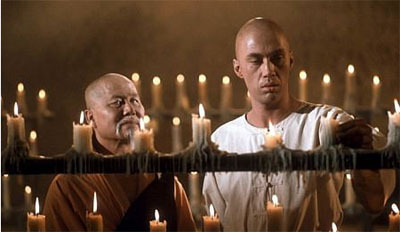
Tread lightly grasshopper

The narrative must be integrated and preserved and will remain a fundamental foundation of clinical knowledge now and into the future of healthcare information systems. How are you preserving the information in your EMR or have you seen the record dumbed down?

Sunday, October 17, 2010

Vaccination suits

While the idea of law suits against vaccine manufactures is appealing. Opening these doors to a multitude of frivolous cases will have a chilling effect on vaccine development and vaccine use

Supreme Court Considers Vaccine Injury Case

On the list of snake oil challenges is the vaccine causes autism bunkum. Unsupported in any scientific study but perpetuated by a wide range of people who may have good intentions but are using their influence to damage years of hard work building vaccination programs and relegating serious and life threatening diseases to the  history books

Let's hope the Supreme court can take account of these effects as they consider this case. If not we could be in for a rash of diseases.

Posted via email from drnic's posterous

Adults need Tetanus Diptheria Boosters too

Don't think immunization is just for kids its not. Adults need those boosters too

Adults Not Getting Tdap Boosters (CME/CE)

Have you had yours?

Posted via email from drnic's posterous

Thursday, October 14, 2010

Physical examination a dying art that needs to be resurrected

In a timely piece from the NY Times featuring Dr Verghese who continues to demo strategy and teach medical students that the physical examination is an essential part of the clinician patient interaction. 


At Stanford, Dr. Abraham Verghese on a mission to bring back something he considers a lost art: the physical exam.
<<<<<<<
http://nyti.ms/9pqWHC

In what seems much like the House brilliance of observation combined with a ready wit and and extensive knowledge of medicine Dr. Abraham Verghese vividly demonstrates the value and contribution of the physical examination and worries that the skill is being lost in American medicine and is not being taught to medical students in the US. 

The physical exam should not be relegated to history books and while time pressures make spending time on this intimate interaction difficult the rewards are not just found in more clinical information but also closer links to patients. 

Posted via email from drnic's posterous

Wednesday, October 6, 2010

Clinical Documentation Challenges

We are on a path to roll out a large swathe of Electronic Health Records (EHR) but a recent report published on the AISHealth.com Audits of Electronic Health Records Cloning Reveal Documentation Problems That Put Compliance at Risk will give many folks reasons to pause and consider their strategy in rolling out electronic medical records and reconsider how they capture information in these systems.

Interestingly the article suggests that EHR's "can reduce the time it takes physicians to document patient encounters" but there is a fair amount of research suggesting that EHR can increase the burden and time taken to document. A study in the Healthcare Ledger in March 2009 showed an increase of ~ 4x when documenting using the EHR and there is increasing concern that the current burden of clerical work being required of medical residents is limiting the educational opportunities and failing to teach our future doctors the process of reflection and distillation of a patient history that is an essential part of the diagnostic process (Doll and Arora 2010). Add to that that many EHR systems limit the potential for capturing the complete clinical story of the patient as outlined in a recent study “Communication of Clinically Relevant Information in Electronic Health Records: A Comparison between Structured Data and Unrestricted Physician Language” (Resnik, Niv et al 2010) in a systematic comparison between free natural language dictations and information codified by structured categories in an EHR demonstrated a failure to capture clinically significant information. Even in the most conservative estimate the study demonstrated 25% clinical omissions that rated 4-5 on a 1–5 scale of seriousness (1 being minimal severity and 5 meaning severe).

However the access to real time information and improved legibility deliver significant benefits and advances into our healthcare system. But as Nina Youngstrom points out:
CMS and Medicare contractors are wary of classic EHR physician documentation shortcuts — cloning (cut and paste), macros and templates — and audits are bearing out their concerns
As the audit demonstrated "Each note should contain individualized data that supports the medical necessity of the visit or procedure.” and problems stem from EHR documentation shortcuts:
  • Cloning (cutting and pasting): Physicians copy information from previous patient encounters (e.g., demographic, history of present illness, exam, medical decision making) and paste it in the current encounter.
  • Templates: Physicians fill out templates for patient encounters that cover a lot of ground with a few key strokes. The review of systems is pre-filled with the term “negative” for each organ system. For positive answers, physicians must change “negative” to reflect the positive response given by the patient.
  • Macros: Macros are a type of EHR shortcut that allows the entry of generous customized data quickly. Though initially CMS resisted the use of macros, the agency gave its approval for their use by teaching physicians (see Medicare Transmittal 811). With macros, teaching physicians, for instance, type in “.liv” to convey “liver exam,” which triggers a drop-down menu of choices for the next step.

So avoiding these pitfalls and capturing the essence of the clinical consultation in the "Medical decision making" which is the cognitive process and is hard to document with templates and macros is key to both good quality documentation as well as avoiding potential CMS audits and challenges in the future.

There is no one size fits all to these challenges and in different clinical circumstances different solutions will be beneficial but providing tools to document the complete narrative and extract key data elements will help drive clinically actionable data into the EHR while maintaining the decision making process that includes taking and documenting a full history without burdening the physician with mundane data entry tasks. Clinical Language Understanding offers to bridge this divide capturing the voice with proven voice recognition Technology (Dragon Medical) and the exciting addition of Clinical Language Understanding: The video demonstrates the CLU in action offering an alternative path for clinicians weary from screen based data entry:


Or you can see the video here, and can see Paul Ricci on CNBC "Street Signs” hosted by Erin Burnett "Nuance Partners with IBM":


and read about the collaboration with IBM here. What would you rather be doing? Manual data entry or dictating. This announcement and the work underway offers a solution that bridges the divide between the need for clinically actionable data and physicians desire to capture the complete clinical story for the patient.

Thursday, September 23, 2010

Voice is Ready for Prime Time

Mike Elgan said so......: Say it with me: Voice is ready for prime time, It's time for the victory of voice to shout down the tyranny of text in this enlightening piece that had many comments all in the positive relative the to advance of technology
Talking is the best user interface...Language is natural to people and universal to all cultures. Language is a spoken medium. Written language is merely the symbolic representation of spoken language. It's an abstraction, but a necessary one.

And he asked But is the technology there yet?. You bet!
In the future, we'll talk to our computers and they'll talk back. We know this is true because talking is the most natural way for human beings to communicate. The evolution of the human-machine interface always moves the workload of interaction from the person to the computer. The perfect UI would be a natural conversation, just like you have with other people.

Could not have said it better myself! This is especially true in the healthcare setting where clinicians are overwhelmed with paper work and documentation requirements. As Mike points out there are hurdles, no insurmountable
  • Technology: creation of software (supported by powerful hardware) that can understand spoken language
  • Technology: content must be searchable. Text can be indexed, and we've grown addicted to the ability to search for and find the things we've written, and
  • Cultural: the barrier to voice-based computer interaction is one of habit. We've grown used to typing on keyboards. Although speaking is natural, speaking to a computer feels a little weird at first. And people generally don't like learning a new way to do things.

In the piece he features three products that address these issues and go much farther VoiceBase for indexing and searching, DialtoDo to convert spoken utterances into action, and as he puts it the Mother of All Voice Applications, Dragon NaturallySpeaking 11 from Nuance.
Dragon NaturallySpeaking takes dictation so accurately that it begins to approach Steve Jobs' favorite word: "Magical." For the first week of use, I was actually shocked when it correctly recognized obscure names, extremely technical terms, brand names with correct capitalization (for example, iPhone) and performed other unlikely feats. Since I started using it, I've written the first drafts of all of my columns and blog posts, including this column, using Dragon NaturallySpeaking.

But as Mike points out the downside to this innovations, speed and accuracy that is especially relevant to healthcare is the lack of time to think. Many of us use typing time as thinking time....if you lose the typing time you lose the thinking time and generating content becomes a little more challenging at first:
The accuracy has an unexpected and very welcome side effect: It makes it easier to write. I assumed that typing was automatic, requiring little brain power. But using Dragon has demonstrated that mental energy was diverted from the task of typing to the task of thinking, which is what makes writing so much easier. I can also write faster using Dragon.

This requires a change in behavior and an adaptation to the lost thinking time that can make clinicians feel less productive as they have to pause during dictations. But for those that already adapted to dictation and that process is easy (think existing dictating clinicians who use a telephone or hand held recorder device to dictate and generate clinical notes using traditional dictation and transcription) then a move to dictating directly to your PC is one step closer.

But be warned as he identified "It's not feasible yet for most people to completely abandon keyboards, mice and text and interact entirely via the spoken word." - so don't try to make that happen or expect it to happen. Again think of the telephone and texting - in some respects Texting could be considered a retrograde step but for many (read millions) texting is preferable to actually using the phone to speak to someone.

Embrace the tools that make sense in your work and home life and importantly as I said in this piece at HealthCareIt Guy Blog: Top 10 tips for successfully using speech recognition in EHRs and healthcare apps spend the money on a good microphone

I'll leave you with Mike's closing comments:
And what can I say about Dragon NaturallySpeaking 11? It's the biggest user interface advance since the iPhone. The bottom line is that voice is finally ready for prime time. I've decided to continue my experiment indefinitely and to keep pushing the voice envelope as far as it will go. Voice makes using a computer faster, easier and a lot more fun.

How about you - have you made the jump? Can it work for you in your environment and if not what is is the barrier to using voice in your world?

Wednesday, September 22, 2010

Fish oil studies

No doubt the recently presented abstract on fish oil will drive even more alternative medicine claims. The study currently preliminary:

HFSA: Fish Oil Benefits Early Heart Failure (CME/CE)

As always the data requires careful analysis and while superficially linking taking fish oil to reducing cardiac diseases but there are problems with this approach

- the study was arrows out on patients with Cardiomyopathy
- study is preliminary and yet to be reviewed and published in a peer review journal

While taking fish oil may not cause harm (apart from your wallet) linking this abstract for the purpose of selling more fish oil is a major part of the misleading activities that take place to confuse the general public and persuade them to buy unnecessary alternative therapies. 

Posted via email from drnic's posterous

Dementia to increase by 85% over next 20 Years

In yet another noteAble challenge faced in the healthcare system over the coming years is the massive increase in Dementia over the next 20 years. Expect to see an additional 85% more in the next 20 years

Report Predicts Massive Dementia Burden

This is another symptom of the baby boomers getting older tied to the inevitable health decline we all suffer with age. 

Posted via email from drnic's posterous

MedIcare moves to Fingerprinting

In a move away from "pay and chase" to fraud prevention Medicare will start to ask for fingerprint and background checks on some beneficiaries in an attempt to decrease fraud

Medicare Proposes New Anti-Fraud Measures

Challenging problem with big money at stake but seems this strategy may fall foul of individual rights based on innocent until proven guilty?

Posted via email from drnic's posterous

Length of Compression stocking Matters in DVT Prevention

For Compression Hose, Length Matters (CME/CE)

Using above knee bs cAlf length compression TED stockings improves prevention of DVTs in at risk patients

Posted via email from drnic's posterous

Thursday, September 16, 2010

Junior Doctors Hours

The topic of hours and fatigue in medicine continues to rumble on with no real resolution in site. A couple of recent articles and news items highlighted the continuing challenges.

The Daily Mail reported the Coroners' comments and verdict in this piece (Coroner hits out at doctors' hours after patient dies) and Doctors.Net also featured the report: Junior Hours Blamed at Inquest (membership required)
An elderly man died in hospital after waiting five hours to see a doctor. After being told how Roland Holbrow died without seeing a doctor, a coroner yesterday criticized European rules that restricting junior medics' working hours.
Michael Rose described the European Working Time Directive....'Hospitals are running into problems,' he said. 'I can see the clear warning signs, although I am not going to refer this to Mr Lansley as I think he will already be aware of it.
There's no shortage of views from both sides of this discussion:

Those in favor of restricting hours
..I don't agree that anyone should work that amount of hours, its not safe, and it courses problems in the future.
..criticise the PCT for not employing enough Doctors.
..Hospitals at fault here for NOT recruiting sufficient staff to provide proper shift cover... instead, they've been reducing manning levels instead so as not to exceed the WTD hours limit
..At the end of the day though do we really want to be treated by a doctor who has been on duty for over 12 hours. Pilots and the like are restricted on hours worked for safety reasons so should we really be seeing a doctor who is dead on his/her feet and then expect them to make the correct diagnosis first time every time. I doubt if many hospital administrators have a clue what happens overnite in their hospital and how bad things are they will have left by 5 30 in any case

And those that think we need to return to longer hours so junior doctors get "more experience"
..Good to see such a courageous coroner and Clinical Director, both willing to speak unpopular truths. We must unshackle Juniors from the restrictions of the "New Deal", and EWTD, whilst maintaining a sensible work / not work life balance. Also we need a 24/7 365 days a year fully active acute sector i.e. more flexible working all round, and likely more doctors
..can some one explain to me why FY1's were taken off doing night shifts and regular weekends? It seems ridiculous that we have a national shortage of doctors yet a massively under used resource of Dr's needing exposure so as to mature into decision making
..A few facts about EWTD. 1. It was never intended for the professions. I know of no professional (or other successful person in other walks of life) who has worked ONLY 48hrs pw when 'on the way up' (or indeed having 'arrived'!)

Even some senior surgeons weighed in in a letter to the Telegraph suggesting limiting hours will have a significant adverse impact on patient care. In fact they have been arguing that junior doctors need to work more hours
The College and others have consistently argued that junior doctors need to work more than the 48 hours per week permitted by the European Working Time Directive in order to amass enough experience and learning to become safe and competent surgeons.

Interesting a study just out in the Journal of Amarican Medical Association: "Presenteeism Among Resident Physicians" and was featured in the NPR Shots Blog Doctors-In-Training May Give More Than Medical Care:
nearly 60 percent of respondents said they had worked while sick at least once and nearly a third reported having worked while sick more than once. At one "outlier" hospital not named in the study, 100 percent of the respondents reported having reported to work while sick.
A related problem, the survey found, is that busy medical residents (who are already known to not get enough sleep in the early years of post-medical school training, despite rules attempting to ensure they do) also reported not having enough time to see a doctor for their own medical care.

One thing is for sure - tired people are not giving their best. As one junior doctor put it
In the last 2 weeks I have worked 105 hours without a day off. This is my rota and includes no overtime. I would say my patient care was compromised at the end as was my love for the job. ....I have maximum 2 hours of teaching every other week as the wards are too busy to leave the rest of the time

Managing the hours and providing a good working environment is going to be essential. Technology will play a role in helping reduce work burdens and creating efficiencies but updating our training system must be included in the update to our health systems

Tuesday, September 14, 2010

Shout Out to Dr Frances Oldham Kelsey - Iconic Image for the FDA

Dr Frances Oldham Kelsey was ahead of her time and is to be honored tomorrow for her contribution in preventing a a much larger Kevadon (better known as Thalidomide) disaster that occurred in Europe:

50 years on much of her insistence on scientific rigor and data remain the main stay of drug review and our process for managing new drugs and procedures. INteresting for someone who got the job because her name sounded like a man's

She was hired sight unseen by Dr. Eugene Geiling, a renowned pharmacology professor at theUniversity of Chicago, because he read her name as Francis. When she got the acceptance letter, in 1936, she realized his mistake and asked a professor at McGill University whether she could accept the job.

Not sure things have changed as much as we might like given the intense focus currently on Women's Equality Day on inequality on women's opportunities and pay

Dr. Kelsey demanded better tests for thalidomide. She also distrusted Merrell, a company that had a history of confrontations with the F.D.A. She soon discovered that Kevadon had been linked in Europe with reports of nerve damage — reports the company had failed to provide her.
“I had the feeling throughout the day,” she wrote after a meeting with company executives, “that they were at no time being wholly frank with me and that this attitude has obtained in all our conferences, etc., regarding this drug.”

Again - not sure things have changed much and we must continue to demand science and data to support treatments

Posted via email from drnic's posterous

3-D Printing WIll Impact Joint Replacements Soon

New developments in technology to allow for the creation of components in real time in three dimensions
>>>http://www.nytimes.com/2010/09/14/technology/14print.html?_r=1&nl=technology&...

imagine the possibilities for grafts, artificial organs and joints built customized to the individual. We are starting to see customized drugs - it won't be long before we see customized implants and even artificial organs.

Posted via email from drnic's posterous

Tuesday, September 7, 2010

Health Care Wastefulness Is Detailed in Studies

I'm what is probably no big surprise we find detailed studies showing billions wasted with unnecessary vista to the doctor and the ED:
Health Care Wastefulness Is Detailed in Studies

A heavy reliance on emergency rooms care is seen as a sign of weaknesses in the primary health care system.
http://nyti.ms/cFqcED

If there's a lesson here it's the fixing of the healthcare system involves everyone of us. Making good choices, intelligent use of resources and an acceptance that things are going to change in the way we decide on care, who receives what and when
Are you playing your part

Posted via email from drnic's posterous

Friday, September 3, 2010

Dragon Helps Matchmaking

The latest in a an annual competition looking for unusual and innovative users of Dragon the winner of the 2010 I speak Dragon contest EvanUp posted a story Dragon NaturallySpeaking: a matchmaker - a truly heart warming story of adversity that was overcome by chance introduction linked to Dragon and culminated in marriage......EvanUp the author was diagnosed with MS

After a few strange experiences with blurred vision and numbness, I was diagnosed with multiple sclerosis and was absolutely terrified by what it might do to me.


His local administrator suggested he try Dragon and pointed him to another user who told him without any hesitation or reservation matter-of-factly:

“I have MS. It started affecting my hands so I got Dragon. It saved my career. Why do you ask?"


Sharing a common bond and enemy the two formed a friendship that culminated in marriage and as EvanUp puts it:

Dragon NaturallySpeaking and multiple sclerosis served as our extremely unlikely matchmakers, and the luckiest break I've ever had


In what is important in life this ranks up at the top on my list and aside from congratulating EvanUp for winning the competition I want to thank him for sharing his quite personal but truly positive outlook on life in the shadow of adversity.

Wednesday, September 1, 2010

What is Clinical Informatics

In a recent online discussion the question was posed "what makes up the skills and requirements of a CMIO". There was much discussion on the nature of the job, the skills needed and where new recruits needed to go to get those skills. But one reply stood out linking the skill set to everything we learn and do as clincinas. So with the permission of of a W Joseph Ketcherside MD, CEO of the Ketcherside Group and a Clinical informaticist who also practices of clinical medicine I post his response in it's entirety

Our patient (a health care system) comes to us with a Chief Complaint (I want to install an EMR).
We gather a little more specific information by taking a History of Present Illness (Why do you want to install an EMR? Improved safety? Decrease cost? Improve quality? Integrate inpatient and outpatient care? And so on.)
We take some Past Medical History (What systems have you worked with before? Any successful implementations? Failed ones?)
We do the ROS (How do you sit in the market? Market share? Referral areas and types? What are the financials? What is the culture overall?
What academic relationships do you have? What is your system's relationship to the community? And so on.)
Then, we do the Physical Exam (Current state analysis and documentation. Palpate the database. Auscultate the medical staff.)
We develop a Differential Diagnosis (Major processes that could be impacted and possible solutions.)
We work with the patient (health system) to determine what a good health outcome would be for them (Future state model).
We come to agreement on a treatment plan (Implementation roadmap and project plans) that will reach that future state.
Then we operate (implement) and, hopefully, are lucky enough to provide ongoing care (continued improvements).
So, I still practice medicine. When I was a neurosurgeon I cared for multi-system organisms (people).
As a clinical informaticist, my patients are multi-organism systems. But, they are still my patients.
And, sitting in the ED on a Saturday night of a CPOE go-live, I would observe that CPOE implementation is exactly like clipping an aneurysm - hours and hours of boredom randomly interspersed with moments of stark terror.
So that's my two cents on the practice of Applied Clinical Informatics.

This resonates with me and is close to the points I made in a guest posting over at Healthcare
IT Today "A Day in the Life of a CMIO. WHat's your experience - what makes a good healthcare informaticist?
"

Tuesday, August 24, 2010

Top 10 Reasons to go Digital in Healthcare

In the Spirit of helping those that face the digital tidal wave of technology in healthcare with trepidation I offer the following top ten reasons why this will be a good thing and include some thoughts on easing the transition from current methods to a digitized clinical office

1) Ready Access for Everyone
Paper medical records cause harm and in multiple studies have been shown to fail to deliver the necessary information to all the clinicians involved in care. In a study I quoted some years ago done by then Arthur Anderson they found that in less than half of patients cases the relevant clinical notes were neither available or could be found at the time the patient was seen. Digital records are available to everyone involved in the care of the team who has access. Instant availability provides referring physicians and specialists as well as the patients with a copy of medical record quickly and conveniently.

2) Digital Record are More Easily Kept Up To Date
New innovations and digitization allows for the capture of information by the patient prior to a visit. Almost every clinical facility asks patients to fill in forms as they sit in a waiting room – the information contained in these forms is marginal at best and locked away on a piece of paper. From a patient perspective the information has likely been provided to multiple other offices and clinical providers. Digital records are on the pathway to effective and meaningful sharing of clinical data that will remove the need to render or re capture the same information. Focusing on capturing it once and allowing the patient to review it for correctness and completeness at the time of the visit is likely to lead to a much higher quality more accurate medical record. It may seem foreign to many clinicians but the patient probably has the biggest vested interest in an accurate and complete medical record more so than anyone else involved in the clinical care process. In some cases the digital record can be shared with the patient ahead of time online in a secure environment and they can check, update and complete this before arriving for their appointment.


3) Filtering and presentation
Clinical information captured as data throughout the continuum of care can be presented in innovative and more useful ways ("Can Electronic Clinical Documentation Help Prevent Diagnostic Errors"; N Engl J Med 362;12 March 25, 2010 pdf).
Seeing a single blood pressure reading adds little to the clinical decision-making process. Seeing the blood pressure plotted over time with a clear upward trend is far more useful in identifying hypertension that requires treatment.


4) No Need to Loose the Narrative
Capturing the whole story remains an essential component of any clinical record with the history contributing anywhere up to 80% of the final diagnosis. As part of any move to the digital medical record the inclusion of this narrative and the ability to record it without interfering with the normal workflow is a must. EHR’s have a wide range of tools and techniques for capturing and recording the patient record and there is wide variation in their use. Different specialties have different needs – in ophthalmology there are many data points routinely collected and form filling on a computer or digital tablet is likely to be efficient. General medicine on the other hand is dependant on the narrative and the detail behind the symptom. In this case it is important to provide tools to capture the data efficiently without adding to the time required for documentation. Historically these notes were hand written which probably induced an element of brevity. Hand written notes were replaced by dictation and transcription which while efficient for the clinicians introduced delays in the availability of information to the referring physician and other clinicians and proved costly. Recent moves introduced templates and forms along with tools to create these notes and while they work in some cases there are disadvantages of losing the patient story, and the inability to convey the meaning (“The transition from paper to electronic inpatient physician notes”; J Am Med Infom Assoc 2010; 17:108-111 abstract). Speech remains the most common means of communication and providing tools to capture the clinical story and convert that into a digital record have been successful in many settings (Fallon clinic Study). The key to success is offering a progressive blend of tools and methods to accommodate individual preferences and situational constraints. No one method suits all circumstances and all individuals and providing choice is the key to success. Present a choice and allow regular dictation and transcription while offering a pathway to more structured data entry, either through computer based forms entry or using speech recognition dictating directly into the EMR. (Save the clinical narrative)

5) Creating Structure and Data
If the narrative forms is an essential part of any clinical record so is structured data but generating both elements remains a challenging prospect for the busy clinician. New technologies on the horizon will automatically process the narrative and extract data elements to be placed directly into fields within an EMR. Using clinical language understanding (CLU) in conjunction with speech recognition technologies allows the clinician to document a succinct evaluation and description while automatically producing a discrete and codified problem list among other key clinical values. Codification renders this data useful to the EMR making it semantically interoperable. This forms the basis of the decision support, evidence based medicine and the error catching for ePrescribing solutions that have built in databases of contra indications based on specific clinical conditions (an allergy for instance) or careful monitoring and adjustment of doses based on renal function test (Gentamicin for example needs careful monitoring of renal function to prevent hearing damage)

6) Practical Clinical Support Tools
Human memory alone cannot guarantee the right questions and clinical information is gathered and applied to arrive at the most likely differential diagnosis. The landscape of clinical knowledge is rapidly changing and becoming more complex. Doctors need approximately 2 million pieces of information to practice medicine and subscribe to an average of 7 journals representing approximately 2,500 articles per year that they must read, process and then apply in order to stay current – an all but impossible task that is only getting harder (Sackett DL: Surveys of self-reported reading times of consultants in Oxford, Birmingham, Milton-Keynes, Bristol, Leicester, and Glasgow, 1995. In Rosenberg WMC, Richardson WS, Haynes RB, Sackett DL. Evidence-Based Medicine. London: Churchill -Livingstone). Digital records are the basis for applying knowledge and providing decision support to busy clinicians. While these alerts and tools are still in their nascent form, many are far to intrusive and can be triggered too easily. Refinement of these tools will bring about better quality of care helping prevent errors and facilitating informed decision making for patients and clinicians.


7) ePrescribing – The Key to Safer More Efficient Prescribing
Electronic prescribing appears to reduce the rate of medication errors and should be an integral part of any clinical system. While the process of entering a prescription can seem arduous initially efficiency is rapidly achieved through frequent use and user customized and system stored favorites and pre populated prescriptions can ease this pain. Add to that the value of legible prescriptions that are almost instantly available to pharmacies and help the patient and the pharmacist and clinicians deliver the right drug with the right dose to the right patient at the right time. And built in to the prescribing system are contra indications, allergies and drug-drug interactions that can be caught as part of the prescribing activity, reducing medication errors and improving the quality of care.

8) Timely and Failsafe Communications
Computers are good at repetitive tasks and once programmed never forget. Tracking results, tests and clinical findings and ensuring that urgent communications reach the intended recipient every time is easier using a digital record. Much of our personal lives are now organized using mobile hand held devices that include calendars, automatic alerts and alarms, so could be our digital medical record. I receive notification from my bank when an unusual transaction exceeding a specific amount is authorized from my credit card. A digital record can identify unusual or abnormal results and highlight the information to the clinical team including communicating the information to the patient. Even with the best intentions paper based communication can and do break down. There are many examples a condition being identified correctly but a breakdown in communication to the patient or the correct caregiver may have led to an unfortunate, but potentially avoidable consequences.

9) Security
While much has been made of security issues associated with digital medical records the reality is that medical records than the old paper records. Furthermore access is easily tracked and audited. Ensuring the right level of security is essential. There has been many stories of paper records that frequently “walked” out of hospitals, clinics and into the back of cars, offices and even dumpsters.

10) Mobility and Portability
We live in a rapidly changing world and recent natural disasters have demonstrated the need for mobility and portability. Hurricane Katrina demonstrated the need to create medical records that are available in more than one location and are effectively backed up. There were few patients affected by Hurricane Katrina that were able to leave the area and attend another facilities and receive care without significant interruption. For example Veterans who fled the area almost instantly had their medical records available in other VA hospitals. While this might be an extreme example of crisis mobility and extraordinary circumstances our population and society is far more mobile than ever before. People no longer live their entire life in the same location. In addition to facilitating mobility, digital records deliver built in redundancies and create backups and copies to ensure survivability of information. But mobility is not just about the record but the ability of the clinician to access the record from any location and at any time. Seeing patients out of hours has always been difficult with the lack of available information – digital records that are accessible from any location and even on portable devices can provide instant access to key data to help clinicians manage patients efficiently. Reviewing a medical record on a mobile phone may not be ideal but having access to information even on a small screen is preferable to having no information as the basis of clinical decisions on patient care.

Digitizing medical records is not so much a destination but a journey and one that we must all take. There are challenges but the benefits are clear. The question you must ask yourself as a physician is can you afford not to go digital and more importantly can your patients.

Average wait time in ED 4 hours

Average wait time for "emergency" treatment is in excess of 4 hours. As the article puts it: Fast Treatment Rare in Emergency Departments
>>enough time to watch 4 episodes of the TV series ER!
Actually more like 6 if you removed the adverts
A sorry state of affairs that reflects the strain on the service and a high degree of inappropriate use driven by financial pressures, uncertainty and ignorance
There must be big savings to be had in focusing on this problem, creating better low cost (or free) alternatives, and including some push to stop unnecessary usage. 

Posted via email from drnic's posterous

Sledding injuries can be severe

It is probably no great surprise that sledding injuries occur in children but the severity especially in children under 4 years of age tends to be more severe and more likely to be a head injury. The commonest injury across all groups was fractures followed by contusions and abrasions 

Sledding Injuries Common in Kids, Can Be Severe (CME/CE)

It may seem a long way off as we sit in the heat of the summer but it will be sledding season soon

Posted via email from drnic's posterous

Oil spill clean up workers likely to experience more healt problems

Previous spill clean ups show increased health problems in the workers including respiratory problems and even some chromosomal changes
Oil Spill Clean-Up Tied to Adverse Health Effects (CME/CE)

Posted via email from drnic's posterous