We are facing significant changes to the world of clinical documentation with the big push encompassed in the Meaningful Use requirements that push provides and healthcare facilities inexorably towards an electronic medical record (EMR) but there remain significant concerns over the potential impact these solutions can and will have on our clinical documentation.
In this piece in the Archives of Internal Medicine (Subscription required):
Time Spent on Clinical Documentation: Is Technology a Help or a Hindrance? (
abstract) the review of the excessive burden of clerical work was cited as a detractor to the learning process for residents buried in a quagmire of administrative burdens. While the authors acknowledge the value that EHRs bring including
more efficient and safer order entry, easily accessible clinical information, and the ability to facilitate documentation through decision support or documentation templates. While these positive effects can streamline and potentially diminish the low value tasks their experience at the University of Chicago demonstrated that
residents often research a new patient extensively on the EHR prior to the history taking and physical examination, preferring to obtain information via clerical work rather than direct patient assessment. In addition, the well-described habits of "cutting and pasting" notes or copying forward previous notes with minor daily updates are work-arounds that may save time but provide little opportunity for education and reflection about a patient's course
This was further emphasized a recent interview in Healthcare Informatics
Medical Documentation and Meaningful Use focusing on the challenges of meaningful use and the loss of the narrative:
Policymakers have been too caught up in discrete data fields, putting the narrative element of the medical transcription process in jeopardy (and) meaningful use rules do not go far enough in guaranteeing that information is robust enough to provide a basis for complex clinical decisions and coordinate patient care. “Granularity and specificity have been overlooked,”
As he point out
It would be unfortunate to sacrifice the nuanced reporting by an overemphasis on discrete data. Structured reporting does not necessarily mean sacrificing the whole, nuanced record
But if you remain unconvinced this excellent paper "
Communication of Clinically Relevant Information in Electronic Health Records: A Comparison between Structured Data and Unrestricted Physician Language" in the AHIMA Journal Perspectives carried a study to determine
what information is lost when free dictation of data is replaced with structured entry of information?:
If physicians restrict themselves primarily to structured data entry, what happens to the “nuances of patient variability”
According to the authors nobody has yet attempted to answer this particular question which leaves a major gap in our understanding of the long term impact of the EMR on our clinical knowledge in the context of data, information, knowledge, wisdom (DIKW). And while there are some advantages to the capture of structured data and integration of information from different sources and disparate systems (an important goal in the meaningful use framework) the disadvantages of this limited selection of choices include the increased time to document (= less time with patients or for patients) but more importantly "
discrete data may not catch the nuances of patient variability".
The study while limited in size attacks the problem systematically and in sufficient details to arrive at what can only be described as very troubling conclusions. Naturally dictated cardiology notes were manually highlighted with information that would be captured in a a structured data entry system. These annotated notes were then reviewed by two independent physician experts who were asked to review the highlighting of the notes and
imagine himself as a physician assuming responsibility for the patient, and to imagine that the highlighting had been added by the previous physician, indicating what he or she believed to be clinically relevant and necessary to include in the communication. In an inspirational piece of design there was no mention of the EMR/EHR and structured note taking so the content was reviewed in pure clinical terms - brilliant! The experts scored missing content that was marked up rating the missing content (if any) in terms of the severity of the omission:
1 - Minimal Severity through to
5 - failing to mark up the language was extremely severe, in terms of having serious consequences for the care of the patient if that clinically relevant information had not been communicated to you
The results, even in the most conservative analysis:
(they) find that 50 percent of the notes include at least one omission rated 3 or higher on a 5-point scale, and 25 percent contain omissions rated 4 or higher
So fully 25% of notes contain omissions that rated 4 or 5 on the severity of the clinical impact of that omission! With less conservative analysis at least one expert showed 100% of notes as containing at least one omission rated with severity of 3 or higher, with 5.25 such omissions on average and omissions with “serious consequences for the care of the patient” (severity rating equal to 5) in fully 55 percent of the notes!
That's worth restating:
All notes contained clinically significant omissions (Grade 3 or higher) and on average contained 5.25 such omissions and over half contained severe omissions!
The content that was missed in some cases could be added to flexible systems but there were distinct pieces of
nuanced or detailed elaborations of information and temporal/logical content and the clinician thought process for example:
- after identifying reporting severe pain in one patient’s neck and back, the dictating physician adds that she was “almost brought to tears just in getting her up on the examination table.” Both experts found it relevant that a patient was “able to walk on flat levels and walk at a moderate pace for one hour without abnormal shortness of breath or chest pain.”
- a patient’s nonsustained ventricular tachycardia (fast heart rate) occurred “during post myocardial infarction care…far removed from the time of his infarction.” The cardiologist found it highly relevant, for another patient, that the dictating physician was “hesitant to recommend his FAA certification renewal” without a repeat of a previous catheterization.
- the physician recommends continuing Toprol because it “seems to be controlling [the patient’s] palpitations well.” In another, the dictating physician considers discomfort to be “suggestive of angina.” In a third, the dictating physician expresses a belief that results of stress testing “would rule out significant major coronary artery disease, despite it being a somewhat incomplete study.”
While the study size is small and there are some potential acknowledge bias the design and conservative analysis suggests the problems is very significant and adds further weight when considering the methods for capturing and recoding clinical data. And while it is possible that adding this missing content is possible with the free text fields replete in EMR systems I have heard clinicians say they have modified their patient diagnostic review process to avoid the "other" field specifically to limit the time necessary to type this content into the "other" box. Adding speech recognition technology can decrease the time to populate these boxes but providing a more elegant and integrated solution that allows for capture of the full patient story and clinical history. As the authors conclude:
Even under quite conservative assumptions, we have found that important clinical information, detail, and nuance would fail to be captured by an EHR standard’s discrete fields, with potentially serious consequences for the patient. Such omissions could potentially influence not only clinical care, but the progression from data to information to knowledge discovery in clinical research. Clearly the question merits further attention and study.
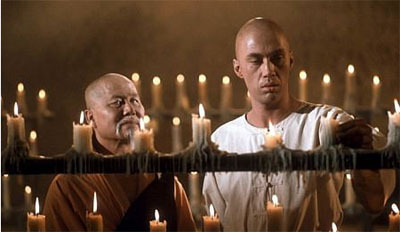
In the inimitable words from Master Po in the iconic 70s TV Series
Kung Fu:
Tread lightly grasshopper
The narrative must be integrated and preserved and will remain a fundamental foundation of clinical knowledge now and into the future of healthcare information systems. How are you preserving the information in your EMR or have you seen the record dumbed down?